

Something interesting is happening in bathrooms across the country. People are fed up with scrubbing their retainers. And they’re looking for a way out. Dentasonic has been trending recently with some big claims.
You’ve probably seen the ads. A small device, a few minutes, and suddenly your retainer looks cleaner than it has in months. Maybe you ignored it at first. Maybe you’re still ignoring it. But the question keeps nagging at you: is this thing actually worth it?
That’s why I’m writing this DentaSonic Review so that my readers can have more information as I did. I’ve spent time looking at what DentaSonic really does, what it doesn’t do, and who it makes sense for. Not to convince you one way or the other, but to give you enough information to make up your own mind.
DentaSonic Review: Our Research and Testing Method
I want to be upfront about how I put this review together.
I didn’t buy a DentaSonic and run it through a lab test. I don’t have a retainer with controlled buildup. What I did instead was gather information from multiple angles so you get a complete picture without doing what I did.
My process
First, I looked at the device itself. What’s included? What’s the tank capacity? How many cycles does it have? What’s the runtime? That gave me the basic facts.
Second, I researched the technology. Ultrasonic cleaning is not new. It’s been used in dental labs, jewelry shops, and medical facilities for decades. I looked at how the process works, what it can realistically achieve, and what the limitations are. That helped me separate the marketing claims from the practical reality.
Third, I read customer reviews. Not just the ones on the official site, but feedback from people who have used similar devices. I wanted to know what satisfied customers said and what disappointed customers complained about. That gave me a balanced picture.
Fourth, I compared DentaSonic to other options. Manual brushing. Soaking tablets. Professional cleaning. Other ultrasonic cleaners. That helped me understand where DentaSonic fits in the market.
What I didn’t do was perform a controlled test. I don’t have a lab. I don’t have a retainer with a controlled amount of buildup. So I’m not going to claim I tested it in perfect conditions.
What I can tell you is whether the product makes sense based on the technology, the device specifications, the customer feedback, and the price. That’s what an honest review should do.
WHAT IS DENTASONIC
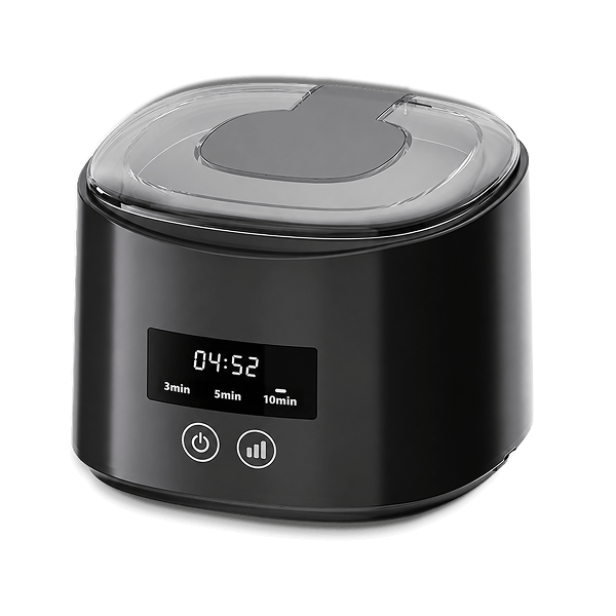
Picture a small tank sitting on your bathroom counter. You fill it with water, drop your retainer in, and press a button. Three minutes later, it’s clean. That’s DentaSonic in a nutshell.
Is an ultrasonic cleaning device designed for dental appliances. It’s a small tank, about the size of a large coffee mug, that uses high-frequency sound waves to clean retainers, aligners, mouthguards, dentures, and even jewelry.
The device has a 180ml stainless steel tank. You fill it with plain water, drop your appliance in, and press a button. The ultrasonic action does the rest. No scrubbing. No soaking tablets. No chemicals.
The kit includes the cleaning unit itself, a USB charging cable, and a user manual. It’s cordless, rechargeable, and portable. It weighs about 320g, which is less than a pound. That means you can throw it in your luggage and take it with you when you travel.
The intended users are pretty broad. Anyone who wears a retainer or aligner. Anyone with a night guard for teeth grinding. Anyone with dentures. Parents who are tired of nagging their kids to clean their retainers. Even people who want to clean their jewelry without harsh chemicals.
That’s what DentaSonic is. A practical, affordable tool for cleaning small dental appliances. Nothing more, nothing less.
HOW DOES DENTASONIC WORK?
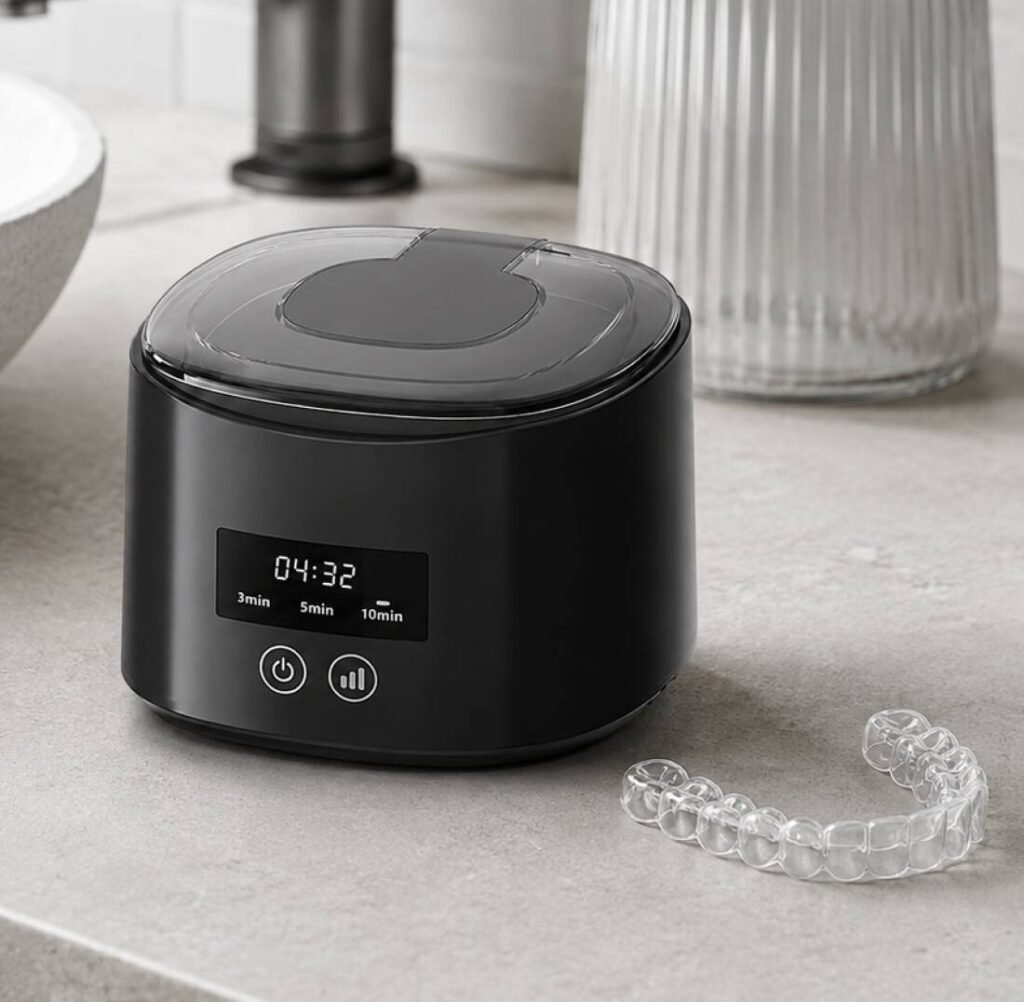
The core idea is simple. Ultrasonic cleaning uses high-frequency sound waves to create tiny bubbles in water. Those bubbles implode, and the implosion creates a scrubbing action that lifts dirt, bacteria, and buildup from surfaces. It’s the same technology used in professional dental labs and jewelry cleaners.
DentaSonic operates at 47kHz. That’s the frequency of the sound waves. The brand calls it DentaPulse technology. When you press the button, the device sends those waves through the water, and the cleaning action begins.
The process is straightforward. Fill the tank with water. Place your appliance inside. Choose a cycle. Press the button. Wait. That’s it.
The device has three cleaning cycles. The 3-minute Quick Clean is for daily use. The 5-minute Enhanced Clean is for when you notice buildup. The 10-minute Deep Clean is for when your appliance has been sitting in its case for a while or when you need a more thorough clean.
The tank is stainless steel, which is durable and easy to wipe down. The device is cordless and rechargeable over USB. A full charge provides up to 150 minutes of runtime, which the brand says is enough for about 50 quick clean cycles.
DOES DENTASONIC REALLY WORK?
MY honest answer: the technology behind it is real, but whether it works for you depends on what you’re expecting.
The mechanism isn’t marketing fluff. Ultrasonic cleaning has been used in professional settings for decades. The 47kHz frequency creates cavitation bubbles that lift debris from surfaces. It reaches into grooves and crevices that a toothbrush can’t touch. That’s not a DentaSonic invention—it’s how ultrasonic cleaning has always worked.
So the science is sound. The question is execution.
From what I’ve seen with similar devices, the results are genuinely positive. One dental hygienist noted that a clear retainer with cloudy film around its inner ridge came out noticeably cleaner after a 5-minute cycle. The film had loosened from the narrow edges that were difficult to brush. That’s exactly what you’d expect from ultrasonic cleaning.
But here’s where I have to be careful. I haven’t personally tested DentaSonic, and I won’t pretend I have. What I can tell you is that the category of product works when the appliance is placed in the tank properly and the right cycle is selected.
A critical review of a similar ultrasonic cleaner noted that results depend on the user. Some people expect a miracle. They expect a heavily stained, months-old retainer to come out looking brand new. That’s not realistic. Ultrasonic cleaning removes buildup and bacteria. It doesn’t reverse staining or restore plastic to factory condition.
So does DentaSonic work? Yes, for daily maintenance and for cleaning buildup that brushing can’t reach. It won’t make an old retainer look new. But it will make it cleaner than a toothbrush ever could.
DENTASONIC FEATURES AND SPECIFICATIONS
Let me walk you through what you are actually getting in the box, so you know exactly what you are paying for.
The Ultrasonic Action
DentaSonic operates at 47kHz. That’s the frequency of the sound waves that create the cleaning action. The brand calls it DentaPulse technology. The waves travel through the water, creating tiny bubbles that implode and lift debris from surfaces. It’s the same principle used in professional dental labs.
The Cleaning Cycles
You get three cycles. The 3-minute Quick Clean is for daily use. The 5-minute Enhanced Clean is for when buildup is visible. The 10-minute Deep Clean is for when your appliance has been sitting in its case or needs a more thorough clean. Having options is useful because not every clean needs to be the same.
The Tank
The tank is 180ml and made of stainless steel. That’s big enough to hold a retainer, aligner, mouthguard, or set of dentures. The stainless steel is durable and easy to wipe down. It won’t hold odors like plastic might.
The Battery
The device is USB-rechargeable and cordless. A full charge provides up to 150 minutes of runtime. The brand says that’s enough for about 50 quick clean cycles. For daily use, that means you’re charging it roughly once a month or so.
The Size
It weighs about 320g, which is less than a pound. It’s compact enough to sit on a bathroom counter without taking up much space. It’s also portable enough to throw in a bag for travel.
The Controls
One button. That’s it. Press it to cycle through the cleaning modes. Press and hold to start. It’s simple enough that you don’t need to read a manual.
The Versatility
DentaSonic isn’t just for retainers. It works on aligners, mouthguards, dentures, and small jewelry like rings and watch bands. If it fits in the tank, you can clean it.
One thing I noticed: the brand doesn’t specify the exact power output in watts. Some competitors list that number. It’s a minor omission, but the 47kHz frequency is the key specification, and that’s clearly stated.
Now let me tell you about the benefits and the drawbacks.
DentaSonic Benefits and Potential Drawbacks
Let me give you both sides, because you deserve to know what you’re getting into.
The Benefits
The first benefit is convenience. You fill the tank, drop your appliance in, press a button, and walk away. No scrubbing. No toothpaste residue in the sink. No standing over the counter trying to reach the back grooves with a brush. For people who wear their retainer every night, this is a daily chore that suddenly becomes effortless.
The second benefit is effectiveness. Ultrasonic cleaning reaches places a toothbrush can’t. The grooves, the wires, the fitted edges, the areas where buildup accumulates and smells develop. A brush cleans only where the bristles touch. Ultrasonic cleaning works through the water, so it reaches everywhere the water reaches.
The third benefit is that it uses plain water. No soaking tablets. No chemicals. No lingering aftertaste or residue on your appliance. That’s a big deal for something you put in your mouth.
The fourth benefit is portability. It’s cordless, USB-rechargeable, and compact. You can take it with you when you travel, and it’ll clean your retainer on a hotel bathroom counter just as well as it does at home.
The Drawbacks
The biggest drawback is that it won’t restore an old, stained appliance to look brand new. Ultrasonic cleaning removes bacteria and buildup. It doesn’t reverse discoloration or remove deep stains that have set into the plastic. If your retainer is years old and yellowed, this won’t fix that.
The second drawback is that it’s not a sterilization device. It removes bacteria, but it doesn’t use heat or UV light to sterilize. If you need medical-grade sterilization, this isn’t that.
The third drawback is that the tank is small. At 180ml, it fits standard dental appliances, but it won’t fit larger items. It’s designed for retainers, aligners, mouthguards, and dentures. That’s it.
The fourth drawback is that it requires charging. If you forget to charge it, you’re back to brushing until it’s ready. It’s not a huge issue, but it’s worth knowing.
And finally, there’s the learning curve. Not with the device itself, but with expectations. Some people expect their appliance to come out looking like it just came from the dentist’s office. That’s not realistic. It will be cleaner and fresher. It won’t be new.
IS DENTASONIC LEGIT OR A SCAM?
Here’s the honest answer: the product category is legitimate, but I can’t give DentaSonic a perfect trust score because the company behind it is hard to verify.
Okay, let me explain what I mean
Ultrasonic cleaners are a real thing. They’ve been used in dental labs and jewelry shops for years, and consumer versions are sold by several brands. The technology isn’t a gimmick. So the concept of DentaSonic is legit.
The problem is the website. When I look for independent verification of the company, I don’t find much. There’s no established track record, no third-party reviews on major platforms, and no clear information about who actually runs the business. That’s not proof of a scam. But it’s also not proof of reliability.
What I can tell you is this: the product has a 100% satisfaction guarantee according to the website. That’s your safety net. If you order it, use a payment method that protects you, like a credit card or PayPal. Keep your order confirmation. And if something feels off, contact the company before you do anything else.
A scam usually takes your money and disappears. DentaSonic appears to ship a real product. It has thousands of reviews on its site. The device itself is a known category of product. But it’s a small operation with limited transparency. That means you should approach it the same way you’d approach any unfamiliar brand: with caution, not blind trust.
Buy it if you’re comfortable with a small risk and you have a genuine need. Skip it if you need the reassurance of a well-known brand with years of verified reviews.
DentaSonic Reviews Complaints
I looked for negative feedback too. The most common complaint is that the device doesn’t make an old, stained appliance look new. Some people expect a miracle and are disappointed when a faint stain remains. Others mention that the tank is small and won’t fit larger items. A few note that they wish the battery lasted longer between charges.
But they aren’t dealbreakers. They’re just realistic expectations. If you want your retainer to look new, buy a new retainer. If you want it to be clean and fresh, this is what it looks like.
Price, Discounts, and Refund Policy
Let me walk you through the money side of things, because that’s usually what decides whether you try a product or not.
DentaSonic is sold directly through its official website. You won’t find it on Amazon, in dental offices, or on a shelf anywhere else. That’s common for direct-to-consumer products, but it also means you should be careful if you see it listed somewhere else.
The pricing is structured around the current promotion. The website advertises up to 75% off for a limited time. The exact price depends on the bundle and the current promotion, but the discount is significant. This isn’t a product that costs hundreds of dollars. It’s in the range of a reasonable bathroom gadget.
Shipping is fast and worldwide according to the website. That means you can order it from wherever you are and get it without waiting weeks.
Every order comes with a 100% satisfaction guarantee. If the device doesn’t work for you, you can contact customer support and they’ll make it right. The exact terms depend on the company, but the guarantee is advertised prominently on the site.
One honest note: I couldn’t independently verify the company’s refund track record because there isn’t much third-party information available about DentaSonic specifically. That doesn’t mean it’s a scam. It just means you should keep your receipt and use a payment method that protects you.
The price is reasonable for what you’re getting. A professional ultrasonic cleaner costs hundreds of dollars. This is a consumer version that’s designed for home use and costs a fraction of that. If you use it regularly, it pays for itself compared to buying soaking tablets or replacing stained appliances.
WHO SHOULD CONSIDER DENTASONIC?
Let me be practical with you. This product isn’t for everyone, and it’s better you know that now than be disappointed later.
DentaSonic makes sense for you if you wear a retainer or aligner and you’re tired of scrubbing it every day. Maybe you have tried brushing, and you know it doesn’t reach the grooves. Maybe you have also tried soaking tablets, and you hate the chemical residue. Maybe you just want something that works without effort. If that’s you, this device is worth considering.
It also makes sense if you have a night guard for teeth grinding. Night guards are thicker and have deeper grooves than retainers. They’re harder to clean with a brush. An ultrasonic cleaner can reach the areas that brushing misses.
It’s a good fit if you have dentures. Dentures need regular cleaning, and an ultrasonic cleaner does a more thorough job than a brush alone. It’s also gentler on the material.
It’s for parents of kids with retainers or aligners. If you’re tired of reminding your child to clean their appliance, this makes it automatic. They drop it in, press a button, and walk away. No nagging required.
It’s for travelers. The device is cordless, compact, and rechargeable. It fits in a bag and works in any bathroom. If you’re on the road and need to keep your retainer clean, this is a practical solution.
And it’s for anyone who wants to clean their jewelry without harsh chemicals. If you have rings, earrings, or watch bands that need a refresh, this device handles it.
Now let me tell you who should probably skip it.
Alright, let me be just as honest about who shouldn’t buy this. Because buying the wrong product for your situation is worse than not buying anything at all.
Skip DentaSonic if you’re expecting it to restore an old, stained appliance to look brand new. Ultrasonic cleaning removes bacteria and buildup. It doesn’t reverse discoloration or remove deep stains that have set into the plastic. If your retainer is years old and yellowed, this won’t fix that. You need a new retainer, not a cleaner.
Skip it if you need medical-grade sterilization. DentaSonic removes bacteria, but it doesn’t sterilize. It doesn’t use heat or UV light to kill everything. If you have a compromised immune system or you’re in a medical setting, you need a different solution.
Skip it if you have a large appliance that won’t fit in a 180ml tank. This is designed for standard dental appliances. If you have something bigger, it won’t fit.
Skip it if you’re not going to use it regularly. The device works best when you use it daily or every few days. If you’re the type to buy something and let it sit in a drawer, save your money.
And skip it if you need the reassurance of a well-known brand. DentaSonic is a small operation with limited third-party verification. If that makes you uncomfortable, look for a device from a brand you already trust.
DENTASONIC VS ALTERNATIVES
DentaSonic vs Manual Brushing
A toothbrush cleans only where the bristles make contact. It can’t reach the grooves, the wires, the fitted edges, or the areas where buildup accumulates and smells develop. It’s better than nothing, but it’s not thorough.
DentaSonic cleans through the water. It reaches everywhere the water reaches. That means the grooves, the wires, and the fitted edges all get cleaned. For daily maintenance, it’s a significant upgrade over brushing alone.
DentaSonic vs Soaking Tablets
Soaking tablets dissolve in water and release cleaning agents. They work, but they leave residue. You have to rinse the appliance afterward. Some people don’t like the chemical aftertaste or the idea of soaking their retainer in something they can’t pronounce.
DentaSonic uses plain water. No chemicals. No residue. No aftertaste. For people who want a chemical-free clean, this is a better option.
DentaSonic vs Professional Ultrasonic Cleaners
Professional ultrasonic cleaners cost hundreds of dollars. They’re bigger, more powerful, and designed for clinical settings. They’re overkill for home use.
DentaSonic is a consumer version. It’s smaller, less powerful, and designed for home use. It’s not as strong as a professional unit, but it’s more than enough for daily maintenance.
DentaSonic vs Other Consumer Ultrasonic Cleaners
There are several consumer ultrasonic cleaners on the market. Some operate at lower frequencies. Some have only one or two cleaning cycles. Some have smaller tanks.
DentaSonic operates at 47kHz, which is on the higher end for consumer devices. It has three cleaning cycles. It has a 180ml tank. It’s competitive with other options in its price range.
THE BOTTOM LINE
DentaSonic sits in the middle. It’s better than brushing or soaking alone. It’s cheaper than a professional unit. It’s competitive with other consumer options. It’s not the only choice, and it’s not always the right one. But for daily retainer care, it’s a practical option.
DENTASONIC REVIEW: FINAL VERDICT
Finally we have come to the end. Let me give it to you straight.
What I found about DentaSonic after researching it thoroughly.
The technology is real. Ultrasonic cleaning has been used in dental labs and jewelry shops for decades. The concept works. When you place an appliance in water and send high-frequency sound waves through it, the cavitation bubbles lift debris from surfaces. That’s not marketing talk. That’s how ultrasonic cleaning has always worked.
The device itself is well-equipped. A 180ml stainless steel tank. Three cleaning cycles. A 150-minute runtime. USB charging. Cordless operation. It’s compact and portable. The process is simple enough for anyone to follow.
The price is reasonable. With the current discount, it’s a fraction of what a professional ultrasonic cleaner would cost. If you use it regularly, it pays for itself compared to buying soaking tablets or replacing stained appliances.
But where I have to be honest with you. I couldn’t test this product myself. I didn’t perform a clean. I don’t have lab results. What I have is the technology, the device specifications, the customer feedback, and the price. That’s enough to form a reasonable opinion, but it’s not the same as first-hand experience.
And there’s another issue. The company behind DentaSonic is hard to verify. There’s no established track record, no third-party reviews on major platforms, and limited information about who runs the business. That’s not proof of a scam. But it’s a reason to be cautious.
So where does that leave us?
My Verdict: A Reasonable Option With Caveats
DentaSonic is a legitimate product built on real technology. It’s not a miracle. It won’t restore an old, stained appliance to look brand new. But it can clean a retainer, aligner, mouthguard, or denture more thoroughly than a toothbrush, and it can do it in three minutes without scrubbing.
Buy it if: You wear a retainer or aligner, you’re tired of scrubbing, and you want a convenient way to keep your appliance clean and fresh.
Skip it if: You are expecting it to restore an old, stained appliance to look new, or you need medical-grade sterilization.
My Rating: 4/5
It loses a point for limited transparency about the company and the lack of independent testing. It gains points for real technology, a well-equipped device, and a fair price.
Frequently Asked Questions About DentaSonic
How does DentaSonic clean a retainer?
It uses ultrasonic action. High-frequency sound waves create tiny bubbles in water that implode and lift dirt, bacteria, and buildup from surfaces. It reaches into grooves and crevices that a toothbrush can’t touch.
What can I clean with DentaSonic?
Retainers, aligners, mouthguards, dentures, and small jewelry like rings and watch bands. Any small item that fits in the tank and can be safely cleaned with water.
Which cleaning cycle should I choose?
Use the 3-minute Quick Clean for daily maintenance. Use the 5-minute Enhanced Clean when you notice buildup. Use the 10-minute Deep Clean after your appliance has been sitting in its case for a while.
Do I need cleaning tablets?
No. DentaSonic runs on plain water. That’s one of its advantages. No chemicals, no residue, no aftertaste.
Can I use DentaSonic while it is charging?
No. It’s designed to run cordlessly. Charge it fully, then use it. The runtime is 150 minutes, which is enough for about 50 quick clean cycles.
Is DentaSonic safe for delicate appliances?
Yes. Ultrasonic cleaning is gentle. It doesn’t use heat or harsh chemicals. It’s safe for retainers, aligners, mouthguards, and dentures.
How is DentaSonic different from brushing or soaking?
Brushing only cleans where the bristles touch. Soaking tablets leave residue. DentaSonic cleans through the water, reaching every surface the water reaches. It uses no chemicals and leaves no residue.
Does DentaSonic use UV light?
No. It uses ultrasonic action. UV light is a different technology that some other cleaners use. DentaSonic relies on sound waves, not light.
FINAL THOUGHTS
If you wear a retainer or aligner, you know the struggle. You know that brushing doesn’t reach the grooves. You know that soaking tablets leave residue. You know that the smell comes back faster than it should.
DentaSonic solves that problem. It’s not a miracle. It won’t make an old retainer look new. But it will clean your appliance more thoroughly than a toothbrush, and it will do it in three minutes without scrubbing.
The device is well-made. The technology is real. The price is reasonable, especially with the current discount. And the satisfaction guarantee means you’re not risking much by trying it.
If you’re on the fence, here’s my advice. Check your insurance or dental plan first. Some plans cover part of the cost of a new retainer, but none cover the cost of cleaning it. DentaSonic is a small investment that can extend the life of your appliance and keep it fresh.
And if you decide to buy, use the official website. Keep your order confirmation. Use a payment method that protects you. And give it a fair try. Use it daily for a week. See if you notice the difference.
Affiliate Disclosure: This article contains affiliate links. If you purchase through these links, we may earn a small commission at no extra cost to you. This helps support our site and allows us to continue providing honest reviews.
Medical Disclaimer: This article is for informational purposes only and does not constitute medical advice. Always consult your dentist or orthodontist for guidance on caring for your dental appliances. DentaSonic is a cleaning device, not a medical device, and is not intended to diagnose, treat, cure, or prevent any disease.
Visit The Official Website For More Information