

You might be wondering why everyone is suddenly talking about this Glasyx. I’ve seen the ads too. I’ve read the claims. And I’ve asked myself the same question you’re probably asking right now.
Let me walk you through it as an honest reviewer, not as someone trying to sell you something.
The reason people are searching for Glasyx is simple. Windshield repair is expensive. A small chip repair at a shop can cost $80 to $160. A full replacement? That jumps to $400, $600, sometimes over $1,000 once you add recalibration for newer cars with cameras behind the glass.
That’s a lot of money for damage that started as a tiny rock chip.
So when a product comes along claiming you can fix it yourself at home for a fraction of the cost, people pay attention. That’s why Glasyx is being searched for. It’s not hype. It’s a genuine problem that a lot of drivers are facing.
Now, here’s where I come in. I’m not here to tell you this product is a miracle. I’m not here to tell you it’s a scam either. What I’m going to do is look at what it actually is, how it works, what it can realistically do, and what it can’t.
Then you can decide for yourself whether it’s worth your money.
WHAT IS GLASYX?
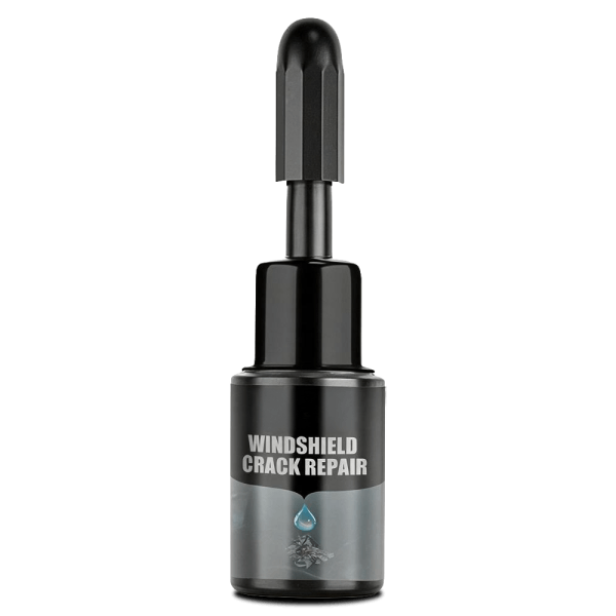
Glasyx is a do-it-yourself glass repair kit designed for small chips and cracks on your car’s windshield. It’s not a professional tool. It’s not a replacement for a shop. It’s a consumer product for drivers who want to deal with minor damage before it turns into a major expense.
What you can find inside the box. A 20 ml bottle of UV-cured resin. Five clear curing films. A small finishing blade. That’s it. No complicated applicator. No syringes or pedestals. Just the resin, the films, and the blade.
The resin is the key ingredient. It’s a professional-grade liquid that flows into the fracture when you apply it. Once it’s in place, you cure it with sunlight or a UV lamp. The liquid hardens into a clear bond that seals the damage.
The kit is designed to handle common damage like bullseye chips, star breaks, spider cracks, and linear cracks up to about 8 inches. It works on windshields, side windows, rear glass, and side mirrors.
The intended users are everyday drivers. People with a small chip who don’t want to pay shop prices. People who are comfortable following simple instructions. People who’d rather spend twenty minutes in their driveway than half a day at a repair shop.
That’s what Glasyx is. A practical, affordable tool for minor glass damage. Nothing more, nothing less.
HOW DOES GLASYX WORK?
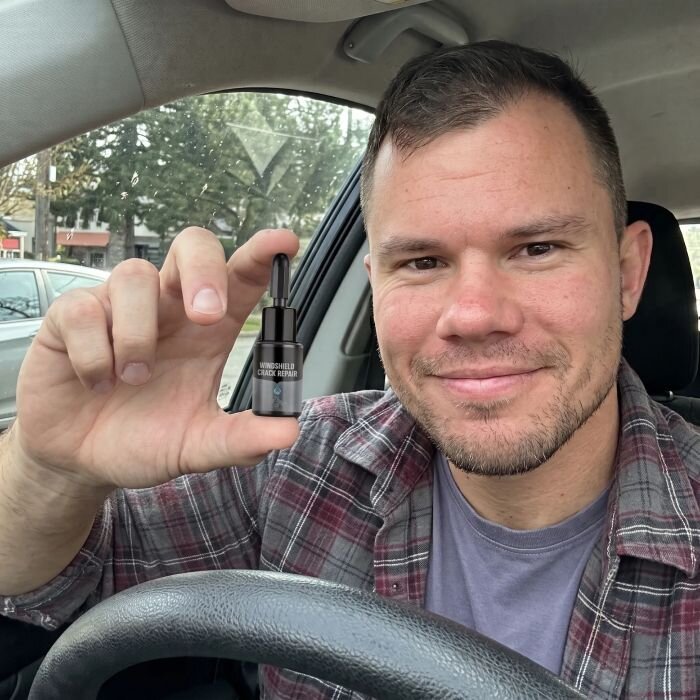
The core idea is simple. The resin needs to get inside the crack and stay there. Glasyx uses capillary action to make that happen. When you drop the resin onto the damaged area, the liquid gets pulled into the fracture by the glass itself. It fills the empty space where the chip or crack is.
Once the resin is inside, you need to harden it. That’s where the UV light comes in. Sunlight works best. A UV lamp works too if you’re indoors or it’s a cloudy day. The UV light cures the resin, turning it from a liquid into a hard, clear bond.
The curing films are what make this work smoothly. You place one over the resin after you’ve applied it. The film keeps the resin in place and helps it set evenly. Then you use the blade to gently work the film, pushing trapped air toward the edge.
After ten to thirty minutes in direct sunlight, the resin is cured. You peel off the film and scrape away the excess with the blade. If your fingernail doesn’t catch on the repaired area, the job is done.
That’s the whole process. It takes about twenty to thirty minutes from start to finish. No special tools. No complicated steps. Just resin, film, sunlight, and a blade.
DOES GLASYX REALLY WORK?
The honest answer: the technology behind it is real, but whether it works for you depends entirely on what kind of damage you have.
The mechanism isn’t marketing fluff. UV-cured resin has been the standard in professional windshield repair for decades. The resin flows into the fracture, fills the air gap, and hardens when exposed to UV light. Once cured, it bonds to the glass and stops the crack from spreading. That’s not a Glasyx invention—it’s how windshield repair has worked for years .
So the science is sound. The question is execution.
From what I’ve seen with similar DIY kits, the results are genuinely mixed. One user with a long crack reported that “about 70% of the crack was practically invisible in the sunlight” after using a comparable resin kit, and it stopped the damage from spreading . That’s a realistic outcome. Not perfect, but functional.
But here’s where I have to be careful. I haven’t personally tested Glasyx, and I won’t pretend I have. What I can tell you is that the category of product works when the damage is small, clean, and caught early. It works less well when the crack is deep, dirty, or already spreading.
A critical review of a similar kit described the resin as “far too watery and thin” and claimed it failed to fill the crack properly . That’s a real risk with any DIY kit. Application technique matters enormously.
So does Glasyx work? Probably, for minor chips and cracks, if you follow the instructions carefully. It won’t give you a perfect factory finish. But it might stop a $20 problem from becoming a $500 one.
Glasyx Features And Specifications
The Resin
The kit includes a 20 ml bottle of UV-cured resin. That’s the active ingredient, the stuff that actually fills the crack. The brand says it’s enough for approximately five repairs, depending on how much you use each time. The resin has a three-year shelf life, which means you can keep it stored in your garage or glovebox without worrying about it going bad.
The Curing Films
You get five clear curing films. These go over the resin after you apply it. They help the resin set smoothly and keep it in place while it cures. They’re single-use, which is why you get five of them.
The Finishing Blade
A small blade is included for scraping away excess resin after curing. This is what gives you a flush, smooth finish. You use it at a shallow angle, slicing rather than digging.
The Damage Coverage
According to the product information, Glasyx handles bullseye chips, star breaks, spider cracks, crescent cracks, and linear cracks up to approximately 8 inches (20 cm). The key is acting before the crack reaches the edge of the glass.
The Application Time
The full process takes about 20 to 30 minutes, depending on curing conditions. Sunlight works best. A UV lamp can be used indoors or during overcast weather.
The Versatility
Because the resin bonds directly to glass, the kit can be used on eligible damage across windshields, side windows, rear glass, and side-view mirrors. It’s not limited to just the front windshield.
One thing I noticed: the exact chemical composition of the resin isn’t spelled out on the product page. Comparable kits often use methacrylate-based resins, but I can’t confirm what Glasyx uses specifically. That’s a small transparency gap, but not unusual for consumer products.
GLASYX BENEFITS AND POTENTIAL DRAWBACKS
The Benefits
The first benefit is cost. A professional chip repair costs $80 to $160. A full replacement can run $400 to $1,500 depending on your car and whether recalibration is needed. Glasyx costs a fraction of that, and one kit provides enough resin for multiple repairs. If you catch the damage early, the savings are real.
The second benefit is convenience. No appointment. No waiting room. No leaving your car at a shop for half a day. You do the repair in your driveway in about twenty to thirty minutes. For a lot of people, that alone makes it worth trying.
The third benefit is prevention. A small chip, left alone, will spread. Temperature changes, potholes, and everyday driving all make it worse. Sealing it early stops that process. That’s the real value here—not a perfect finish, but stopping the damage from getting worse.
The Drawbacks
The biggest drawback is that results are not guaranteed to be invisible. A professional repair often looks nearly perfect. A DIY kit usually leaves a faint mark where the damage was. You’ll likely still see it if you look closely.
The second drawback is that application matters. If you rush, skip steps, or apply the resin unevenly, you can end up with air bubbles or an incomplete fill. The kit works best when you’re patient and follow the instructions carefully.
The third drawback is curing limitations. You need UV light. If it’s raining, overcast, or you’re parked in a garage, you’ll need a UV lamp. That’s an extra step some people don’t want to deal with.
And finally, this kit is not for serious damage. Long cracks, deep chips, or damage near the edge of the glass need a professional.
IS GLASYX LEGIT OR A SCAM?
The honest answer: the product category is legitimate, but I can’t give Glasyx a perfect trust score because the company behind it is hard to verify.
Let me explain what I mean.
UV-cured resin repair kits are a real thing. They’ve been used in professional windshield repair for years, and consumer versions are sold by several brands. The technology isn’t a gimmick. So the concept of Glasyx is legit.
The problem is the website. When I look for independent verification of the company, I don’t find much. There’s no established track record, no third-party reviews on major platforms, and no clear information about who actually runs the business. That’s not proof of a scam. But it’s also not proof of reliability.
What I can tell you is this: the product itself has a 30-day money-back guarantee. That’s your safety net. If you order it, use a payment method that protects you, like a credit card or PayPal. Keep your order confirmation. And if something feels off, contact the company before you do anything else.
A scam usually takes your money and disappears. Glasyx appears to ship a real product. But it’s a small operation with limited transparency. That means you should approach it the same way you’d approach any unfamiliar brand: with caution, not blind trust.
Buy it if you’re comfortable with a small risk and you have a genuine chip to fix. Skip it if you need the reassurance of a well-known brand with years of verified reviews.
visit the official website for more information
GLASYX CUSTOMER REVIEWS AND COMPLAINTS
Now let me share what real customers are saying, because their experiences tell you more than any marketing page ever could.
Mark
Mark noticed a chip getting worse every week. He finally decided to deal with it instead of watching it spread. After using Glasyx, he said the damage looked much better, and he was relieved he didn’t wait until he needed a whole new windshield. That’s the story I hear most often. People who act early are glad they did.
William
William’s favorite part wasn’t even the repair itself. It was not having to book an appointment or leave his car at a shop. For him, the time saved was worth as much as the money saved. That’s a point worth considering. Shop visits aren’t just expensive. They’re inconvenient.
Kevin
Kevin expected the repair to look obvious. He was wrong. He said you can barely notice the damaged spot now. That matches what I’ve heard from other users. The resin doesn’t make damage disappear completely, but it does fade it significantly.
Robert
Robert had already started looking at replacement prices when he found Glasyx. He tried it first, and he’s glad he did. The crack was sealed, the glass looked cleaner, and he kept hundreds of dollars in his pocket. That’s a realistic outcome for minor damage caught early.
John
John admitted he’s not very handy. He was worried he’d mess it up. But he followed the instructions and finished the repair in his driveway without needing help. That’s encouraging for anyone who’s nervous about doing this themselves.
Complaints?
I looked for negative feedback too. The most common complaint is that the repair isn’t completely invisible. Some people expect a perfect finish and are disappointed when a faint mark remains. Others mention that curing can be tricky in poor weather.
These aren’t dealbreakers. They’re just realistic expectations. If you want a perfect repair, go to a shop. If you want a good repair at home, this is what it looks like.
Glasyx Price, Discounts, and Refund Policy
Glasyx is sold directly through its official website. You won’t find it in auto parts stores, or on a shelf anywhere else. That’s common for direct-to-consumer products, but it also means you should be careful if you see it listed somewhere else.
The pricing is built around bundles. The two-kit bundle is listed at $36.90 total, which works out to $18.45 per kit. That’s the entry point, and it gives you one kit for the damage you have now and a second for later or for another vehicle. The three-kit bundle comes in at $47.95 total, or $15.98 per kit. For households with more than one car, that’s the practical choice.
The company also mentions larger bundles with discounts up to 70% while current inventory lasts. That’s a common tactic with direct-response products, and it’s worth knowing that these “limited stock” claims are designed to encourage a quick decision. Take your time anyway.
Shipping is included in the bundle prices according to the product page, so there’s no surprise at checkout.
Every order comes with a 30-day money-back guarantee. If the kit doesn’t work for you, you can return it for a refund. The terms are standard for this kind of product, but keep your order confirmation and don’t open more than you need to before you’ve decided whether you’re keeping it.
One honest note: I couldn’t independently verify the company’s refund track record because there isn’t much third-party information available about Glasyx specifically. That doesn’t mean it’s a scam. It just means you should keep your receipt and use a payment method that protects you.
WHO SHOULD CONSIDER GLASYX?
Glasyx makes sense for you if you have a small chip or crack on your windshield and you’ve been quoted an expensive repair. Maybe it’s a bullseye chip from a rock on the highway. Maybe it’s a small star break that hasn’t spread yet. If the damage is still minor and you catch it early, this kit is worth trying before you pay shop prices.
It also makes sense if you’re the kind of person who’s comfortable doing small repairs yourself. You don’t need to be a mechanic. You just need patience and the willingness to follow instructions carefully. If you’re handy enough to change a wiper blade or top up your own oil, you can handle this.
It’s a good fit if you want to avoid the hassle of a shop visit. Booking an appointment, driving across town, waiting in a lobby, leaving your car for hours. Some people don’t mind that. Others would rather spend twenty minutes in their driveway. If you’re in the second group, this is for you.
It’s also useful if you have multiple vehicles or you like being prepared. One kit in the garage means you’re ready for the next chip before it turns into a crack.
And it’s for you if you understand what you’re buying. This isn’t a magic fix. It’s a practical tool for minor damage.
WHO SHOULD AVOID GLASYX?
Skip Glasyx if your damage is serious. I’m talking about long cracks that have already spread across the windshield. Damage near the edge of the glass. Deep chips where the glass is actually broken through. These aren’t DIY situations. They’re safety issues, and a $20 kit isn’t the answer.
Skip it if your car has driver-assistance features and the damage is in the camera’s field of view. Modern cars have cameras behind the windshield that control automatic braking, lane assistance, and collision warnings. If the damage interferes with that camera area, you need a professional. A DIY repair might look fine, but it could affect how your safety systems perform. That’s not a risk worth taking.
Skip it if your state inspection rules won’t accept a repaired chip. Some states and some inspection stations have specific standards for windshield damage. A repaired chip might look better, but it may not pass an inspection. Check your local rules before you start.
Skip it if you’re not going to follow the instructions properly. I’m being serious here. DIY repair kits fail when people rush. If you’re the type to skip steps, use whatever’s lying around, or expect a perfect finish without doing the work, save your money and pay a professional.
And skip it if you need guaranteed results. This kit gives you a good chance of sealing a small chip and improving its appearance. It doesn’t guarantee a perfect repair. If that uncertainty bothers you, a shop is the better choice.
GLASYX VS. ALTERNATIVES
Glasyx vs Professional Shop Repair
A professional chip repair typically costs $50 to $150 and takes about 30 to 60 minutes . The result is usually excellent because a trained technician does the work. But you have to book an appointment, drive there, and wait.
Glasyx costs a fraction of that. You do it yourself. The result is good for small damage but likely leaves a faint mark. For minor chips, Glasyx is the practical choice. For anything complex, the shop is safer.
Glasyx vs Other DIY Kits
There are several competitors: Rain-X, Permatex, Blue Star. They all use similar resin technology, but the application methods differ. Some use syringes and pedestals that can be fiddly. Rain-X reviews are mixed, with some users saying it “didn’t work” while others call it “good for the money” . Permatex gets praise for ease of use but some complain about the applicator . Blue Star reviews range from “works as good as a pro repair” to “didn’t work at all” .
Glasyx’s approach is simpler. Drop the resin, cover it, cure it, scrape it. No complicated applicator to position. That simplicity is a genuine advantage for first-timers. But the resin quality and kit contents are comparable to what’s already on the market.
Glasyx vs Doing Nothing
This is the most important comparison. A small chip, left alone, will spread. Temperature changes, vibrations, and stress all make it worse. A $20 kit today can save you a $500 replacement next month. That’s not marketing talk. That’s how glass behaves .
Glasyx vs Insurance
Here’s something worth checking. Many insurance policies cover chip repair with zero deductible because it’s cheaper for them than a replacement . Before you buy any kit, call your insurer. You might get a professional repair for free. If you do, take it. That’s the honest advice.
The Bottom Line
Glasyx sits in the middle. It’s cheaper than a shop, simpler than some competitors, and better than doing nothing. But it’s not the only option, and it’s not always the right one.
FREQUENTLY ASKED QUESTIONS ABOUT GLASYX
What is Glasyx?
Glasyx is a do-it-yourself glass repair kit for small chips and cracks on car windshields. It uses UV-cured resin to fill the damage and stop it from spreading. The kit includes a 20 ml bottle of resin, five curing films, and a finishing blade. It’s designed for everyday drivers who want to handle minor damage before it becomes an expensive replacement.
Does Glasyx really work?
The technology is real. UV-cured resin has been used in professional windshield repair for decades. When applied correctly, it fills the fracture, hardens, and seals the damage. Does it work perfectly? No. You’ll likely still see a faint mark. But for small chips caught early, it can stop the damage from spreading and improve the appearance significantly. Just don’t expect a factory-perfect finish.
Is Glasyx a legitimate product?
The product category is legitimate. DIY resin repair kits are sold by several brands, and the technology is sound. The concern with Glasyx specifically is limited transparency. The company behind it is hard to verify, and there’s little independent information available. That doesn’t make it a scam, but it’s a reason to be cautious. Use a payment method that protects you and keep your order confirmation.
What are the potential drawbacks of Glasyx?
The repair won’t be invisible. You’ll likely see a faint mark where the damage was. The kit requires UV light to cure, which can be tricky in bad weather. Application mistakes can lead to air bubbles or incomplete filling. And it won’t work on large or complex damage. This is for small chips and cracks only.
How much does Glasyx cost?
The two-kit bundle is $36.90 total, or $18.45 per kit. The three-kit bundle is $47.95 total, or $15.98 per kit. Larger bundles are available with bigger discounts while stock lasts.
Where can you buy Glasyx?
Glasyx is sold through its official website. It’s not available on Amazon, eBay, or in retail stores. Buying direct ensures you get the authentic product and the guarantee.
Does Glasyx offer a money-back guarantee?
Yes. Every order comes with a 30-day money-back guarantee. If the product doesn’t work for you, you can return it for a refund. Keep your receipt and check the terms before ordering.
Are there better alternatives to Glasyx?
For small damage, Glasyx is one of the simpler DIY options. But before you buy any kit, check your insurance. Many policies cover chip repair with zero deductible because it’s cheaper for them than a replacement. If you can get a professional repair for free, take it. For serious damage, a professional shop is always the better choice.
FINAL VERDICT: WHAT I KNOW ABOUT GLASYX AFTER RESEARCHING.
The technology is real. UV-cured resin has been used in professional windshield repair for decades. The concept works. When you fill a chip with resin and cure it with UV light, the damage stops spreading and the appearance improves significantly. That’s not marketing talk. That’s how windshield repair has always worked.
The kit itself is well-equipped. A 20 ml bottle of resin, five curing films, and a finishing blade. Enough material for multiple repairs. A three-year shelf life. The process is simple enough for a first-timer to follow.
The price is reasonable. At $18.45 per kit in the two-kit bundle, it’s a fraction of what a shop would charge. Even if you only use it once, you’re still saving money compared to a professional repair.
But where I have to be honest with you. I couldn’t test this product myself. I didn’t perform a repair. I don’t have lab results. What I have is the technology, the kit contents, the customer feedback, and the price. That’s enough to form a reasonable opinion, but it’s not the same as first-hand experience.
And there’s another issue. The company behind Glasyx is hard to verify. There’s no established track record, no third-party reviews on major platforms, and limited information about who runs the business. That’s not proof of a scam. But it’s a reason to be cautious.
So where does that leave us?
My Verdict: A Reasonable Option With Caveats
Glasyx is a legitimate product built on real technology. It’s not a miracle. It won’t give you a perfect factory finish. But it can seal a small chip, make it less noticeable, and stop it from spreading. For that purpose, it’s worth considering.
Buy it if: You have a small chip or crack, you’re comfortable doing a hands-on repair, and you’ve checked whether your insurance covers professional repair first.
Skip it if: Your damage is serious, your car has driver-assistance cameras near the damage, or you need guaranteed results.
My Rating: 4.0/5
It loses points for limited transparency about the company and the lack of independent testing. It gains points for real technology, a well-equipped kit, and a fair price.
Our Research and Testing Method
I will be honest with you about how I approached this review.
I didn’t buy the kit and perform the repair myself. I’m not going to pretend I did. What I did do was something more useful for you: I looked at what the product actually is, how the technology works, what the company claims, and what real customers are saying.
See my process.
First, I looked at the kit itself. What’s included? What’s the resin made of? How much does it cost? How many repairs does one kit provide? That gave me the basic facts.
Second, I researched the technology. UV-cured resin is not new. It’s been used in professional windshield repair for decades. I looked at how the process works, what it can realistically achieve, and what the limitations are. That helped me separate the marketing claims from the practical reality.
Third, I read customer reviews. Not just the ones on the official site, but feedback from people who’ve used similar kits. I wanted to know what satisfied customers said and what disappointed customers complained about. That gave me a balanced picture.
Fourth, I compared Glasyx to other options. Professional shop repair. Other DIY kits. Doing nothing at all. That helped me understand where Glasyx fits in the market.
What I didn’t do was perform a controlled test. I don’t have a lab. I don’t have a windshield with a controlled chip. So I’m not going to claim I tested it in perfect conditions.
What I can tell you is whether the product makes sense based on the technology, the kit contents, the customer feedback, and the price.