
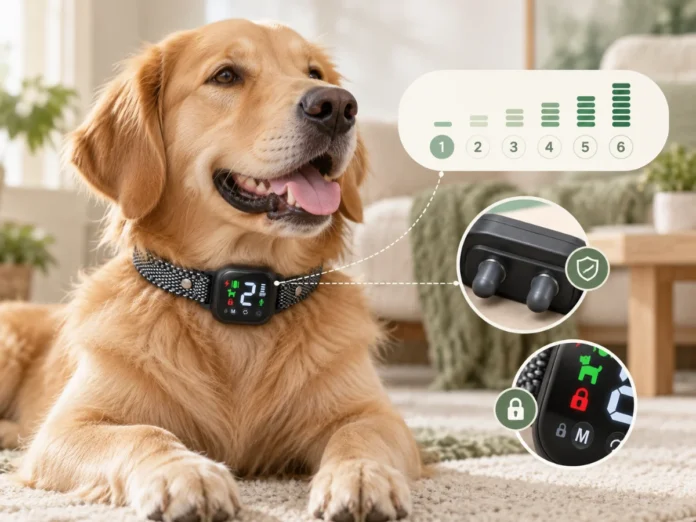

Few household problems wear people down like a dog that will not stop barking. One bark at the window becomes ten minutes of noise, a neighbor’s dog answers from two doors down, and before long half the street is awake. For people in townhouses, apartments, and neighborhoods with homeowners’ associations, the stakes are higher than a few sleepless nights. Complaint letters, fines, and strained relationships with the people next door are all on the table.
Rosie, a four-year-old beagle mix living outside Charlotte, is a good example. She is affectionate and well loved, but she reacts to cars, delivery vans, and even a neighbor’s screen door. Two years of managing this were tolerable until new neighbors moved in next to the shared wall and an HOA notice about “continued nuisance” appeared on the door, with a fine promised for the next one.
Why dog owners are considering Hush Bark Collar
Owners in this position usually have a history of things that did not work. Spray collars, ultrasonic boxes, training sessions, and remote-controlled collars each solve part of the problem and miss the rest. The common failure is that these tools often cannot tell the difference between the dog’s own bark and the noise outside. A device that punishes a dog for a truck, a doorbell, or another dog’s barking teaches the wrong lesson.
Hush Bark is marketed as the answer to exactly that weakness. It claims to confirm a bark through two separate signals before it responds, and it comes with a 30-day money-back guarantee. That combination is why it keeps appearing in neighborhood groups and online searches.
What This Review Covers
This review walks through what the collar is, how it is said to work, its specifications, the evidence for its effectiveness, and the safety questions every owner should weigh. It also looks at price, the legitimacy of the seller, the return policy, customer feedback, and how the Hush Bark Collar compares with other approache. Throughout, a distinction is drawn between what the manufacturer claims, what one owner experienced, and what has been independently verified, because those are three different levels of evidence.
What Is the Hush Bark Collar?
Hush Bark Collar is a rechargeable, automatic bark-control collar. It sits around the dog’s neck and responds when the dog barks with no remote and no app involved. Unlike a basic bark collar that listens only for sound, Hush Bark is described as using two detection methods together: a contact sensor that feels the vibration of the dog’s throat and a microphone that hears the sound. The collar only reacts when both agree.
The company markets this under the name AcoustiNode and positions the collar as a more precise alternative to the cheaper devices found on general marketplaces.
Main features and advertised benefits
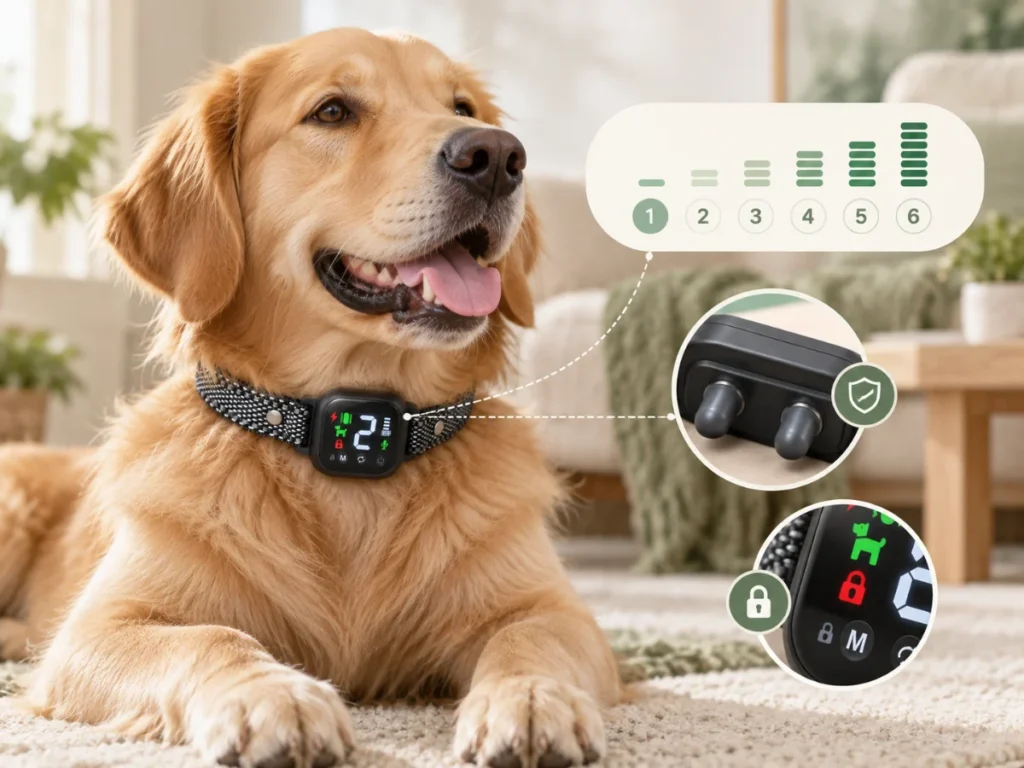
The manufacturer’s promotional material highlights the following points:
Dual detection that is meant to ignore traffic, other dogs, and the television.
A graduated response that begins with a beep, adds vibration, and reserves static correction for the higher modes.
Eight sensitivity levels, four modes, and six correction levels, adjustable to the individual dog.
IP67 water resistance, so the collar can stay on in rain, baths, and swimming.
Roughly two hours of charging, with a battery said to last several weeks under normal use.
A 30-day money-back guarantee when bought from the official website.
Who is it designed for?
Hush bark collar is aimed at owners of dogs that bark persistently when nobody is there to intervene, such as at the window during the workday. According to the company, it suits most dogs older than three months and heavier than eight pounds. It is not recommended for elderly, pregnant, aggressive, or easily frightened dogs, or for dogs in poor health. Those exclusions are worth taking seriously, and they are discussed further in the safety section.
How Does the Hush Bark Collar Work?
Here is how it works:
Bark detection technology
Most inexpensive bark collars rely on a microphone alone. The weakness is obvious: a microphone cannot say whose noise it is hearing. A passing truck, a barking dog across the fence, or a loud television can all trigger it.
Hush Bark’s approach is to add a second check. A sensor pressed against the throat registers the physical vibration of the dog’s own vocal cords, while the microphone confirms the sound at the same moment. Only when both signals line up does the collar treat the event as a bark. In theory this removes most false triggers, which is the main reason owners who have been burned before find the design appealing.
Correction methods and operating modes
The collar responds in stages rather than going straight to its strongest setting. The first bark produces a beep. If the dog keeps barking, a light vibration is added. Static stimulation only enters the picture on the higher modes, and only if the barking continues.
Owners can tune the experience through eight sensitivity levels, four modes, and six correction levels, starting from the gentlest. A small beagle mix and a large shepherd should not be corrected at the same intensity, and this range exists so each can be set up appropriately. The practical advice for any owner is to start at the lowest level and move up only if the dog genuinely does not respond.
How To Use Hush Bark Collar
Setup is simple and does not need a smartphone or a helper at home. The general process looks like this:
Charge the collar fully before first use, which the company says takes about two hours.
Choose the lowest mode and the lowest correction level.
Fit the collar snugly so the contact points touch the skin at the throat, while still allowing two fingers to slide beneath the strap.
Let the dog wear it for short periods at first and watch how she reacts.
Raise sensitivity or correction only in small steps if there is no change after several days.
Limit daily wear time, and check the skin under the contact points regularly.
Hush Bark Collar Features and Specifications
Here are its features as per the official website:
Design and comfort
Hush Bark Collar is built as a lightweight, adjustable strap with a receiver unit that sits under the chin. Comfort depends heavily on fit. A collar that is too loose may fail to register barks, while one that is too tight can irritate the skin. The company recommends no more than six to twelve hours of wear per day, with breaks to inspect the neck. That is a sensible limit, and owners should treat it as a rule rather than a suggestion.
Battery life and charging
Charging is done through a USB cable and takes about two hours. The manufacturer says a full charge lasts several weeks with normal use and that an indicator shows when the battery needs topping up. Actual life will depend on how often the collar activates and which modes are in use, so it is reasonable to treat the “several weeks” figure as a best-case estimate until tested at home.
Water resistance and durability
Hush Bark collar carries an IP67 rating. In plain terms, that means it is protected against dust and can handle temporary immersion in water, which covers rain, baths, and a swim in a pond or pool. IP67 is not the same as being designed for long periods underwater, and it says little about how the straps and seals age after months of daily wear. Owners with active outdoor dogs should inspect the unit periodically for cracks or loose seals.
Compatibility with different dog sizes
The stated minimum is eight pounds and three months of age. The company also says that two of the refund requests it received came from owners whose dogs were under that weight limit, which suggests the collar may not register or fit properly on very small dogs. Adjustable levels make it usable across a range of breeds, but toy breeds, puppies, and frail older dogs fall outside the intended audience.
Does Hush Bark Collar Really Work?
Manufacturer’s effectiveness claims
The company says most owners notice a difference within three days. It also reports a refund rate of 0.04 percent across more than 24,000 collars sold, equal to about four returns in every ten thousand. If accurate, that would be an unusually low return rate for any pet product, and the company presents it as evidence that the collar performs as promised.
Available evidence of its performance
This is where caution is needed. The refund figure comes from the seller itself, and there is no independent audit supporting it. Customer testimonials on the sales page are selected by the company. The strongest first-hand account available here is a single household: within three days Rosie’s daytime barking dropped sharply, by day nine the mail truck no longer set her off, and by week three she barked only twice over a full weekend without the collar, both times at something real.
That is encouraging, but it is one dog. No peer-reviewed study of this specific product has been identified, and the broader research on bark collars is mixed, with results depending on the dog, the type of stimulus, and the owner’s consistency.
What results can dog owners realistically expect?
Nuisance barking driven by habit, such as barking at the window or at passing vehicles, tends to respond best to a collar that interrupts the behavior consistently. Barking rooted in anxiety, separation distress, boredom, or fear is different. A collar may suppress the sound without touching the cause, and in some dogs it can make the underlying stress worse.
A realistic expectation is a noticeable reduction within the first week for habitual barking, paired with some adjustment of settings along the way. It is not a permanent cure, and it works best alongside exercise, enrichment, and basic training.
It is also sensible to keep a simple log during the trial. Note how many times the dog barks at the same times of day before the collar is fitted, and again after the first three days and after two weeks.
A written record turns a vague impression into something measurable, and it gives you real evidence for or against claiming the refund
Is the Hush Bark Collar Safe for Dogs?
Potential risks and discomfort
Any collar that delivers an aversive stimulus carries risks. Prolonged contact can cause skin irritation or pressure sores, particularly if the strap is tight or the dog wears it for too many hours. Some dogs become anxious or avoid places where they were corrected. Rosie’s earlier experience with a spray collar, which taught her to fear the driveway rather than stop barking, shows how a dog can connect the unpleasant experience with the wrong thing.
The company states that static correction is designed to interrupt barking without causing harm, and that the staged design means most dogs never need more than the beep. Still, the product does include static stimulation on higher modes, so descriptions such as “no shock required” should be read as meaning that shock is optional, not that it is absent. Veterinary behavior organizations generally recommend reward-based methods over aversive devices, and owners should be aware of that guidance.
Suitability for puppies and small dogs. Puppies under three months, dogs under eight pounds, and dogs that are elderly, pregnant, aggressive, or in poor health are not recommended by the manufacturer. A puppy is still learning how the world works, and a correction device can interfere with that process. Small dogs have thin necks and may feel the same stimulation more intensely. Anyone with a dog that has a medical condition, particularly heart or skin problems, should speak to a veterinarian first.
Humane alternatives to bark-control collars
There are several options that avoid aversive correction altogether. Identifying the trigger and removing it, for example by frosting a window, helps with barking at passers-by. Teaching a “quiet” cue with rewards, increasing daily exercise, providing puzzle feeders, and consulting a certified behaviorist for anxiety-based barking can all produce lasting change. These approaches take more time, but they address the cause rather than the sound
Hush Bark Collar Pros and Cons
Potential advantages
The dual-sensor design aims to ignore traffic, television, and other dogs, which is the main failing of cheaper collars.
Corrections begin with a beep and increase only if the barking continues.
Eight sensitivity levels and six correction levels allow fine tuning for different dogs.
It works without a remote, an app, or someone being home.
IP67 water resistance and a short charging time make daily use convenient.
A 30-day money-back guarantee lowers the financial risk of trying it.
Limitations and disadvantages
It includes static stimulation, which many trainers and veterinary behaviorists advise against.
It addresses the sound of barking, not the reason behind it
.
Performance claims and the refund rate come from the seller and are not independently verified.
It is unsuitable for small, young, elderly, anxious, or unwell dogs
.
Wear time must be limited, and fit needs regular checking.
The guarantee applies only to purchases from the official website.
Important considerations before buying
Before ordering, owners should work out why the dog is barking, confirm the dog meets the age and weight requirements, and read the refund terms in full. It is also worth deciding in advance how long to trial the collar and what would count as success, so that the 30-day guarantee window is used properly
Visit Official Hush Bark Collar Website For More Information
Hush Bark Collar Price and Value for Money
Current price and available discounts: The sales page promotes an online-only offer of 50 percent off and warns that the offer can end without notice. Prices and promotions change frequently, and urgent-sounding discount timers are a common sales technique, so the exact figure should be checked on the official website at the time of purchase rather than relied on from a review. A genuine bargain will still be a bargain tomorrow, and a pause of a day to compare is rarely costly.
Packages and additional costs: Buyers should look for shipping charges, taxes, multi-collar bundles, and any optional add-ons before reaching checkout. The seller advertises fast shipping, and one customer reported ordering on a Sunday and receiving the collar by Wednesday. There are no subscription charges for the collar itself, since it has no app. Possible extra costs include a replacement strap or spare charging cable, and the return shipping question covered later in this review.
Is Hush Bark Collar worth the price?
The case for value rests on what owners have often already spent. In Rosie’s household, a citronella spray collar cost about $60, an ultrasonic bark box about $40, a remote collar about $85, and a certified trainer $120 per session, with six sessions suggested. That adds up to just over $400 for approaches that either failed or corrected the wrong sound. Measured against that, a single collar that works is good value.
The argument weakens if the collar does not suit the dog. A product that works for habitual barking is poor value for a dog with separation anxiety. For that reason the guarantee, more than the discount, is what makes the purchase reasonable to try.
Is HushBark Legit or a Scam?
Company background and website transparency
The collar is sold through an official website, and the marketing there is polished and persuasive, but little verifiable detail about the company is presented in the material reviewed here. Legitimate sellers typically list a registered business name, a physical address, a working phone number, and clear terms. Buyers should look for all of these before paying, and search the business name along with words such as “complaints” and “refund.”
Independent reviews and customer complaints
Reviews on the seller’s own site cannot be treated as independent. Look instead at third-party platforms, consumer-review sites, forums, and social media groups. Pay attention to patterns: repeated complaints about delayed shipping, unanswered refund requests, or collars that stopped working are more informative than any single review, positive or negative.
Red flags buyers should check
A product page that depends heavily on urgency, such as countdown offers, and on emotional personal stories is not proof of a scam, but it is a signal to slow down. Other items to check are listed below.
Claims of statistics that cannot be traced to any source.
Advice not to buy from any other retailer, which makes price and authenticity comparison harder.
Descriptions that contradict each other, such as “no shock” alongside shock levels.
Vague refund conditions or missing contact details.
Testimonials that lack full names, dates, or any way of verifying them.
Payment security and purchase protection
Pay with a credit card or a service such as PayPal, which allows a dispute if the product never arrives or the refund is refused. Avoid bank transfers and debit payments with weak protection. Confirm the checkout page uses HTTPS, keep screenshots of the offer and the guarantee terms, and save the order confirmation email.
Hush Bark Return Policy and Money-Back Guarantee
Refund period and eligibility
The company offers a 30-day money-back guarantee. According to its marketing, if the barking has not measurably dropped within that time, the buyer receives a full refund, with no store credit. The guarantee applies only to collars bought from the official website, and the seller says marketplace listings are not covered. Owners should confirm whether the 30 days start at the order date or the delivery date, since that detail can shorten the real trial period.
Return shipping costs and restocking fees
The sales page says the process involves no forms and no waiting, but it does not clearly state who pays for return shipping or whether a restocking fee applies. Those are exactly the details that decide whether a guarantee is generous or merely appealing. Read the full policy before purchase, and if it is unclear, email customer support and keep the reply.
How to request a refund
Contact customer support through the details on the official site, quoting the order number and explaining that the product did not meet expectations. Make the request in writing so that there is a record, do so well before the window closes, and keep the collar and packaging in good condition in case it must be returned. If the request is ignored, a credit card chargeback or PayPal dispute is the fallback.
HushBark Customer Reviews and Complaints
Positive customer experiences
Positive feedback centers on one theme: the collar does not go off at the wrong things. One verified customer describes not wanting to shock her dog into silence but wanting her to stop barking at nothing. Another reports that her dog stopped barking at the window within six days. Rosie’s story follows the same pattern, with a quiet house after three days and renewed freedom to open the windows.
Negative reviews and reported issues
Critical feedback is harder to find on the seller’s own pages, which is itself worth noting. Based on how this type of product generally performs, the likely complaints include dogs that learn to bark only when the collar is off, poor fit leading to missed detection, skin irritation from long wear, and dogs that remained unaffected at the lower settings. The company’s own admission that some refunds involved dogs under the weight minimum points to size mismatch as a real problem.
Are customer testimonials trustworthy?
Treat them as stories, not statistics. Testimonials on a sales page are chosen by the seller, and the rate of happy customers shown there is not a measurement. A fair approach is to give more weight to detailed accounts that mention dates, the dog’s breed and age, and problems as well as successes, and to look for the same names on independent platforms. Where a testimonial describes a different dog from the one named in the surrounding story, that discrepancy should raise a question about how carefully the page was assembled.
HushBark vs Other Bark-Control Solutions
HushBark vs vibration collars
Vibration-only collars deliver a buzz instead of static and are often recommended as the gentler choice. Many dogs respond to them well, and they avoid the shock question entirely. Hush Bark includes vibration as a middle step, so it can be used in a way that resembles a vibration collar, but it also keeps static on the higher modes. An owner who wants to avoid static completely may be better off with a dedicated vibration-only device.
HushBark vs sound-based devices
Ultrasonic boxes and similar devices are cheap and need no collar, but they have no way of telling which dog is barking, and they react to any loud noise. In Rosie’s home, the box fired at the vacuum, the doorbell, and a phone, and she ignored it by the second week. Hush Bark’s dual detection is meant to avoid exactly that, since it responds to the wearer alone. Citronella collars share the false-trigger weakness and can leave dogs fearful of locations.
HushBark vs reward-based training
Reward-based training deals with the cause of barking and produces lasting results, and it is the approach most professional organizations prefer. The drawback is time and consistency. In the example household, homework worked while the owner held treats and faded as soon as she sat down, and the price of $120 per session adds up.
A collar works when no one is present, while training builds skills that last. The strongest plan uses both, with the collar covering the hours when training cannot.
Which option is best for different barking problems?
Barking at passers-by or vehicles: block the view first, then consider a collar for persistent cases.
Attention-seeking or boredom barking: more exercise, puzzle toys, and reward-based quiet training.
Separation anxiety or fear: a veterinarian or certified behaviorist, not a collar.
Dogs barking at each other across fences: a collar that ignores outside noise may help, alongside a conversation with the neighbor.
Owners who want to avoid any aversive stimulus: vibration-only collars or training alone.
Who Should Consider Hush Bark—and Who Should Avoid It?
Potentially suitable situations
The collar is most reasonable for healthy adult dogs over eight pounds whose barking is habitual and triggered by ordinary things, in homes where complaints from neighbors or a landlord are building. It suits owners who have already tried basic training and environmental changes and who can commit to checking the fit and limiting wear time.
When professional training may be more appropriate
A trainer or veterinary behaviorist is the better first call when barking comes with signs of anxiety, such as pacing, destruction, house soiling, or panting when left alone, or when it is linked to aggression or fear. The same is true for puppies, small or older dogs, and any dog with a health problem. Treating the cause is more effective than silencing the symptom.
What to consider before purchasing
Ask yourself why the dog barks, whether the dog is within the weight and age limits, whether you are comfortable with static stimulation on the higher modes, and whether the refund terms are acceptable. Having a clear plan for the 30-day trial, including a note of how many barks occur before and after, will make the guarantee far more useful.
Frequently Asked Questions About HushBark
Does HushBark really stop barking?
For many dogs with habitual barking it appears to reduce it considerably, and the company claims most owners notice a change in three days. Results are not guaranteed, and dogs barking from anxiety may not improve.
Is HushBark safe for dogs?
Used correctly on a healthy adult dog, with a proper fit and limited wear time, the manufacturer says it is safe. Risks include skin irritation and stress, and it is not suitable for puppies, small, elderly, pregnant, aggressive, or unwell dogs.
Does HushBark use electric stimulation?
Yes, on the higher modes. The collar starts with a beep, moves to vibration, and uses static only if the barking continues. Owners can keep it on the lower settings and never reach the static level.
Is HushBark waterproof?
It is rated IP67, which protects against rain, baths, and temporary immersion. It is not intended for prolonged diving or heavy submersion.
How long does the battery last?
The company states a full charge lasts several weeks with normal use after roughly two hours of charging through the USB cable. Real results depend on how often the collar activates.
Does Hush Bark offer a money-back guarantee?
Yes, a 30-day money-back guarantee on purchases from the official website. Check when the period starts and whether return shipping is covered.
Where can you buy HushBark?
The seller advises ordering from the official website only, saying marketplace listings are not covered by the guarantee and may use microphone-only detection. Confirm the website address carefully and keep proof of purchase.
Final Verdict — Is the HushBark Smart Bark Collar Worth It?
Main findings
Hush Bark’s dual-sensor design addresses the central flaw of cheaper bark collars, which is reacting to noises that are not the dog’s own. The staged correction, wide adjustment range, water resistance, and short charging time make it practical, and the one detailed account available shows a fast improvement in a household that had already spent over $400 on things that did not work. However, the evidence is thin. Success rates and refund figures come from the seller, there is no independent testing, and the product includes static correction that many professionals discourage.
Key advantages and disadvantages
The strongest points are false-trigger resistance, gradual correction, no need for a remote or app, and a guarantee that reduces risk. The weakest points are unverified claims, static stimulation, unsuitability for small or anxious dogs, and unclear return details. It also treats the sound, not the cause.
Final buying recommendation
For a healthy adult dog with habitual nuisance barking, and an owner who has run out of simpler options, Hush Bark is a reasonable product to try, provided it is bought from the official site, started on the lowest setting, and used within the recommended wear limits. For a dog that barks from fear, anxiety, or distress, a professional should be consulted first.
The most important findings are these: the technology is sensible, the results look promising but are not independently proven, and the guarantee is what makes the purchase low-risk. Before ordering, verify the company’s contact details, read the return terms in full, confirm who pays return shipping, and check independent reviews. Do not rely on a countdown timer or a single story, including this one, to make the decision.
In short, treat Hush Bark as a tool for a specific kind of problem and not as a universal fix. Used carefully, with realistic expectations and an eye on the dog’s comfort, it may bring the quiet that Rosie’s household found. Used carelessly, or on the wrong dog, it can do more harm than good.