
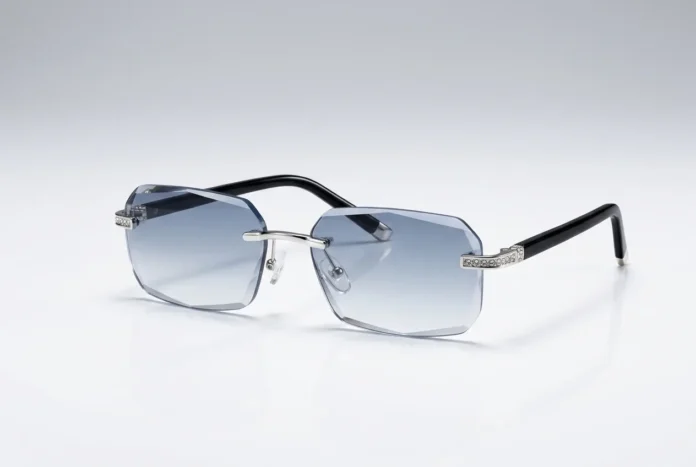

Few everyday annoyances are as universal as the pair-juggling routine that comes with ageing eyes and busy screens. Reading glasses sit on the kitchen counter, a second pair lives beside the keyboard, a third waits in the car, and sunglasses are somewhere near the front door. By the time you need the right pair, it is usually in a different room. Blue Lume Glasses are marketed as the answer to that problem: a single, lightweight, non-prescription pair that the brand says covers near and far viewing, filters blue light from screens, and darkens automatically in sunlight.
The idea is appealing, and it has produced a wave of advertising, promotional pages and online discussion. Some of that material is enthusiastic, some is openly sceptical, and much of it is written by people who are paid when a visitor clicks “buy”. That makes it hard for an ordinary shopper to know what is actually being offered, what is reasonable to expect, and what questions to ask before spending money.
This review is written to help with exactly that. It explains what Blue Lume Glasses are, what the brand claims they do, which features are genuinely standard in the eyewear category and which are harder to verify, what buyers typically look for in an all-in-one pair of glasses, and where the product’s limitations and complaints lie. It also covers the pricing tiers, the 90-day money-back guarantee and the practical details of returning an order, followed by a set of frequently asked questions and a balanced final verdict.
One note on approach: product features, pricing and guarantee terms described here are those stated by the brand unless otherwise indicated. Where a claim cannot be independently confirmed, this review says so plainly rather than repeating it as fact. Prices and offers change frequently, so always confirm the figures at checkout before you pay.
Why Consumers Are Searching About Blue Lume Glasses
Search interest in all-in-one glasses is being driven by several overlapping trends, and understanding them explains why a product like Blue Lume attracts so much attention.
The first is presbyopia, the gradual loss of close-focusing ability that affects almost everyone from their early to mid-forties onwards. It is the reason people begin holding menus at arm’s length and reaching for readers. Because it is so common, the market for inexpensive ready-made reading glasses is enormous, and any product promising to make life with presbyopia simpler gets noticed.
The second is screen time. Many adults now spend most of their working day in front of a monitor and much of their evening looking at a phone or tablet. Symptoms such as tired eyes, dryness, headaches and blurred vision after long sessions are widely reported and have given rise to a whole category of “computer glasses” and blue-light filtering lenses. Shoppers who already feel screen-related discomfort are naturally curious about any product that mentions it.
The third is convenience fatigue. Owning separate glasses for reading, for the computer and for the outdoors means buying, storing, cleaning and losing several items. A single pair that adapts to each situation addresses a real practical frustration, which is why the headline promise — one pair for near, far, screens and sunlight — resonates so strongly.
The fourth is price sensitivity. Prescription progressive lenses, which are the traditional solution for people who need several focal distances, can cost hundreds of dollars once frames, lens upgrades and coatings are added. A ready-to-wear pair priced in the range of roughly thirty-five to forty-five dollars per pair looks far more accessible, and many shoppers are curious whether it can deliver even part of the same benefit.
Finally, the product is heavily advertised online. Promotional articles, review-style landing pages and social media videos have introduced many people to the name, and a large share of those people then search for independent opinions before deciding. If you are one of them, that cautious instinct is a good one, and the sections below are designed to support it.
What Are Blue Lume Glasses
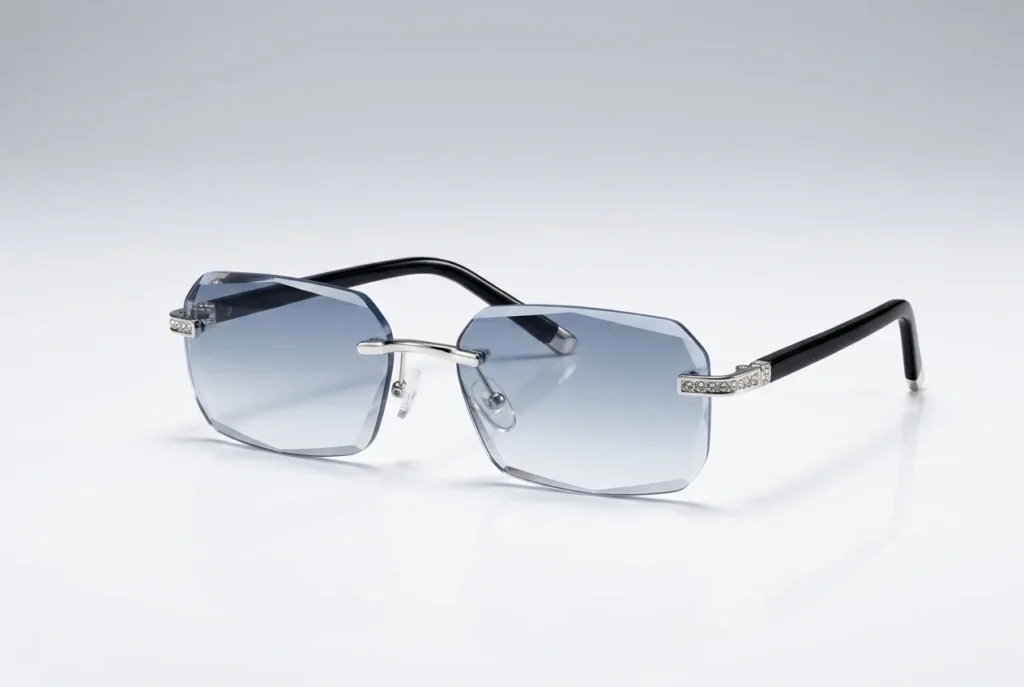
Blue Lume Glasses are non-prescription, ready-to-wear eyeglasses sold online. They are presented as a multi-purpose pair intended for people who currently own, or are tempted to buy, separate eyewear for reading, screen work and outdoor use. They are not custom-made to an individual’s eye measurements, and they are sold without an eye examination or prescription, in the same way as drugstore readers.
According to the brand, blue lume glasses combine several functions in one lightweight frame: lenses intended to help with both close and distant viewing, a blue-light filter aimed at easing screen-related eye fatigue, and photochromic (transition-style) lenses that darken outdoors and return to clear indoors. The frame is described as weighing under one ounce, which is meant to make it comfortable enough to wear throughout the day.
The product is sold directly through the brand’s own online order pages rather than through a conventional optical shop. Buyers can order a single pair or multi-pair bundles, and the purchase is covered by a 90-day money-back guarantee as advertised. A separate multi-year warranty is also mentioned in the brand’s materials, although its detailed terms are not widely published.
It is worth being clear about what Blue Lume Glasses are not. It is not a medical device, it is not a substitute for a comprehensive eye examination, and it is not a prescription product. It belongs to the general category of consumer eyewear, alongside reading glasses, blue-light glasses and photochromic sunglasses, and should be judged against that backdrop.
What Blue Lume Glasses Claims To Do
The brand’s core message is compact and easy to remember: one pair for near, far, screens and sunlight. In practical terms, the claims fall into four groups.
Near-to-far vision: Blue Lume Glasses are said to let you read small print and view road signs with the same pair, removing the need to swap between reading glasses and distance glasses.
Light-responsive lenses: the lenses are described as dark outdoors and clear indoors, so the wearer does not need a separate pair of sunglasses for everyday outings.
Blue-light filtering: the lenses are said to help ease screen-related eye fatigue during computer, phone and tablet use.
All-day comfort: the frame is described as lightweight, at under one ounce, so it can be worn for long periods without pressure on the nose or ears.
Alongside these functional claims, the brand emphasises risk-free purchasing through a 90-day money-back guarantee. Promotional material also refers to large numbers of buyers and thousands of positive reviews, which the brand presents as evidence of satisfaction.
It is useful to separate the claims into two types. Some, such as the weight of the frame or the presence of a photochromic lens, are straightforward product specifications that a buyer can check on arrival. Others, such as the ability of a single fixed lens to support clear vision at every distance, are performance claims that depend heavily on the wearer’s own eyes. The second type deserves more careful examination, and this guide returns to it in the limitations section.
Blue Lume Glasses Features
Near-to-far vision: This is the feature that makes Blue Lume Glasses different from a typical pair of readers. A standard reading lens is optimised for close work and tends to blur distant objects. The brand says its lens design lets the wearer move between reading small print and viewing distant signs. Multi-zone lens designs do exist in the eyewear world; they are the principle behind progressive lenses, in which different parts of the lens provide different focusing power. Whether a ready-made, non-prescription version can match what an individually prescribed lens achieves is the key open question for any buy
Transition-style lenses: Photochromic lenses contain light-reactive molecules that darken when exposed to ultraviolet light and fade when the light source is removed. The brand describes its lenses as dark outdoors and clear indoors. This technology is well established and widely used, so the feature is believable, though real-world performance depends on temperature, the amount of UV present and how long the wearer has been in a given environment.
Blue-light filter: The lenses are said to filter a portion of the blue-violet light emitted by digital screens. Blue-light filtering coatings and tints are common across many brands, and the feature is typically included in inexpensive computer glasses. The brand positions it as a way to help with screen-related eye fatigue.
Lightweight construction: At under one ounce, the frame is light enough that most wearers should barely notice it. Weight is a meaningful comfort factor for glasses worn from morning to evening, especially for anyone who has experienced sore noses or headaches from heavier frames.
90-day money-back guarantee: The purchase is promoted with a 90-day money-back guarantee, which is longer than the typical 30-day trial in the eyewear market. The practical conditions attached to it are discussed in the return policy section below.
What Consumers Typically Look For When Shopping For All-In-One Glasses Blue Lume
Because the original question of what shoppers look for applies to any considered purchase, it helps to translate it into the context of multi-purpose glasses. Experienced buyers tend to evaluate the following points before they commit.
Correct lens power: the most important factor in any non-prescription glasses is whether the power suits the wearer. Readers come in graded strengths, and the wrong strength causes strain rather than relief. Shoppers should check whether a product offers a choice of strengths or only a single, fixed design.
Clarity at every distance: a pair that promises several focal distances should be judged on whether text, screens and distant objects are all comfortably clear, with no swimming sensation or distortion at the edges.
Fit and comfort: frame width, nose-pad design and temple length matter enormously for all-day wear. A pair that looks good but pinches behind the ears will end up in a drawer.
Lens quality and coatings: anti-reflective and scratch-resistant coatings improve everyday usability, while poor optics can cause glare and eye fatigue.
Photochromic performance: buyers want lenses that darken quickly outdoors, clear promptly indoors, and behave sensibly in a car where windscreens block much of the UV that triggers darkening.
UV protection: whatever else a lens does, shoppers should confirm that it blocks harmful ultraviolet light, particularly when it doubles as sun protection.
Durability: hinges, lens coatings and the frame material should withstand daily handling, being dropped into bags and being cleaned repeatedly.
Price and value: buyers compare the cost with what they would spend on separate readers, computer glasses and sunglasses, and with what an optician would charge for prescription lenses.
Seller transparency: a clear company name, working contact details, a published return address and understandable policies reassure shoppers that they can resolve problems after purchase.
Return and warranty terms: the length of the trial, the condition in which items must be returned, who pays for postage and whether refunds are made in full all affect real-world risk.
Independent feedback: sensible shoppers look beyond the seller’s own testimonials for impartial reviews, complaint records and professional opinions.
Holding Blue Lume Glasses up against this checklist is a practical way to judge it. The product scores well on price, weight and the length of its advertised guarantee. It is less clear on independently demonstrated optical performance and on the detail of its after-sales terms.
Visit the official Bluelume Glasses offer page
Blue Lume Glasses Benefits
Taking the brand’s claims at face value and recognising the genuine advantages of the product category, several benefits are worth highlighting for the right kind of buyer.
Convenience: one pair that stays on your face from reading the newspaper to checking the sat-nav to stepping into the garden reduces the daily friction of swapping and searching.
Cost savings: priced from around thirty-five to forty-five dollars per pair depending on quantity, the glasses cost far less than a set of prescription lenses and may cost less than three separate specialist pairs.
Light weight: a frame under one ounce is comfortable for long wear, which matters for office workers, drivers and travellers.
Outdoor comfort: photochromic lenses reduce glare in bright conditions without requiring a separate pair of sunglasses, which is handy for quick errands.
Screen comfort: some users find that tinted or coated lenses make long hours at a monitor feel more comfortable, even though the scientific evidence for blue-light filtering as a treatment for eye strain is limited.
Low-risk trial: a 90-day money-back guarantee, if honoured on reasonable terms, gives time to try the glasses in real situations rather than a short test around the house.
These benefits are most relevant to adults who have mild, similar vision in both eyes, who do not need correction for astigmatism, and who are looking for a convenient everyday option rather than a precision medical solution.
BlueLume Glasses Limitations And Complaints
No product is right for everyone, and an honest assessment has to include the points on which Blue Lume Glasses attracts doubt. The following limitations come from the nature of non-prescription eyewear itself and from the way the product is promoted.
Non-prescription lenses cannot fit every pair of eyes: Ready-made glasses apply the same optical design to every wearer. Many people have a different prescription in each eye, have astigmatism, or need a specific correction for distance that a generic lens cannot supply. For them, a ready-to-wear pair may feel blurry, tiring or even headache-inducing, and no amount of marketing can change that. Anyone with a known prescription, a history of eye disease, or recent changes in vision should have an eye examination rather than rely on over-the-counter eyewear.
The near-to-far claim is the hardest to verify: A single fixed lens cannot simply focus at every distance. Where several distances are covered, it is usually through different zones in the lens, and the wearer has to look through the correct zone. That takes adaptation, and the field of clear vision can be narrower than with a single-purpose lens. Independent, laboratory-style testing of BlueLume’s optical performance does not appear to be widely published, so claims should be treated as the brand’s description rather than proven fact. The sweeping idea that one ready-made pair can replace every other pair of glasses should be approached with reasonable caution.
Blue-light filtering is not a proven cure for eye strain: Blue-light glasses are enormously popular, but the clinical evidence behind them is thin. A major systematic review of the available research concluded that blue-light filtering lenses did not offer a clear benefit for reducing digital eye strain or improving sleep in adults. Eye strain is more commonly linked to prolonged close focusing, reduced blinking, poor lighting and screen set-up. Taking regular breaks, adjusting screen brightness and following simple habits such as looking into the distance every twenty minutes tend to help more. A buyer who values the tint for comfort can reasonably enjoy it, but should not treat it as medical protection.
Photochromic lenses have practical quirks: Photochromic technology is real, but it is not unique to BlueLume and it has well-known limitations. Lenses may not darken fully inside a car because windscreens block much of the UV light that triggers the change. They can take a minute or more to darken and longer to clear, and the effect varies with temperature, being weaker in heat. They are rarely as dark as dedicated sunglasses, so people who are sensitive to glare or who drive in intense sun may still want a separate pair.
Marketing and review credibility: Much of the online material about Blue Lume Glasses is promotional. Several review-style pages are labelled as advertisements or function as sales funnels, display large buyer and review counts that are not independently documented, and feature named testimonials that cannot be verified. Figures such as tens of thousands of testers and thousands of verified reviews appear on seller-controlled pages rather than on independent review platforms. Sceptical commentators have criticised this style of presentation and warned shoppers not to buy solely on the strength of an advertorial. This does not prove the product is poor, but it does mean enthusiastic claims about popularity should be treated carefully.
Return process complaints: The generous 90-day headline is the feature most often examined. Commentators have noted that the seller’s own policy adds conditions that are narrower than the advertising suggests, including requirements for unused, unworn glasses in intact packaging, prior authorisation, and a return address supplied by customer service. These points are expanded in the return policy section. Prospective buyers should read them before ordering, because they affect what a “risk-free” trial really means in practice.
What Blue Lume Disclosed About Its Product
The brand’s own materials share a reasonable amount of basic information, even if they stop short of technical detail. Based on what the brand discloses, a buyer can establish the following.
The product is a one-pair solution designed for near vision, distance vision, screen use and sunlight.
It includes photochromic lenses that are dark outdoors and clear indoors.
It includes a blue-light filter described as helping ease screen-related eye fatigue.
The frame weighs under one ounce.
The purchase is covered by a 90-day money-back guarantee.
Pricing is tiered by quantity, with the cost per pair decreasing as more pairs are added to the order.
A longer-term warranty is mentioned in promotional material.
What the brand does not disclose in detail is just as important. The materials reviewed do not set out a published lens power or the range of focal distances the lens is designed to cover. They do not provide independent laboratory test results for the blue-light filter, a specification for the level of UV protection, or data on how quickly the photochromic lenses darken and clear. They also do not publish a full set of warranty terms. Third-party commentary has also pointed to a lack of independent documentation for the buyer and review counts used in promotion.
None of this means the information does not exist; it may be available from customer service or on the packaging. Shoppers who care about these details should ask directly before buying and keep a copy of the answers. A confident seller should be able to confirm UV protection, the lens specification and the warranty conditions in plain terms.
Blue Lume Return Policy: What You Should Know
The 90-day money-back guarantee is the most prominent selling point, and it is a genuinely longer trial period than most eyewear sellers offer. Understanding how it works in practice is essential, because the way a guarantee is written determines whether it protects you.
According to the seller’s published policy, the 90-day period is the starting point. Alongside it, several conditions are attached. Returned glasses are expected to be brand new, unworn and in their original intact packaging. A return typically requires prior authorisation from customer support, and the return address is supplied by the support team rather than printed on the original package. Some of the policy language also refers to a shorter window, in the region of fourteen days, for unused items, together with a hygiene-related restriction that is common in the eyewear and personal-accessory industry.
Taken together, these conditions mean that the “try for 90 days” message may not mean you can wear the glasses for three months and then return them for a full refund. If the policy requires unworn glasses, a genuine trial in everyday situations may conflict with the return conditions. That tension is the main reason independent commentators have encouraged caution.
Practical steps can reduce the risk:
Before you order, read the complete return policy on the page where you are paying, not only the headline on the sales page.
Take screenshots of the guarantee wording and the checkout total, and save your order confirmation email.
Note the name of the actual seller, the contact email and the billing descriptor that will appear on your card statement.
On arrival, inspect the packaging and test the glasses promptly, then contact support at once if you are unhappy rather than waiting until the end of the window.
Ask support in writing whether trying the glasses on counts as use, and whether you will receive a full refund including the original shipping charge.
Keep all packaging and obtain a return authorisation and return address before sending anything back.
Use a tracked shipping method and keep the receipt.
If a refund is not issued in a reasonable time, contact your card issuer to dispute the charge, and keep copies of your correspondence.
The guarantee is still a valuable feature if honoured fairly, but the precise terms matter more than the headline. A shopper who follows the steps above is in a much stronger position than one who simply relies on the number ninety.
Prices And Where To Buy Blue Lume Glasses
Blue Lume Glasses are sold through the brand’s own online order pages. They are not typically found on the shelves of high-street optical shops. As with many direct-response products, buyers should be cautious about unfamiliar third-party sellers and imitation websites, and should place their order only through the official order page they were directed to by the brand, checking the web address carefully before entering payment details.
Pricing is tiered by quantity. The figures below are the brand’s checkout prices at the time of writing, and they may change at any time.
Two pairs cost $84.42 in total, which works out to $42.21 per pair, and the brand labels this tier “Most Popular”. Three pairs cost $119.97, or $39.99 per pair, and carry the “Best Deal” label. Four pairs cost $151.08, or $37.77 per pair, while five pairs cost $177.70, bringing the price down to $35.54 per pair.
The reference prices shown by the brand are considerably higher than the checkout totals, and the percentage discounts are calculated against them. As noted above, it is wiser to focus on the actual amount you will pay and whether that represents fair value for you. Shipping charges, taxes and any pre-ticked add-ons should be reviewed on the final checkout screen.
FAQs
What are Blue Lume Glasses?
Blue Lume Glasses are non-prescription, ready-to-wear glasses marketed as a single pair for reading, distance, screen use and sunlight. They combine near-to-far lenses, transition-style photochromic lenses, a blue-light filter and a lightweight frame under one ounce.
Are Blue Lume Glasses a prescription product?
No. They are consumer eyewear sold without an eye examination. They cannot be tailored to your individual prescription, so they are not a replacement for glasses prescribed by an optometrist or ophthalmologist.
Can one pair really replace reading glasses, computer glasses and sunglasses?
It may for some people in some situations, particularly those with mild, balanced vision who want occasional convenience. For others, especially those with astigmatism, uneven prescriptions or strong glare sensitivity, separate specialised pairs may still perform better. The best test is to try the glasses in your normal routine within the return window.
Do the lenses really darken outdoors?
Photochromic lenses are an established technology, and the brand states that the lenses are dark outdoors and clear indoors. Expect variation with temperature and UV levels. They typically darken less behind a car windscreen and are not always as dark as dedicated sunglasses.
Do blue-light filtering glasses prevent eye damage?
There is no solid evidence that normal screen use damages the eyes in the way many advertisements suggest, and research reviews have not found a clear benefit of blue-light lenses for eye strain. Some people simply prefer the feel of the tint. Regular breaks, good lighting and an up-to-date prescription are more reliable ways to ease digital eye strain.
How much do BlueLume Glasses cost?
At the brand’s checkout, prices range from about $35.54 to $44.43 per pair depending on the number of pairs ordered. Two pairs cost $84.42, three cost $119.97, four cost $151.08 and five cost $177.70, according to the brand’s page at the time of writing. Always confirm current prices and shipping at checkout.
Is there a money-back guarantee?
Yes, a 90-day money-back guarantee is advertised. The seller’s policy includes conditions such as unused, unworn glasses in intact packaging and prior return authorisation, so read the full terms before ordering.
Is there a warranty?
A multi-year warranty is mentioned in promotional material, but detailed terms are not widely published. Ask customer support to confirm what it covers, how long it lasts and how a claim is made.
Where can I buy BlueLume Glasses?
They are sold through the brand’s official online order pages. Be careful with unfamiliar resellers and look-alike websites, and confirm the web address and seller details before you pay.
Who should consider Blue Lume Glasses?
Adults looking for an inexpensive, convenient, lightweight pair for everyday reading, casual screen use and quick outdoor errands, who understand that ready-made lenses are a compromise compared with prescription ones, may find them worthwhile.
Who should avoid them?
Anyone with significant or different prescriptions in each eye, astigmatism, a history of eye disease, sudden changes in vision, or demanding visual tasks such as long night drives or precision work should see an eye-care professional first.
Are the customer reviews trustworthy?
Many of the buyer counts and testimonials appear on seller-controlled pages and have not been independently verified. Treat them as marketing, and look for impartial feedback and complaint records before drawing conclusions.
Should I still get an eye exam?
Yes. Regular eye examinations detect conditions such as glaucoma, cataracts and diabetic eye disease that no pair of consumer glasses can identify. Ready-made glasses should be treated as a convenience, not as a substitute for professional care.
Final Verdict
Blue Lume Glasses are built around an attractive idea: one lightweight, affordable pair that handles reading, distance, screens and sunlight. For the person who is tired of searching for the right pair, the convenience proposition is easy to understand, and the price per pair is low compared with prescription alternatives.
On the positive side, the frame is light, the photochromic feature is based on proven technology, the pricing tiers reduce the cost per pair for those who need several, and a 90-day guarantee is advertised, which is generous by the standards of the category. For buyers with modest needs and realistic expectations, these strengths could make the glasses a handy everyday or backup option.
On the cautious side, the central near-to-far promise is the hardest to confirm, because non-prescription lenses cannot be matched to individual eyes and independent optical testing is not widely available. The blue-light feature, while popular, is not supported by strong evidence as a treatment for eye strain. Photochromic lenses have familiar limits, particularly in cars. Promotional material relies on buyer and review figures that are not independently documented, discounts are shown against inflated reference prices, and the return conditions are narrower than the headline guarantee suggests.
The sensible conclusion is neither to dismiss BlueLume nor to accept the marketing at face value. If you decide to try it, treat the purchase as an inexpensive experiment: read the complete return terms first, order only the quantity you genuinely need, document everything, test the glasses promptly and honestly in your daily routine, and use the guarantee quickly if they do not suit you. If you have a prescription, notice changes in your vision, or suffer from persistent eye strain or headaches, book an eye examination, because that will do more for your comfort and eye health than any one-size-fits-all pair.
In short: Blue Lume Glasses may offer real convenience at a modest price for the right user, but they are a compromise product rather than a replacement for tailored eyewear, and the best purchase decision is an informed one.
Is BlueLume Glasses Scam? What to Know Before You Buy
If you’ve come across Blue Lume glasses, you may be wondering whether they’re worth trying. With so many products advertised online, it’s always a good idea to take a closer look before making a decision.
BlueLume glasses are promoted as a convenient eyewear option, but before ordering, I recommend reviewing the product details, checking the available customer feedback, and understanding the seller’s return policy.
Are BlueLume glasses worth considering?
That really depends on your needs, expectations, and budget. Take a moment to explore the features, see what the offer includes, and decide whether it sounds like the right fit for you.
There’s no need to rush into a purchase. The best decision is one you feel comfortable making after reviewing the information for yourself.
Curious to learn more? You can check out the BlueLume offer, explore the details, and decide whether it’s something you’d like to try.
Disclosure: This article may contain affiliate links. If you make a purchase through one of these links, I may earn a commission at no additional cost to you. This helps support my content, and my goal is to help you make an informed decision.