
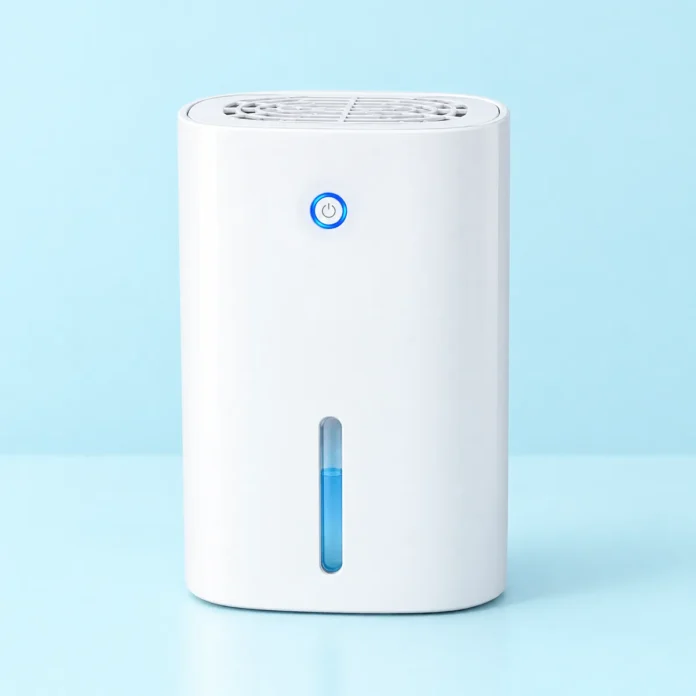

Introduction To Drydon Dehumidifier Device
Damp air rarely announces itself dramatically. It shows up as a faint mustiness when you open a wardrobe, a bedroom that never quite feels dry, or a film of condensation along a window frame on a cold morning. Because these annoyances are small and gradual, many households live with them for months before deciding to do something. When they do, a dehumidifier is usually one of the first products they consider.
Drydon dehumidifier is one of the newer names to appear in that search. It is marketed as a compact, low-power unit for small enclosed spaces rather than as a whole-house machine, and its promotional material leans heavily on simplicity: one button, a removable tank, and a modest electricity rating. Its pricing is built around multi-unit bundles, which is an unusual approach in a category where most buyers purchase a single appliance.
This review takes a close look at Drydon Dehumidifier using the information the company itself publishes and knowledge gained from general research about it. It explains what the product is, what it says it can do, how those claims should be interpreted, where the product is likely to suit a buyer and where it is likely to fall short, and what the pricing and return terms look like. The aim is not to sell the product or to dismiss it, but to help you decide whether a small, plug-in moisture collector matches the problem you actually have.
Why Are Consumers Searching About Dehumidifier Devices?
Interest in dehumidifiers is driven by a mix of comfort, health, and property concerns. Humidity is one of those household variables that people tend to ignore until it causes a visible or tangible problem, and then they want a fix quickly.
Comfort is also a reason. No doubt, air with a lot of moisture feels heavier and warmer than it really is. Bedding can feel slightly clammy, towels take longer to dry, and rooms that should be restful feel stuffy. Even when the thermostat is set sensibly, high humidity can make a space feel uncomfortable, which is why many shoppers describe their search in terms of “feeling” rather than numbers.
Protecting belongings Closets, storage rooms, and spare bedrooms often have little airflow. Clothing, shoes, leather goods, books, and stored linens can pick up a stale smell when moisture lingers. People who have had to throw away something that went musty tend to look for prevention afterward.
Condensation and surface damp is also a reason. Water droplets on windows, damp patches on cold walls, and darkened grout in the bathroom are common triggers. Shoppers often search for a dehumidifier hoping it will deal with these signs directly, although condensation can have several causes, including poor ventilation, cooking and showering without extraction, drying laundry indoors, and actual leaks.
Seasonal and lifestyle factors. Search interest typically rises in humid summers and again in cold, wet months when windows stay shut and heating is on. Renters, apartment dwellers, and people living in older buildings are especially likely to look for a plug-in solution because they cannot alter the structure of the property.
A preference for small and simple solutions. Not everyone wants a large floor-standing machine with hoses, filters, and settings menus. A growing group of shoppers wants something small enough to put on a shelf or nightstand, cheap enough to try, and simple enough to use without reading a manual. That preference is the space Drydon Dehumidifier is trying to occupy.
What Is the Drydon Dehumidifier?
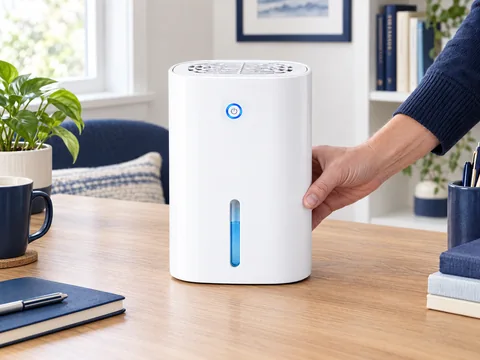
Drydon Dehumidifier is a compact, portable, lightweight and efficient dehumidifier designed for small enclosed rooms. it draws in moist air, collects the water in a removable reservoir, and stops itself when the reservoir is full. It is not presented as a heavy-duty appliance for basements or open-plan living areas. Instead, the brand positions it around everyday trouble spots: a bedroom that feels clammy, a closet that smells stale, and a bathroom that holds moisture after showers.
Drydon Dehumidifier comes with a 1,000 mL removable tank and a supplied power adapter. It is operated with a single on/off button, and a window on the front lets you see how much water has been collected. The rated power is 22.5 watts, which is very low for an electrical appliance and is a central part of the brand’s message about manageable running costs.
The company also makes a point of saying that its product operates without disposable moisture-absorber refill packs. This distinguishes it from the small crystal-based absorber boxes sold in supermarkets, which need replacing once saturated. With Drydon Dehumidifier, the routine is to empty the tank and reuse it.
Finally, Drydon Dehumidifier is sold in quantities rather than as a single item only. You can buy one unit, or several at a lower per-unit price, with the idea that each separate small space gets its own device instead of one unit being carried between rooms.
What Does Drydon Dehumidifier Claim to Do?
The marketing can be summarized as a promise of “less damp air, more comfort, and a sensible spend.” Broken down, the claims fall into several groups.
Collects excess moisture in small spaces. The unit is said to pull airborne moisture into its tank so it can be seen and emptied.
Makes daily use simple. A single button, a visible water level, and a tank that slides out are presented as the whole routine.
Keeps electricity costs low. With a rated power of 22.5 W, the company invites buyers to calculate costs using their own electricity rate.
Stops automatically when full. The unit is said to shut off and flash an indicator when the tank needs emptying.
Runs quietly. A sound level of 36 dB is listed by the manufacturer.
Offers value in multiples. Bundle pricing is promoted as a way to cover several separate rooms.
Equally important is what the company does not claim. Its material states that Drydon Dehumidifier is intended for small enclosed rooms, that it should be used at temperatures between roughly 59°F and 104°F and when relative humidity is above 45%, and that a bundle does not establish whole-home coverage. It also notes that condensation has several causes and that leaks and ventilation may need to be addressed separately. These qualifiers matter, and they are discussed further below.
Understanding the extraction figure
The manufacturer lists a maximum extraction of up to 350 mL per day, measured at 86°F and 80% relative humidity. That is a warm and very humid test environment. The company itself describes this as a stated test-condition figure rather than a promised everyday result. In ordinary bedrooms and closets, where conditions are usually cooler and less saturated, the amount collected will often be lower. The figure is best treated as an upper benchmark rather than a prediction.
Drydon Dehumidifier Features
Here is a closer look at the features the manufacturer highlights, and what each one means in practice.
Removable 1,000 mL water tank: The tank holds up to one litre. It slides out for emptying and goes back in for reuse. A larger tank means fewer trips to the sink, though it is important to understand that tank size is not the same as daily extraction capacity. The tank is simply how much it can hold before it needs attention, and how quickly it fills depends on conditions in the room.
Automatic full-tank stop: When the reservoir is full, the unit stops and an indicator flashes. This is a practical safety and convenience feature, since it prevents overflow and signals clearly when you need to act. It also means that in very humid conditions the unit may pause until you empty it.
Visible water-level window: A front window lets you check the level without removing the tank. Many people find this oddly satisfying, since it provides visible proof that the unit is collecting something. It also helps you learn how quickly your particular room produces water, which can guide how often you check it.
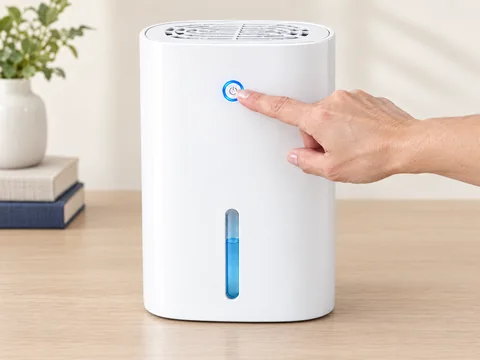
One-button operation: There are no humidity targets, timers, or modes to configure. You press once to switch on and once to switch off. This keeps things straightforward, though it also means there is no built-in humidistat for you to set a desired humidity level, at least not according to the information published by the company.
22.5 W rated power: This low power draw underpins the running-cost argument. The company provides a calculator based on a simple formula: 0.0225 kW multiplied by hours of use, your electricity rate, and the number of units. At eight hours a day and 20 cents per kWh, a single unit comes to about four cents a day, or roughly $1.08 over 30 days. Actual consumption can vary, and the estimate excludes the purchase price and other charges on your bill.
36 dB listed sound level: The manufacturer lists 36 dB, which would be comparable to a quiet whisper if measured in ideal conditions. It also acknowledges that perceived sound depends on placement, room acoustics, and measurement conditions. In a silent bedroom at night, even a quiet device may be noticeable, so it is worth testing early in your return window.
Compact, upright design: The device should be placed upright on a stable, dry surface with its air inlets and outlets clear. In a bathroom, it should sit safely away from splashes. Its small footprint is the whole point, but it also means you need to choose its position carefully so it is not blocked by curtains, clothing, or furniture.
What is in the box
Each unit is supplied with a dehumidifier, a tank, and an adapter. The setup instructions are three steps: choose a spot, insert the tank fully and connect the adapter before pressing the button, then switch off and empty the tank when it is full, keeping the surface and vents clean.
What Consumers Typically Look for When Shopping for a Dehumidifier
Understanding what shoppers care about makes it easier to judge any product fairly. Most buyers weigh the following factors, whether consciously or not.
Room size and capacity: The most important question is how big the space is and how much moisture it has. Dehumidifiers are usually rated by how much water they can remove per day under specified conditions, and the rating should be matched to the room. A unit that is too small will run constantly without making a noticeable difference, while an oversized unit wastes money and space.
Running costs: Because a dehumidifier may run for many hours, electricity use matters. Shoppers look at wattage, whether the machine switches off by itself, and whether it has an energy-saving mode. Low-wattage units appeal to those worried about their utility bill.
Noise: Bedrooms in particular demand a quiet appliance. Decibel figures are useful for comparison, but buyers also read reviews for real-world experience, since a compressor rattle or fan whine can matter more than a number on a
specification sheet: Tank size and drainage
Bigger tanks mean fewer interruptions. Some larger models offer continuous drainage through a hose, which suits basements. For small rooms, a removable tank is typically fine as long as it is easy to carry and empty without spilling.
Controls and humidity setting: Some people want a humidistat that lets them choose a target humidity, a timer, or a display of current room humidity. Others prefer minimal controls. Neither is right or wrong, but it is worth deciding in advance.
Operating conditions: Cold rooms, garages, and unheated spaces can reduce the effectiveness of some types of dehumidifier. Buyers should check the stated operating temperature range and decide whether it fits the space.
Price, warranty, and returns: Finally, buyers look at what they will pay, what guarantees accompany the purchase, and how easy it is to return the product if it does not work out. For a lesser-known brand, a clear return policy often counts for more than any feature on the list.
Drydon Dehumidifier Benefits
Judged against those criteria, there are several areas where Drydon Dehumidifier proposition is attractive, provided the buyer’s needs match the product’s intended scope.
Low entry price: At $79.95 for a single unit, Drydon Dehumidifier sits at the accessible end of the market. For someone who wants to test whether a dehumidifier helps in one bedroom or closet, it is a relatively modest outlay.
Very low electricity use: A 22.5 W rating means running costs are limited. Even running three units for eight hours a day at 20 cents per kWh would come to only about $3.24 over a month on the manufacturer’s formula. For households wary of ongoing costs, this is a genuine strength, with the caveat that actual use varies.
Easy daily routine: Press a button, watch the level, empty the tank. There is nothing to learn. This will appeal to older users, people who dislike fiddling with settings, and anyone who simply wants the device to work.
Reusable, with no refill packs: Because the supplied unit does not rely on disposable absorber packs, there is no recurring consumable to buy. The ongoing effort is emptying the tank and paying for electricity.
Safe stop when full: The automatic shutoff and flashing indicator reduce the risk of overflow and make it obvious when the unit needs attention.
Room-by-room flexibility: Many dehumidifiers are portable, but moving a heavy one between floors is a chore. Because Drydon Dehumidifier is compact and sold in multiples, a household could place one unit in each trouble spot and leave it there. The three-unit bundle, at $159.99, works out to about $53.33 per unit and saves $79.86 compared with buying three singles at full price.
Honest scoping: Although this is not a feature in the traditional sense, the company’s own material is relatively candid about limits. It tells buyers that large rooms, heavy moisture loads, cold spaces, and persistent damp may need a different solution. That kind of candour helps shoppers avoid mismatched expectations.
Drydon Dehumidifier Official Website
Drydon Dehumidifier Limitations and Complaints
No product suits every situation, and the most useful part of any review is where it stops being the right tool. The points below are drawn from the manufacturer’s own stated boundaries and from the general nature of compact dehumidifiers. This article has not relied on independent lab testing, and buyers are encouraged to read recent customer feedback from multiple sources before deciding if they are in doubt.
Small spaces only: Drydon Dehumidifier is designed for small enclosed rooms. Anyone hoping to dry out a large living room, a finished basement, or an open-plan area should expect disappointment. The company states plainly that a bundle does not create whole-home coverage, so buying several units should not be thought of as equivalent to one large machine.
The extraction figure is a ceiling: The 350 mL per day number applies at 86°F and 80% humidity. Most homes are cooler and drier than that. Shoppers who read the figure as what they will collect every day may find that real-world results are little short of that.
Temperature and humidity thresholds: The stated operating range is 59–104°F and above 45% relative humidity. In cold garages, unheated outbuildings, or already fairly dry rooms, the unit may not perform as hoped. Because there is no mention of a humidity display, users may have to buy a separate hygrometer if they want to monitor conditions precisely.
Does not fix the cause of damp: Excess moisture often has a source: a leaking pipe, rising damp, a blocked gutter, or poor ventilation. A small dehumidifier can reduce airborne moisture but cannot repair a leak or stop mold that has already taken hold. The company says as much, noting that Drydon will not solve whole-home damp or remove mold. Complaints about dehumidifiers in general frequently arise when buyers expect them to do the job of building repairs.
Basic controls. The simplicity that attracts some buyers will frustrate others. There is no published humidity setting or timer, so the unit runs until you turn it off or the tank fills. People who prefer precise control may find this limiting.
Manual emptying: The tank has to be emptied by hand. In very humid rooms it may fill frequently, and the unit will stop until you attend to it. For a bedroom or closet this is probably manageable; for a room with a heavy moisture load it could become tiresome.
Noise perception: The 36 dB figure is the manufacturer’s measurement, and the company itself notes that perceived sound varies. Light sleepers may still notice a fan or low hum.
Bundle temptation: Because per-unit prices fall as quantity rises, it is easy to buy more than you need. The five-unit option at $219.99 offers the lowest price per unit at about $44.00, but each additional unit adds electricity use and is only worthwhile if you truly have that many separate small spaces.
Brand familiarity: As a lesser-known name, Drydon has a smaller public track record than long-established appliance makers. Shoppers should check recent reviews, look for patterns in feedback about durability and customer service, and be cautious about testimonials that appear only on the seller’s own site.
What Drydon Disclosed About Its Dehumidifier
Transparency is a useful lens when evaluating a newer brand. Reading the manufacturer’s material closely, several disclosures stand out, and they generally work in the buyer’s favour.
Operating conditions: use at 59–104°F and above 45% relative humidity.
Placement: keep the unit upright, on a dry and stable surface, with vents clear. In bathrooms, keep it safely away from splashes.
Extraction: up to 350 mL per day only under 86°F and 80% relative humidity, and explicitly not a guaranteed everyday outcome.
Tank: 1,000 mL, with the full-tank stop and flashing indicator. The company does not suggest the tank size equals daily capacity.
Noise: a listed 36 dB, with a caveat that real-world perception depends on placement and room acoustics.
Running cost: a transparent formula and a worked example, noting that actual consumption can vary and that purchase price and other bill charges are excluded.
Scope: suited to small enclosed rooms; large, cold, or heavily damp spaces may need other equipment; leaks and ventilation should be dealt with separately.
Pricing: USD prices, with final price, shipping, tax, and availability confirmed at checkout. Savings are calculated against the same number of single-unit offers at $79.95.
Guarantee: a 30-day money-back guarantee, marked with an asterisk that directs buyers to the return and refund policy for instructions and eligibility.
What is less visible in the published material is detailed information such as the specific cooling or drying technology used, certification details, warranty length beyond the guarantee, or independent test results. A careful buyer may wish to ask the company directly about these points before ordering.
Drydon Dehumidifier Return Policy: What You Should Know
The headline offer is a 30-day money-back guarantee. It is repeated across the product pages and attached to every pricing option. For a buyer trying an unfamiliar brand, this is arguably the most important feature, since it gives time to test the unit in a real room and decide whether it makes a difference.
The guarantee is marked with an asterisk, and the company says buyers should review the return and refund policy for instructions and eligibility. That means the headline is not the whole story. Before purchasing, read the full terms and check the following points.
When the 30 days begin: from the order date, delivery date, or some other point.
Condition requirements: whether the unit and its packaging must be unused or in a particular condition.
Return shipping: who pays the cost, particularly if you bought a multi-unit bundle.
Partial returns: whether you can send back some units from a bundle while keeping others, and how refunds would be calculated.
Refund timing and method: how long the refund takes and whether it returns to the original payment method.
Contact process: how to request a return, and what documentation is needed.
A practical tip: start using the unit as soon as it arrives, keep a note of the delivery date, and decide within the first couple of weeks whether it is working. Check the water collected, how it sounds at night, and whether the room feels better. Waiting until day 29 leaves little room for delays. Keep the original packaging until you are confident you are keeping the product, and save your order confirmation and any correspondence.
Prices and Where to Buy the Drydon Dehumidifier
Drydon is sold through the brand’s own online store, where quantity is selected at checkout. Prices are listed in US dollars, starting from $79.95. Final price, shipping, tax, and availability are confirmed when you check out, so the figures below should be treated as a guide.
A single unit costs $79.95 and carries an estimated running cost of about $1.08 over 30 days. Buying two units brings the total to $124.99, or roughly $62.50 each, which saves $34.91 compared with two singles and adds about $2.16 to the monthly running cost. The three-unit bundle is $159.99, or about $53.33 per unit, saving $79.86 with an estimated $3.24 in running costs over 30 days.
Moving up, four units cost $189.99 (about $47.50 each), save $129.81, and run to roughly $4.32 per 30 days. The five-unit bundle is $219.99, the lowest price per unit at about $44.00, saving $179.76 with estimated running costs of $5.40 over 30 days. The running-cost estimates use the manufacturer’s formula, assuming eight hours of daily use at 20 cents per kWh across every unit, and savings are measured against buying the same number of single units at $79.95.
The company describes the three-unit bundle as its room-by-room pick, suited to a bedroom, a closet, and a bathroom. The five-unit bundle has the lowest price per unit and is aimed at buyers with more spaces or who plan to share units with family or friends. Free shipping is shown at checkout for the larger bundles, although buyers should confirm this at the time of purchase.
Because the product appears to be sold directly by the brand, it is sensible to be careful about where you buy. Use the official website rather than third-party sellers or unfamiliar listings, and check that the return terms displayed match what is stated on the brand’s site. As with any online purchase, paying by a method that offers buyer protection adds a layer of security.
Before choosing a bundle, consider honestly how many spaces really need treatment. One unit in the room that bothers you most is a low-risk way to test the product. If it works, you can expand later, though you may then pay the higher single-unit price on additional purchases.
FAQs
How much does Drydon Dehumidifier cost to run?
Based on the 22.5 W rating, one unit running for 8 hours a day at 20 cents per kWh costs about $1.08 over 30 days. Your cost depends on your local rate and how long you run it, and each additional unit adds to the total.
What does the extraction figure mean?
The manufacturer lists up to 350 mL per day at 86°F and 80% relative humidity. That is a stated test condition, not an everyday promise. In cooler or less humid rooms you should expect less.
Is the 1,000 mL tank a daily extraction rating?
No. The tank is the amount of water the unit can hold before it needs emptying. How fast it fills depends on room conditions.
What happens when the tank is full?
The unit stops automatically and an indicator flashes. Switch it off, remove the tank, empty it, and replace it fully before turning it back on.
Is Drydon Dehumidifier quiet?
The manufacturer lists a sound level of 36 dB. Perceived noise depends on where you put the unit and how quiet the room is, so test it in your own space.
Where should I use it?
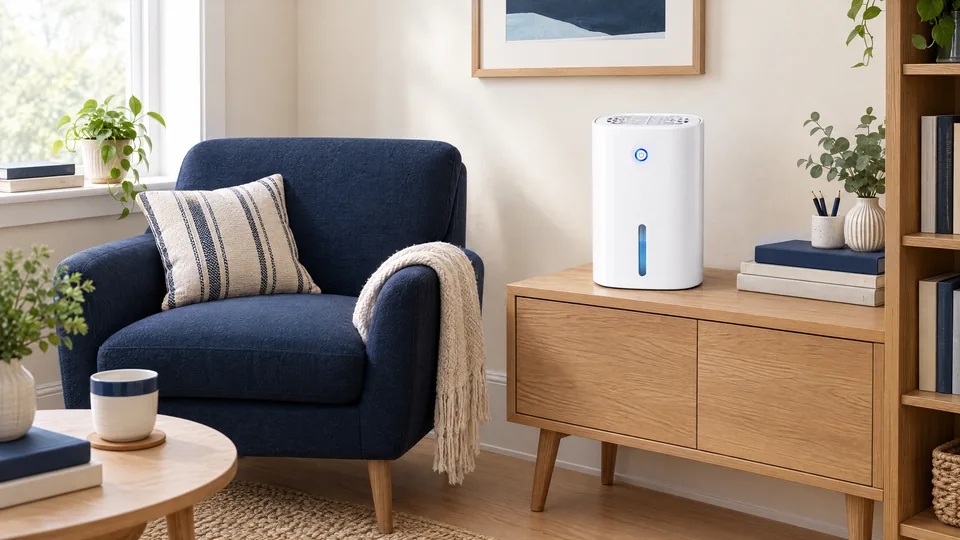
Use it in small enclosed rooms such as a bedroom, closet, or bathroom, on a stable, dry surface, upright, with vents clear. Operating conditions are 59–104°F and above 45% relative humidity. In a bathroom, keep it away from splashes.
Will it solve whole-home damp or remove mold?
No. It is designed to collect excess moisture in small spaces. Leaks, poor ventilation, and existing mold need to be addressed separately, and large or cold areas may need a different type of equipment.
Why buy several units?
If you have separate trouble spots, such as a closet and a bedroom, a unit in each may suit your routine better than carrying one between them. Bundles also lower the per-unit price, but a bundle does not equal whole-home coverage.
What comes with each unit?
Each unit includes the dehumidifier, a tank, and an adapter.
What is the return policy?
A 30-day money-back guarantee is advertised, marked with an asterisk. Review the return and refund policy for instructions and eligibility before buying.
Final Verdict
Drydon Dehumidifier is a sensible idea executed with a clear audience in mind. It targets people who have a modest, specific moisture problem in a small space and who want a cheap, simple, low-energy way to address it. For that buyer, the combination of an accessible price, a rated power of just 22.5 W, a removable 1,000 mL tank, an automatic stop, and a 30-day money-back guarantee makes a reasonable case for trying one.
The company also deserves some credit for being upfront about limits. It states that extraction figures come from warm, humid test conditions, that the product is for small enclosed rooms, that a bundle is not whole-home coverage, and that leaks and ventilation need attention in their own right. Readers who take those statements seriously are less likely to be disappointed.
On the other hand, buyers should be realistic. Drydon Dehumidifier will not rescue a large, cold, or seriously damp space, will not remove mold, and does not appear to offer fine control over humidity levels. Independent testing information is not prominent, the brand is relatively new, and the 30-day guarantee carries an asterisk that makes reading the full policy essential. It is wise to check recent reviews from independent sources before committing.
Our practical advice: start with a single unit in the one place that bothers you most, such as the bedroom or closet. Place it correctly, run it consistently, and watch the tank for a week or two. If it collects a worthwhile amount of water and the space feels better, consider adding units for other rooms through a bundle. If it does not, use the return window and look at a larger or different type of solution, and investigate the underlying cause of the damp.
Used with sensible expectations, Drydon Dehumidifier can be a tidy, affordable tool for small-space moisture control. Used as a cure-all, it is likely to underwhelm. Match the product to the problem, and it has a fair chance of earning its spot on your shelf.
Make A Purchase Today From The Official Website
Also see my honest review of HeatWell Portable Space Heater