

Introduction To Power Heat Pro (My Honest Review)
When the first cold snap arrives, a familiar problem shows up: one room in the house simply refuses to get warm. It might be the back bedroom at the end of the hallway, a basement guest room, a sunroom, or the corner of the house where the home office sits. Running the central furnace harder is an expensive way to fix a single cold spot, and traditional floor-standing space heaters bring their own annoyances, from bulky frames to tripping hazards to noisy fans.
That gap is where a product called Power Heat Pro is trying to position itself. It is marketed as a slim 1800-watt ceramic heater that can hang on a wall or sit on a desk, with a remote, a thermostat, a timer and a quiet fan. The pitch is straightforward: heat the room you are actually using, skip the installer, and avoid warming the rest of the house.
This article walks through what the manufacturer says about Power Heat Pro, what the product is designed to do, which features matter, and which questions a careful shopper should still ask before ordering. It also covers the return policy, where the heater is sold, and a handful of frequently asked questions. Throughout, it is worth remembering that nearly everything below comes from the seller’s own promotional material. Where a claim is the company’s own, it is described that way, and where information is missing, that is pointed out too.
Why Consumers Are Searching For Portable Heating Devices Like Power Heat Pro
Interest in heaters tends to rise sharply every autumn and winter, and the reasons are mostly practical. Heating is one of the largest household energy expenses in colder regions, and many households are looking for ways to keep their bills from climbing. Warming an entire house to a comfortable level just so one person can sit comfortably in one room feels wasteful, so many shoppers start looking for a more targeted option.
Uneven heating is another big driver. Older homes, additions, finished basements, converted garages and sunrooms often sit at the far end of the ductwork or have little insulation. Occupants of those rooms may find that turning up the thermostat barely changes anything. A localized heater looks like a cheaper alternative to hiring a contractor for new ducts or a ductless mini-split system, which the product’s own marketing suggests can run into several thousand dollars.
Convenience and space also matter. Many people live in rentals where installing new equipment is off the table, or where landlords restrict what can be fixed to walls. Others simply do not want another box on the floor. Households with toddlers or pets, in particular, often rule out floor-level heaters because of tip-over and contact concerns.
Comfort and health considerations also play a part. Cold bedrooms can make it harder to fall asleep, and sitting in a chilly home office with stiff fingers makes it hard to concentrate. Many people want a way to take the edge off a cold room quickly, on demand, without waiting for an entire heating system to catch up. A heater that responds within minutes and can be switched off by a timer fits neatly into that need.
Finally, shoppers are increasingly comparison-minded. They search for reviews, complaints and return policies before spending money, especially on products advertised heavily online with big discounts. That is why searches around Power Heat Pro often combine the product name with words like “reviews,” “does it work,” “scam” and “where to buy.” People want to know whether the marketing matches reality, and that is the question this guide tries to help answer.
See my review on Warmmio Portable Heater
What Is Power Heat Pro?
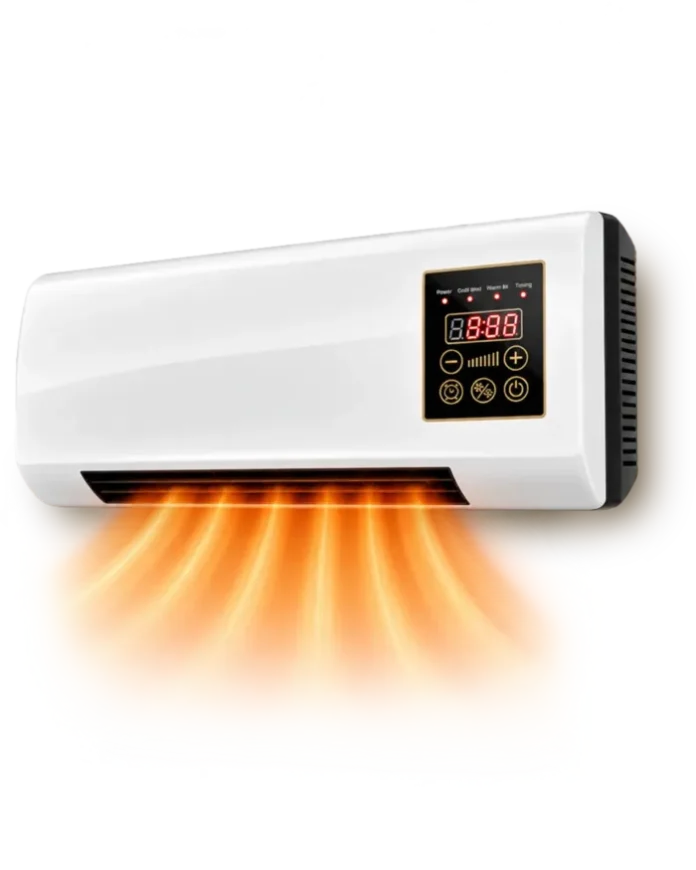
Power Heat Pro is a compact electric heater built around PTC ceramic heating elements. PTC stands for positive temperature coefficient, a type of ceramic material whose electrical resistance rises as it warms, which means it tends to limit its own temperature. Ceramic heaters of this kind are common in the portable heater market, and they are generally known for heating up quickly.
What sets this model apart in its marketing is the form factor. Rather than being a boxy unit that lives on the floor, it is described as a slim body that mounts on a wall using an included bracket, or alternatively rests on a flat surface such as a desk or countertop. It plugs into an ordinary household outlet, so there is no wiring, ductwork or outdoor unit involved.
The manufacturer rates the unit at 1800 watts, which is the typical ceiling for a plug-in heater on a standard household circuit. It uses a built-in fan to push warmed air across the room. Controls include a temperature setting, a mode button that cycles between fan only, low heat and high heat, a timer that works in one-hour increments, and a remote control.
The company brands the heating approach as TurboWarm Technology. In plain language, that label refers to the combination of fast-heating ceramic plates and a fan-forced airflow system. It is a marketing name rather than a separate engineering standard, so shoppers should treat it as a description of the unit’s ceramic-plus-fan design rather than as an independent technical certification.
In everyday terms, a ceramic heater like this works by passing electricity through ceramic plates, which warm up and transfer heat to the air flowing past them. The fan then moves that air into the room. Because the thermostat tells the heating element when to ease off, the unit is intended to settle around the temperature you choose rather than blasting continuously.
The overall concept can be summed up as one heater, one room, no installation. It is meant for supplemental warmth in a single space, not as a replacement for a home’s central heating system.
What Power Heat Pro Claims to Do
The seller makes a series of specific promises about how the heater performs. Understanding them helps separate the marketing narrative from what can actually be verified at home.
Fast warmth: The company says the ceramic plates start heating the moment the unit is switched on, and that a cold room begins to feel warmer within minutes. A figure quoted in its materials says 96 percent of verified users noticed warmth within the first 15 minutes.
Room-focused heating: The central idea is that you warm only the space you are using, so the furnace can be turned down a few degrees while the occupied room stays comfortable.
Lower heating costs: The brand suggests that heating one room instead of the whole house can reduce winter bills. Customer comments on its page describe lower bills, though these are anecdotes rather than measured test results.
Quiet operation: The heater is described as quiet enough for bedrooms and offices, so it should not disrupt sleep or phone calls.
Cool-touch exterior: The housing is said to remain comfortable to touch while it runs, which supports the claim that it is a better fit for homes with children and pets.
Simple setup: The company says it can be mounted or placed in minutes with no installer.
Comparison to older heaters: The brand claims 91 percent of users say it heats faster than the heater they used before, and 98 percent would recommend it. It also positions itself as superior to coil heaters and slow oil radiators.
These are the manufacturer’s statements. The percentages come from an unspecified group the company calls verified users, and the page does not explain how many people were surveyed or how the survey was conducted. Shoppers should read them as promotional claims rather than laboratory findings.
Power Heat Pro Features
Looking past the slogans, the product’s feature list is fairly clear. These are the elements the company highlights most often.
1800W PTC ceramic heating: Ceramic plates are the heart of the unit. They warm up quickly and are designed to regulate their own temperature, which is a common reason ceramic is chosen for small heaters.
Fan-forced airflow: A built-in fan moves heated air outward so warmth reaches more of the room instead of staying in a hot zone right in front of the unit. The fan can also run on its own, which gives you a basic air-circulation option when heat is not needed.
Adjustable thermostat: A temperature button lets the user set a target, after which the heater is meant to hold the room near that level instead of running flat out.
Three modes: One button cycles between Fan, Low Heat and High Heat. Low Heat is pitched at bedrooms and overnight use, while High Heat is for rapid warm-ups.
Wall-mounted or mobile: A bracket is included for wall mounting. Alternatively, the unit can rest on a desk or countertop. The wall option keeps it off the floor, which saves space and reduces the chance of it being knocked over.
Remote control: A remote handles power, heat and fan, so you can switch it on from a sofa or bed. The company also describes pre-warming a room before you walk in.
Timer with auto-off: The timer moves in one-hour steps and shuts the unit off by itself. This is useful for falling asleep in a warm room without leaving a heater running all night.
Quiet operation: The brand emphasizes low noise as a selling point for bedrooms and workspaces.
Compact, cool-touch design: The slim profile is meant to fit above a bed or desk, and the outer shell is described as staying comfortable to touch.
It is worth noting that a heater being cool to the touch on its exterior does not mean the air coming out of it is cool. The outlet area on any heater will be warm or hot while operating, and sensible clearance around the unit still matters.
Visit Power Heat Pro Official Website
What Consumers Typically Look for When Shopping for Heating Devices
Before judging any specific model, it helps to know what experienced shoppers usually put on their checklist. A heater can look impressive in photos and still be a poor match for a particular home.
Room size and heat output. Wattage is a rough guide to how much heat a unit can produce. A common rule of thumb is that a plug-in heater suits a small to medium room, and a very large or drafty space may overwhelm it. Buyers should compare the heater’s rating with the square footage they need to warm.
Safety features: Consumers look for tip-over protection, overheat protection, and independent safety certification from a recognized laboratory. These are standard things to confirm for any electric heater, whatever the brand.
Noise level: A noisy heater is a deal-breaker in a bedroom or office. Fan-forced models can be louder than silent radiant or oil-filled options, so claims about quiet running are worth testing during any trial period.
Control and convenience: Thermostats, timers, remotes and multiple heat settings make a heater easier to live with and can prevent wasted energy.
Placement flexibility: Some shoppers want a floor model they can move around, while others prefer a wall-mounted design that keeps walkways clear.
Households with children or pets. Exterior temperature, stability and placement height become major factors.
Running cost: Electric resistance heating converts nearly all the electricity it uses into heat, so a heater’s running cost depends mainly on its wattage, how long it runs and local electricity rates. Heating a single room can still be cheaper than heating a whole house, but only if the central thermostat is actually turned down.
Price, warranty and returns: A fair price, a clear warranty and an easy return process matter most when buying from a brand the shopper does not already know.
Measured against that list, Power Heat Pro addresses placement, convenience, noise and kid-friendliness in its marketing. The information gaps lie mostly in the safety certification, coverage area and warranty details, which are covered in later sections.
Power Heat Pro Benefits
If the heater performs as described, there are several benefits that would be meaningful for the right household.
The first is speed. Ceramic elements reach working temperature quickly, so a chilly room should start to feel better soon after the unit is switched on rather than after a long wait. For people who dread stepping into a cold bedroom or office, that quick response is probably the most noticeable advantage.
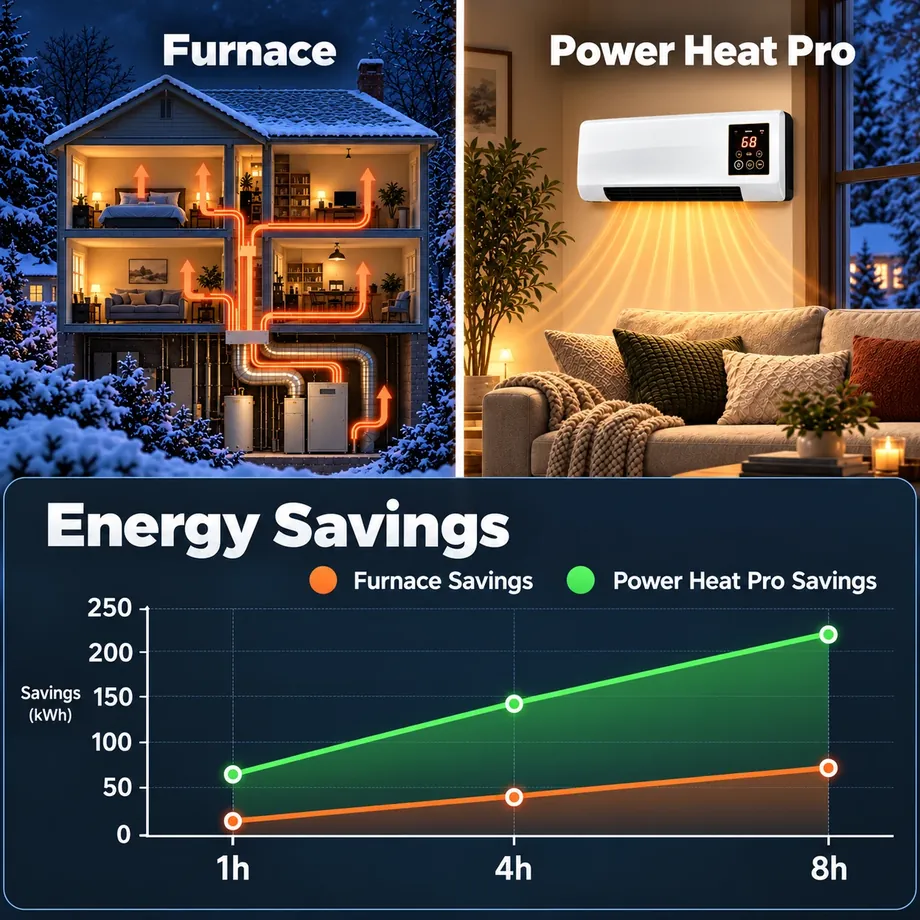
The second is targeted heating. The product encourages a simple habit change: turn the central thermostat down a few degrees and let the heater carry the room you are in. Because empty rooms are not being heated to the same level, total energy use may fall. The actual savings depend on the home’s insulation, local rates and how disciplined the household is about the thermostat, so any specific dollar figure should be treated cautiously.
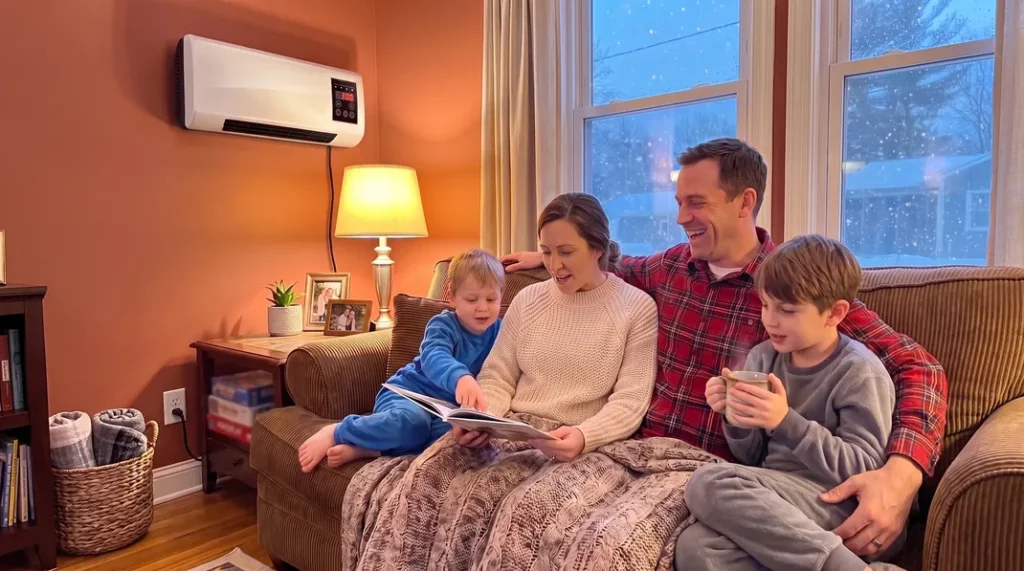
The third is placement. A wall-mounted unit frees up floor space, keeps the heater away from curious children and pets, and avoids the extension-cord clutter that often goes with floor heaters. For small rooms, home offices and kids’ playrooms, that difference is real.
The fourth is ease of control. A remote, a temperature setting and a timer make everyday use simple. The auto-off timer is especially helpful in bedrooms because it prevents the heater from running all night.
The fifth is flexibility. The same unit can be hung in a living room one season and set on a desk the next. It also suits rooms that are hard to heat from the central system, such as sunrooms, basements, garages used as workshops, and guest rooms.
Lastly, there is the purchase risk. The seller attaches a 30-day money-back guarantee, which lowers the cost of finding out whether the heater works well in your own space. For a buyer on a tight budget, that safety net is a meaningful part of the offer.
Power Heat Pro Limitations and Complaints
No heater is perfect, and the way Power Heat Pro is sold makes it especially important to look at what might go wrong. It should be said up front that the source material provided for this article contains only favorable testimonials and no negative customer reviews. Because of that, this section does not report specific complaints from named buyers. Instead, it outlines realistic limitations and the sort of concerns that commonly come up with products of this type.
It is supplemental, not a whole-house solution. A single 1800-watt plug-in unit warms one room. It will not replace a furnace, and it will not help rooms it is not in.
Room size limits. A large open-plan space, a high-ceilinged room or a poorly insulated area may not warm as quickly as the marketing suggests.
Marketing-driven numbers. The satisfaction percentages, the 15-minute warm-up figure and the low refund rate are all supplied by the seller without published methodology. They should not be treated as independent evidence.
Savings are not guaranteed. Electric resistance heating is not especially cheap per unit of heat. If the central thermostat is left unchanged, adding a heater will increase, not reduce, total energy use.
Wall mounting is not for everyone. Renters whose landlords forbid drilling or hanging items may only be able to use the desktop option. The company’s own material mentions a customer who returned the unit for exactly that reason.
Fan noise. The product is described as whisper-quiet, but any fan-forced heater makes some sound. Sensitive sleepers may notice it, especially on the High Heat setting.
Outlet and cord considerations. A heater drawing up to 1800 watts should generally be plugged directly into a wall outlet rather than a light-duty extension cord or a shared power strip. Mounting on a wall may also limit where the cord can run.
Marketplace confusion. The company warns that lookalike products exist elsewhere. Buyers who purchase from unofficial listings may receive a different product and lose refund eligibility.
Before ordering, a careful shopper can search independent review sites and forums for firsthand experiences, check payment-card statements after purchase, and read all the terms on the checkout page. Honest feedback from people who have lived with the heater for an entire winter is more informative than any promotional page.
What Power Heat Pro Disclosed About Its Product
Here is a plain summary of the information the company actually provides, followed by what it leaves out.
Disclosed: the heater is rated at 1800 watts and uses PTC ceramic plates with a fan. It has a temperature control and a mode button for Fan, Low Heat and High Heat. A timer works in one-hour steps, and a remote control is included, as is a wall bracket. It can be mounted or placed on a desk or counter, and it runs from a standard outlet. The exterior is described as cool to the touch, and operation is described as quiet.
Disclosed about the business: the company says it offers a 30-day money-back guarantee, that its refund rate is 0.04 percent across more than 21,000 homes over 14 months, and that genuine units are sold only through its official website. It says third-party and marketplace listings are not eligible for the guarantee. The promotion on the page shows a 70 percent discount, a ship date of October 21 and a low-stock notice.
Power Heat Pro Return Policy: What You Should Know
Because the return policy is such a central part of the sales pitch, it deserves a close read.
The company advertises a 30-day money-back guarantee. According to its description, if the buyer is not satisfied, the package can be returned within 30 days for a refund. The company describes this as a no-questions-asked process, and one of its narrative sections says there are no forms and no store credit involved.
A few practical points follow from that description. The first is timing. The 30-day period presumably starts at a specific point, such as the purchase date or the delivery date, and the supplied material does not say which. Buyers should confirm that detail before ordering, because shipping can eat into the window.
The second is where you buy. The company states that only its official website carries the genuine product and the guarantee, and that purchases through Amazon and other marketplaces are not eligible. If you are tempted by a lower price elsewhere, it will not be covered by this policy.
The third is the logistics of returning the product. Many online sellers require that items be sent back in their original packaging, may ask for a return authorization number, and may deduct shipping costs or restocking fees. The supplied material does not say whether any of that applies here. Keep the box and packing materials until you are sure you want to keep the heater, and save your order confirmation and tracking numbers.
The fourth is how the refund arrives. The company says refunds are full, but it does not state how long they take to process. If a refund is slow, a buyer can contact their card issuer for help.
Finally, the company shares a claimed refund rate of 0.04 percent. That number is only the seller’s claim, so it should not be treated as proof that the heater works for everyone. The more reliable comfort is simply that a stated guarantee exists, and that you should test the heater promptly, in the room you actually need to warm, so that you have time to return it if it falls short.
Prices and Where to Buy Power Heat Pro
The promotional page advertises an offer of up to 70 percent off, with orders shipping by October 21 and stock levels listed as low. The actual dollar price is not shown in the supplied material, so the current cost has to be checked on the official checkout page. Readers should also check what shipping and any taxes add to the total.
It is common for online heater promotions to display a steep percentage discount against a high original price. That is not unusual, and it is not necessarily misleading, but it does mean the discount percentage alone says little about whether the final price is a good deal. A better test is to compare the actual total price with other ceramic wall or desktop heaters of similar wattage and features from established retailers.
As for where to buy, the company is quite clear. It says to order directly from the official website and to avoid Amazon and other marketplace listings. Its reasoning is that lookalike wall heaters may appear identical in photographs but are different products, and that only the official site sells the genuine Power Heat Pro and honors the 30-day guarantee.
Shoppers should be careful about that advice from both directions. On one hand, buying from the official source is the only way to be covered by the stated money-back policy. On the other hand, purchasing from a lesser-known website carries its own risks, so it is wise to confirm you are on the correct site, check that the checkout page is secure, read the terms, and use a payment method with strong buyer protection. Be cautious of urgent countdowns and low-stock banners, since they are designed to encourage quick decisions. A short pause to read the terms rarely costs anything.
Visit Power Heat Pro Official Website
FAQs
Is Power Heat Pro a replacement for my furnace?
No. It is designed as a supplemental heater for one room. Its advantage is that it lets you keep the central thermostat lower while still keeping the room you are using comfortable.
How much power does it use?
The heater is rated at 1800 watts, the typical maximum for a plug-in heater on a standard household circuit. Actual electricity use depends on the mode you choose, how often the thermostat cycles it, and how many hours it runs.
Does it need to be installed by a professional?
According to the company, no. It hangs on an included bracket or sits on a desk or counter, and it plugs into a regular outlet. If you mount it on a wall, make sure the bracket is secured properly to the wall material you have.
Can I use it without mounting it on the wall?
Yes. The company says it can be placed on a flat desk or countertop, which suits renters or anyone who does not want to drill.
Is it safe around children and pets?
The seller describes a cool-touch exterior and a wall-mounted position out of reach as advantages for families. Even so, any electric heater needs sensible clearance, and the air outlet will be warm. Ask the seller about built-in safety features and certifications, and supervise young children and animals around any heater.
Is it quiet enough for a bedroom?
The company says so, and describes the unit as whisper-quiet. Fan-forced heaters always make some sound, so test it at night during the guarantee period.
How do the controls work?
The mode button cycles between Fan, Low Heat and High Heat. A temperature button sets the target. A timer works in one-hour steps and turns the unit off automatically, and the remote covers the main functions.
Will it really lower my heating bill?
It might, but only if you turn the central thermostat down and use the heater just in the room you occupy. The brand’s savings claims come from customer comments, not independent tests, so results will vary.
Where should I buy it?
The company says to use its official website and avoid marketplace listings, which it says are not the genuine product and are not eligible for the guarantee.
What if it does not work for me?
The company offers a 30-day money-back guarantee. Check the exact terms at checkout, keep your packaging and order records, and test the heater soon after it arrives.
Final Verdict
Power Heat Pro addresses a real and common problem: a room that stays cold while the rest of the house is fine, or a household that does not want to pay to warm empty space. On paper, the design makes sense. Ceramic heating is known for quick warm-ups, a fan helps spread the heat, and a wall-mounted or desktop heater keeps the floor clear and out of the way of children and pets. The thermostat, timer and remote add everyday convenience, and the 30-day guarantee gives buyers a way to test the claims at limited risk.
At the same time, readers should keep a clear head. The evidence supplied for the product is promotional, including the satisfaction figures, the refund rate and the testimonials. Key facts a cautious buyer would want, such as the real price, room-size guidance, safety certification and warranty, are missing. The heater is also, by its nature, a plug-in electric unit rated at 1800 watts, which means it suits small to medium rooms and will not rival a central heating system. Any energy savings depend on changing how you use your thermostat.
So who is it for? It looks best suited to people who want to warm a single bedroom, office, sunroom, basement or guest room, who like the idea of a quiet, remote-controlled unit off the floor, and who are comfortable relying on a return guarantee if it disappoints.
It is less suited to people who need to heat a large open space, who want independent proof of performance before buying, or who are not willing to buy from the company’s own website.
It also helps to think about where the heater would live in your own home before buying. Picture the exact wall or desk, the nearest outlet, and how far the cord has to reach. Consider whether furniture, curtains or bedding will sit close to the unit, because every electric heater needs open space around it. Thinking through those practical details now can prevent frustration later and will give you a clearer sense of whether the wall-mounted format genuinely suits your room.
The sensible approach is to treat it as a low-risk trial rather than a guaranteed fix. Confirm the details at checkout, buy only from the official source, test the heater promptly in the room that needs it, and use the return window if it does not live up to the promise. If it does keep that one stubborn room comfortable, it could be a practical addition to your winter setup.