
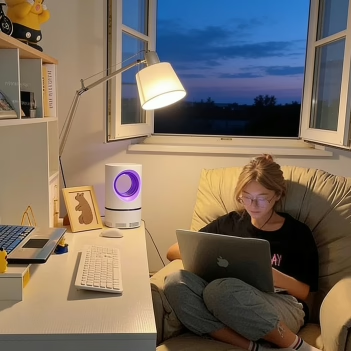

Anyone who has lain awake in a dark bedroom listening to that thin, rising whine near their ear knows how quickly a mosquito can ruin a night. Sprays smell, coils fill the room with smoke, and plug-in refills keep running out. So when a small, quiet lamp promises to pull mosquitoes out of the air while you sleep, with nothing to inhale and nothing to refill, it is no surprise that people stop and take a look.
ZapiTrap is one of the newer products in that category. It is marketed as an overnight bug lamp that combines a violet ultraviolet glow with a gentle suction fan, collecting insects in a tray rather than frying them on a charged grid. The brand says it has more than eight thousand customers and presents it as a chemical-free, family-friendly answer to bites.
This review goes through what ZapiTrap is, how the technology is supposed to work, what the listed features really mean in day-to-day use, and where the marketing deserves a little skepticism. We also compare it with two other products that come up in the same searches, RepelMate and Zappify, so you can see where each one fits. By the end you should know whether ZapiTrap suits your situation or whether another approach makes more sense.
Why Are People Searching for ZapiTrap?
Interest in this product comes from a handful of overlapping frustrations. The first is simple: bites are annoying, and in many regions they are also a health concern. Mosquito-borne illnesses such as West Nile virus and Zika are regularly in the news, and that pushes people to look for ways to cut down on bites at home rather than only when they travel.
The second is fatigue with the usual toolkit. Aerosol sprays leave a film on skin and a smell in the air. Citronella candles and coils only help in a small radius and add smoke. Electric plug-in diffusers need replacement cartridges. A device that runs on a USB cable and asks for nothing more than an occasional tray emptying sounds refreshingly low-maintenance.
Third, there is the sleep angle. Most people are bitten while they are least able to defend themselves. A product that works through the night, quietly, and without a buzzing or crackling grid appeals to light sleepers, parents of young children, and anyone sharing a room with pets.
Finally, social proof and advertising are doing their part. ZapiTrap is promoted heavily online, which means plenty of shoppers encounter the name and then search for ZapiTrap reviews before buying. That is a sensible instinct, because products in this category vary widely in how well they live up to their descriptions.
What Is ZapiTrap?
ZapiTrap is a compact, USB-powered insect trap built to look like a small modern lamp. It stands roughly 8.4 inches tall and about 4.7 inches wide, weighs around 11 ounces, and is designed to sit comfortably on a nightstand, desk, or shelf rather than announcing itself as a gadget.
Rather than relying on sprays or electric shocks, ZapiTrap uses two physical mechanisms working together. A ring of ultraviolet light in the 395 to 400 nanometer range, which the brand calls LureWave, draws flying insects toward the lamp. A concealed fan, marketed as SilentDraw, then creates a downward airflow that pulls those insects into a collection tray at the base. Once inside, the insects cannot easily escape and eventually die.
The brand lists a number of target pests beyond mosquitoes, including gnats, fruit flies, moths, and other small flying insects. It also emphasizes that the unit is chemical-free and odorless, and that it can run all night on a standard USB adapter, power bank, or laptop port.
In short, ZapiTrap sits in the category of light-and-fan traps. It is not a repellent, it does not release a scent, and it is not a bug zapper in the traditional sense. Understanding that distinction matters, because it affects both what the product can realistically do and how you should place it in a room.
How Does ZapiTrap Work?
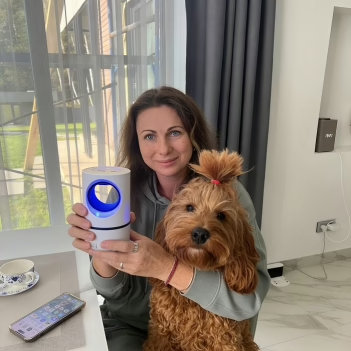
The operating idea is straightforward. Many nocturnal insects are attracted to ultraviolet and near-ultraviolet light, a behavior that has been exploited for decades in light traps used by hobbyists and researchers alike. ZapiTrap tunes its light to the violet end of the spectrum, which looks like a faint purple glow to people but stands out strongly in a dark room to insects.
Step one: the lure
When the room is dark, the UV glow becomes the most prominent light source. Insects that orient toward light begin moving in its direction. This is why the instructions recommend switching off other lights and placing the lamp where you tend to get bitten. A bright room weakens the effect because the trap has to compete with other light sources.
Step two: the draw
As insects approach, the recessed fan generates a downward draft. Because small flying insects are light and have limited ability to fight a steady airflow at close range, they get pulled off their path and into the chamber below. The brand stresses that there is no grid and no spark, so the process is quiet and there is nothing that pops or crackles.
Step three: the tray
Captured insects collect in a slide-out tray. In the morning you pull it out, tip the contents into the trash, and slide it back. The listing says this takes about ten seconds and that you never have to touch the insects.
Powering and placing it
The lamp runs from a single USB cable, so it works with a phone charger, a power bank, a laptop, or even an RV battery. For placement, the practical advice is to put it a few feet from the bed, at roughly table height, away from windows or lamps that compete with it, and with a clear space around the intake so airflow is not blocked. Treat the first few nights as an experiment and move it if the tray stays empty.
Tips for getting the best results
Because ZapiTrap depends on contrast between its glow and its surroundings, small setup choices can make a noticeable difference. These habits are worth building from the first night:
Darken the room: Close curtains, switch off lamps, and cover bright standby lights on electronics so the violet glow is the most attractive light in the space.
Keep it off the floor and away from walls: A position on a nightstand or dresser, with open space around the intake, lets air move freely and gives insects a clear approach.
Close the gaps: If windows or doors let in a steady stream of insects, a screen or a closed window will help the lamp keep up.
Empty the tray daily: A clean tray keeps airflow unobstructed and avoids any smell from accumulated insects.
Be consistent: Running it every night, rather than occasionally, is what gradually lowers the population in a room.
Does ZapiTrap Actually Work?
The honest answer is that it can help, but it is unlikely to be a magic wand. The design is built on real insect behavior, yet results depend heavily on the room, the species, and how you use it.
What supports the idea
Many flying insects do respond to ultraviolet light, and a gentle airflow is an effective way to hold small insects once they are close. Gnats, fruit flies, moths, and other small flyers are generally good candidates for this kind of trap. The no-grid design also means it can run silently overnight, which is a genuine practical advantage over traditional zappers.
Where expectations should be tempered
Mosquitoes are a tougher target than many other insects. Female mosquitoes, the ones that bite, hunt largely by sensing the carbon dioxide in your breath, body heat, and skin odors. Light alone is a weaker attractant for them than it is for moths. Independent testing of light-only mosquito traps has often shown modest results compared with traps that also release carbon dioxide or heat. That does not mean a UV and fan lamp is useless, only that you should not assume it will clear a room of mosquitoes in a single night.
Another factor is competition. If you are in the room, you are a far more powerful attractant than a small lamp. A mosquito already close to you may keep heading for you rather than for the light. The trap tends to work better when it reduces the overall number of insects in a space over several nights, rather than intercepting each one the moment it arrives.
What a realistic result looks like
A tray that collects a visible number of small insects within the first few nights, especially if the room has gnats or flies.
A gradual decline in biting insects over a week or so in a closed or semi-closed bedroom.
Less benefit if windows are open, the room is bright, or a large outdoor population keeps getting in.
The brand’s own FAQ acknowledges that some users will find the tray barely catching anything at first, and it includes a troubleshooting question on exactly that point. That is a healthy sign, since it suggests the company recognizes placement and darkness affect results. As a rule, if you give the lamp a darkened room, a sensible position, and a week of consistent use, you will have a fair read on whether it suits your space.
Safety and household considerations
Because the design has no electrified grid, it avoids one of the common worries about traditional zappers, namely curious fingers or noses near a live wire. The brand also stresses that it releases nothing into the air. Even so, sensible habits apply: keep the cable out of reach of toddlers and pets who might chew it, use a reputable power adapter, and do not cover the lamp or block its vents. If anyone in the home has a specific health concern, such as asthma or a chemical sensitivity, the absence of sprays and fumes is a clear point in the lamp’s favor.
How it fits into a bigger plan
It helps to think of ZapiTrap as one layer rather than the whole defense. Public health agencies consistently recommend combining several measures: emptying containers that hold standing water, keeping screens in good repair, wearing protective clothing outdoors, and using an approved repellent where needed. A trap fits neatly into that approach by working quietly in the background indoors while the other measures handle the rest of your day.
ZapiTrap Features and Specifications
Here is a plain-language summary of what the listing describes, with a short note on why each item matters in practice.
The light ring is the part of the lamp that does the attracting. The brand calls it LureWave and tunes it to 395 to 400 nanometers, a violet range that many night-flying insects respond to and that looks like only a dim glow to people. Working alongside it is a recessed fan the brand calls SilentDraw, which pulls insects downward without any grid or spark, so the lamp stays quiet. Whatever gets drawn in ends up in a slide-out collection tray, which can be emptied without handling the insects or taking the lamp apart.
Practicalities are simple. A single USB cable powers the whole unit, so it works with a wall adapter, a power bank, a laptop, or an RV battery. It measures about 4.7 by 8.4 inches and weighs around 11 ounces, which makes it easy to carry from room to room, and its modern lamp styling lets it blend in on a nightstand or desk. The brand stresses that nothing is sprayed or released into the air, and it lists mosquitoes, gnats, fruit flies, moths, and other small flying insects as targets.
Two points deserve extra comment. First, the all-USB approach is a real convenience, but it also means output depends on the adapter or battery you use, so a decent power source is worth having. Second, the brand mentions 360-degree coverage and whole-room reach. Those are marketing phrases rather than measured specifications, since no coverage area in square feet or meters is published. Treat them as a general description of the lamp’s all-round intake rather than a guarantee for a particular room size.
ZapiTrap Pros and Cons
The strengths are mostly about convenience and comfort. The lamp runs silently, which suits light sleepers and shared rooms, and it produces no chemicals, smoke, or smell. Emptying the tray is quick and requires no contact with insects. Because it runs on USB power it is portable and flexible, and as a one-time purchase it needs no refills. It also catches gnats, fruit flies, and moths, not just mosquitoes, and its compact, tidy design is easy to live with.
The weaknesses come mainly from mosquito biology and missing information. Mosquitoes are not strongly drawn to light alone, so results may be modest, and the lack of a published coverage area means the room-size claims cannot be verified. The lamp works best in a dark room and loses effectiveness when other lights compete with it. It needs a nearby power source for overnight use, it does not protect you once you are away from it, so it is no substitute for repellent outdoors, and the full price and return terms still need to be confirmed on the official page.
The balance is fairly typical for this kind of product. The strengths are convenience, safety, and quiet operation. The weaknesses come from the realities of mosquito biology and the lack of detailed published performance data.
Is ZapiTrap Legit or a Scam?
A fair way to answer this is to separate two questions: is the product real, and does it deliver what a reasonable buyer would expect?
On the first, ZapiTrap appears to be a real physical product with a clear description, defined dimensions, a power spec, a stated UV wavelength, and a practical FAQ. Those are signs of a genuine item rather than a vague listing. The brand also describes worldwide shipping and says the product is in stock, and it publishes a contact section.
On the second, the answer depends on how closely your expectations match the technology. If you expect a quiet lamp that gradually reduces small flying insects in a dark room, that is a reasonable expectation. If you expect it to eliminate every mosquito from a large or open space, that is more than the physics can support, and you could be disappointed.
Things to watch for
Customer counts and similar figures on a brand’s own page are self-reported. Look for independent reviews as well.
Some phrases, such as “complete bug elimination” and “kills all flying bugs,” are enthusiastic marketing language rather than measurable claims.
Confirm the refund policy, shipping times, and company contact details on the official checkout page before you pay.
Use a payment method with buyer protection, such as a credit card or a trusted payment service.
Our overall view is that ZapiTrap does not look like an outright scam, but it is a heavily marketed product whose strongest statements should be read as advertising. Buy it with sensible expectations, protect yourself with a card that offers dispute rights, and use the return window if it does not suit you.
Visit ZapiTrap Mosquito Lamp Official Product Page
ZapiTrap vs. Other Mosquito Control Methods
To put ZapiTrap in context, it helps to compare it with two other products that appear in the same searches. They are very different in how they work, which is exactly why the comparison is useful.
ZapiTrap vs. RepelMate
RepelMate is a repellent, not a trap. It is a peel-and-stick citronella patch that releases oil slowly from tiny capsules and is said to last up to 72 hours per patch. Its aim is to mask your scent and discourage mosquitoes from approaching you at all. The brand states it uses no DEET or synthetic pesticides, that each box contains 78 patches across 13 sheets, and that patches can be placed on clothing, hats, strollers, bags, pet collars, chairs, tents, and windows.
The two products solve different problems. ZapiTrap tries to remove insects from a room, so it makes sense for bedrooms and other enclosed spaces. RepelMate travels with you, so it makes more sense for walks, camping, picnics, and children’s activities. RepelMate does require ongoing purchases of patches, whereas ZapiTrap is a one-time device. On the other hand, RepelMate gives protection on the move, which a plug-in lamp cannot. Many households could reasonably use both: a lamp at night and patches outdoors.
As with ZapiTrap, a note of caution applies. Claims such as repelling nearly all mosquitoes are the brand’s statements, and citronella-based products generally have a mixed record in independent testing compared with repellents containing ingredients like DEET or picaridin. Judge it on your own experience and the refund terms.
ZapiTrap vs. Zappify 2.0
Zappify 2.0 is a rechargeable electric zapper. It uses a three-band purple UV light and a charged grid, rated by the brand at 2,000 volts, to kill insects on contact. It claims a roughly 30 square meter range, battery life of up to 13 hours, IPX5 water resistance, USB-C charging, a carabiner handle for hanging, and a built-in lantern with LED beads. It is also sold with a 30-day money-back guarantee.
Compared with ZapiTrap, Zappify is more portable and rugged. It is cordless, water-resistant, and designed to be hung from a tent or porch hook, which makes it attractive for camping and patios. Its published coverage figure is also something ZapiTrap does not offer. The trade-offs are that a grid zapper can produce audible snaps, may leave insect debris around the device, and is less appealing in a quiet bedroom. ZapiTrap’s silent fan-and-tray design is better suited to sleeping spaces and to households that dislike the sound and mess of a zapper.
Side-by-side overview
RepelMate is a peel-and-stick repellent patch, while ZapiTrap is a plug-in trap, so they approach the problem from opposite directions. ZapiTrap uses UV light and suction to pull insects into a tray, which suits bedrooms and other enclosed spaces, and it runs near silently on USB power. RepelMate uses plant-based citronella oil and needs no power at all, which makes it excellent for protection on the move, for kids and pets, and for outdoor use. The ongoing cost differs too: ZapiTrap is a low-cost device after the initial purchase, while RepelMate requires buying patches again over time.
Zappify 2.0 sits at yet another point on the spectrum. It combines UV light with an electric grid, is cordless and rechargeable over USB-C, and is built for patios and camping. Unlike the silent ZapiTrap, it can make a snapping sound when it kills, and it has no chemicals to worry about but a live grid to respect. In terms of portability it is excellent, whereas ZapiTrap is only moderate because it needs a power source. Only the repellent and, partly, the zapper protect you away from home, since the ZapiTrap lamp protects only the room it sits in.
Beyond these three, other familiar methods remain worth considering: window and doorscreens, fans that disturb mosquito flight, removing standing water around the home, and skin-applied repellents recommended by health authorities. The strongest approach is usually a combination. Reduce breeding sites, keep insects out physically, and use a trap or repellent as a second layer.
ZapiTrap Mosquito Lamp Price, Discounts, Shipping, and Refund Policy
The source information we reviewed does not list a specific price for ZapiTrap, and we do not want to quote a figure that may be out of date or wrong. Pricing for products like this often changes with promotions, bundles, and regional availability. Check the official order page for the current cost, any multi-unit discounts, and what is included in the box.
ZapiTrap Mosquito Lamp Shipping
The brand advertises fast worldwide shipping and says the product is in stock and ready to ship. Delivery time will depend on your location and the carrier, so look for an estimated delivery window at checkout and keep your order confirmation and tracking number.
ZapiTrap Mosquito Lamp Refunds and guarantees
For this product, the information we reviewed does not spell out a refund policy in detail. The two comparison products, by contrast, are advertised with a clear 30-day money-back guarantee. Before buying ZapiTrap, confirm whether a similar guarantee applies, how long you have to request a return, whether the return is free, and who pays for return shipping.
A short buying checklist
Read the refund and return terms on the official page, and take a screenshot.
Pay by credit card or a service that offers dispute protection.
Save the contact email and your order number.
Start using the lamp promptly so you are well within any return window.
Check that a suitable USB adapter is included, or have one ready.
Who Should Consider ZapiTrap Mosquito Lamp and Who Shouldn’t?
Good fit
Light sleepers who want something silent and chemical-free in the bedroom.
Families with young children or pets who prefer to avoid sprays and fumes indoors.
People with gnats, fruit flies, or moths around the home, where the lamp is likely to do well.
Dorm, office, and RV users who value a small, USB-powered device.
Shoppers who like a one-time purchase over continuing refills.
Probably not the best choice
Anyone expecting to protect a large open patio or garden from mosquitoes with a single small lamp.
People who need protection while walking, hiking, or traveling outdoors, where a repellent is the better tool.
Households in areas with serious mosquito-borne disease risk who may need proven repellents, screens, and local public health guidance rather than a single gadget.
Buyers who are unwilling to darken the room, since the lamp works best when it is the main light source.
If you are on the fence, a sensible plan is to buy it for a specific, contained use such as one bedroom, test it for a week or two with the room dark, and make your decision before any return window closes.
Frequently Asked Questions About ZapiTrap
Does ZapiTrap Mosquito Lamp really work?
It can, within limits. The combination of 395-400nm UV light and a downward suction fan is built on real insect behavior, and it should work well on small night-flying insects such as gnats, fruit flies, and moths. Mosquitoes respond to light less strongly than to the carbon dioxide and warmth that people give off, so expect a gradual reduction over several nights rather than instant results. Place it in a dark room, keep other lights off, and give it at least a week before judging.
Is ZapiTrap Mosquito Lamp a legitimate product?
It appears to be a real product with defined specifications, a clear description, and a published FAQ, which separates it from vague or phantom listings. That said, some claims on the sales page are promotional and self-reported. Verify the seller’s contact details, read the refund terms, and use a payment method that offers buyer protection.
Does ZapiTrap Mosquito Lamp kill mosquitoes or just attract them?
It does both, in sequence. The UV light attracts insects, and the fan pulls them into a collection tray where they cannot escape and eventually die. It does not use a charged grid or chemicals. Because the insects are drawn in rather than zapped, the unit stays quiet, and the dead insects collect in the tray for you to empty.
How much does ZapiTrap Mosquito Lamp Cost?
The information we reviewed does not state a price, and pricing for products like this changes often with promotions and bundles. The reliable answer is on the official order page at the time you buy. Compare the total cost, including shipping and any taxes, and check whether multi-pack discounts are offered.
Can ZapiTrap Mosquito Prevent Mosquito Bites?
It can reduce the number of insects in a room, which may lower your chances of being bitten while you sleep, but it cannot guarantee zero bites. It protects only the area around it and does nothing for you once you leave. If you want to cut bites at the source, combine it with window screens, removal of standing water, and a skin or clothing repellent when you are outdoors.
Can I return ZapiTrap Mosquito Lamp if it doesn’t work?
The materials we reviewed do not detail ZapiTrap’s return terms, although comparable products from other brands advertise 30-day money-back guarantees. Check the official policy before ordering, confirm the length of the return window and who pays return shipping, and keep your order confirmation. If the lamp does not suit your space, contact the seller promptly within the stated period.
What are the best alternatives to ZapiTrap?
It depends on where you need protection. RepelMate offers peel-and-stick citronella patches that go on clothing, strollers, chairs, and other surfaces, which makes it better for outdoor and on-the-go use. Zappify 2.0 is a rechargeable electric zapper with a published 30 square meter range and water resistance, which suits patios and camping. Other options include window and door screens, oscillating fans, eliminating standing water, and repellents containing ingredients endorsed by health agencies. Many people get the best results by combining two or three of these.
Where To Buy ZapiTrap Mosquito Lamp?
ZapiTrap is exclusively sold online through the official website.
Final VerdictIs: Is ZapiTrap Mosquito Lamp Worth Buying?
ZapiTrap offers a thoughtful, low-effort take on a very common nuisance. The silent suction design avoids the noise and mess of traditional zappers, the absence of chemicals is a genuine advantage for homes with children and pets, and the USB power and compact size make it easy to put wherever it is needed. The tray design is also practical and keeps cleanup quick.
The caveat is that light-and-fan traps are better at some insects than others. Gnats, fruit flies, and moths are easy targets, while mosquitoes are harder to lure with light alone. The brand’s strongest statements about complete elimination should be read as marketing, and key details such as price and refund terms need to be confirmed directly with the seller.
Our verdict is a cautious yes for the right buyer. If you want a quiet, chemical-free lamp to take a bite out of the insect population in a bedroom or other enclosed space, and you are willing to give it a week in a dark room, ZapiTrap is a reasonable thing to try. If you want an all-purpose solution for large outdoor areas or protection while you are on the move, pair it with, or choose instead, a repellent such as RepelMate or a portable zapper such as Zappify. Whatever you decide, pay with a protected method and keep an eye on the return window.
Our Research and Testing Method
Transparency matters in a review, so here is exactly what this article is and is not. It is a research-based analysis built from the manufacturer’s published product information, feature descriptions, frequently asked questions, and comparison claims, set alongside what is generally understood about how UV light traps and suction traps behave. It also draws on the published details for two competing products so the comparisons are grounded in something concrete.
We did not run a controlled laboratory trial, and we are not presenting any invented lab numbers. Where the brand makes a claim, we say it is the brand’s claim. Where the claim is plausible but unproven, we say so. Where information is missing, such as exact pricing or the full refund wording for this product, we flag it rather than guess.
To keep the evaluation fair, we looked at each claim through the same questions:
Is the mechanism physically sensible for the pest being targeted?
Does the product description set realistic expectations, or does it promise total elimination?
Are the practical details, such as size, power, cleaning, and placement, clear and credible?
How does it compare with alternatives on cost, convenience, and safety?
What conditions would cause a buyer to be disappointed?
We recommend that you read any review, including this one, with the same attitude. Check the official product page for current terms, and treat your own first week of use as the real test.