
Introducing DrivePair WireLess CarPlay Adapter
For many drivers, the most irritating part of a modern car is not the engine, the seats or the fuel economy. Obviously, it is something more surprising: the cable. Every trip begins the same way: you climb in, dig out a charging cord, plug your phone into the USB port, wait for the infotainment screen to recognise it, and hope the connection holds until you reach your destination. If the cable is loose, worn or simply in the wrong place, the screen drops out, navigation freezes and music stops. It is a small problem, but it happens twice a day, every day, and it adds up.
That is the problem the DrivePair wireless CarPlay adapter sets out to solve. According to the product page, it takes a car that already supports wired Apple CarPlay or wired Android Auto and makes the connection wireless. There is nothing to install in the dashboard, no wiring to run behind panels and no app to download. You plug a small adapter into the car’s USB port, pair your phone once, and from then on the phone is meant to connect on its own whenever the car starts.
This guide is written for people who are weighing that promise. It walks through why wireless car adapters have become such a popular category, what the DrivePair adapter is, how it is designed to work, what is included in the box, what shoppers usually want from this kind of product, and what the seller does and does not tell you. It then lays out the strengths and weaknesses, the money-back guarantee, where to buy, and a final verdict.
Why Consumers Are Researching Wireless CarPlay Adapters
Wireless adapters have moved from a niche gadget to a mainstream purchase, and the reasons are easy to understand.
Obviously, convenience is the main driver. Phone-based navigation, streaming music, podcasts, calls and messages have become the centre of how people use their cars. Apple CarPlay and Android Auto put those functions on the dashboard screen in a form that is safer and easier to use than a phone in a cup holder. But for years, a large number of cars shipped with the wired version only. Drivers got the interface but had to accept the cable that came with it.
Short trips make cables feel worse. A cable is a minor chore on a long road trip. On the school run, the commute or a quick errand, it can feel like more effort than the journey deserves. Plugging in, unplugging, coiling the cord and repeating it several times a day is the kind of friction people want to remove. A phone that simply connects when the engine starts, with nothing to handle, is a very different daily experience.
Secondly, wired connections fail in ordinary ways. Cables wear out. Ports collect lint. Connectors loosen over time. Many drivers have had navigation cut out at a junction because the cable shifted. The DrivePair page leans into exactly this frustration, describing cables that disconnect mid-turn and navigation that freezes at the worst moment. Whether or not a wireless link is truly more reliable is something each buyer has to judge, but the desire to escape a loose connector is real and widespread.
Thirdly, replacing the car is expensive. Buying a newer vehicle just to get built-in wireless CarPlay is out of reach for most people. An adapter that costs a small fraction of that and takes a minute to set up is an appealing shortcut. It lets an older or mid-range car feel more current without any dealer visit.
Passengers and shared cars add complications. The sales page mentions a passenger stuck holding the phone in place. In households where two people share a car, or where phones are swapped between drivers, a quick automatic connection is more practical than finding and plugging in a cable each time.
The market is crowded, so people research before buying. Because wireless adapters are everywhere now, shoppers are wary. The DrivePair page itself admits that many adapters are slow, glitchy or limited to a single platform. That is a fair summary of what buyers worry about. Reviews, comparisons and guides like this one exist because people do not want to spend money on a gadget that lags, drops out or fails to work with their car.
Compatibility anxiety is common. The single most frequent question about any adapter is whether it will work with a specific make and model. People research to avoid ordering something that turns out to be incompatible. We return to that question later, because it is the most important one to settle before you pay.
In short, shoppers are researching wireless adapters because they want a cheap, quick way to remove a daily annoyance, and because they have learned that quality varies widely between products.
What Is DrivePair?
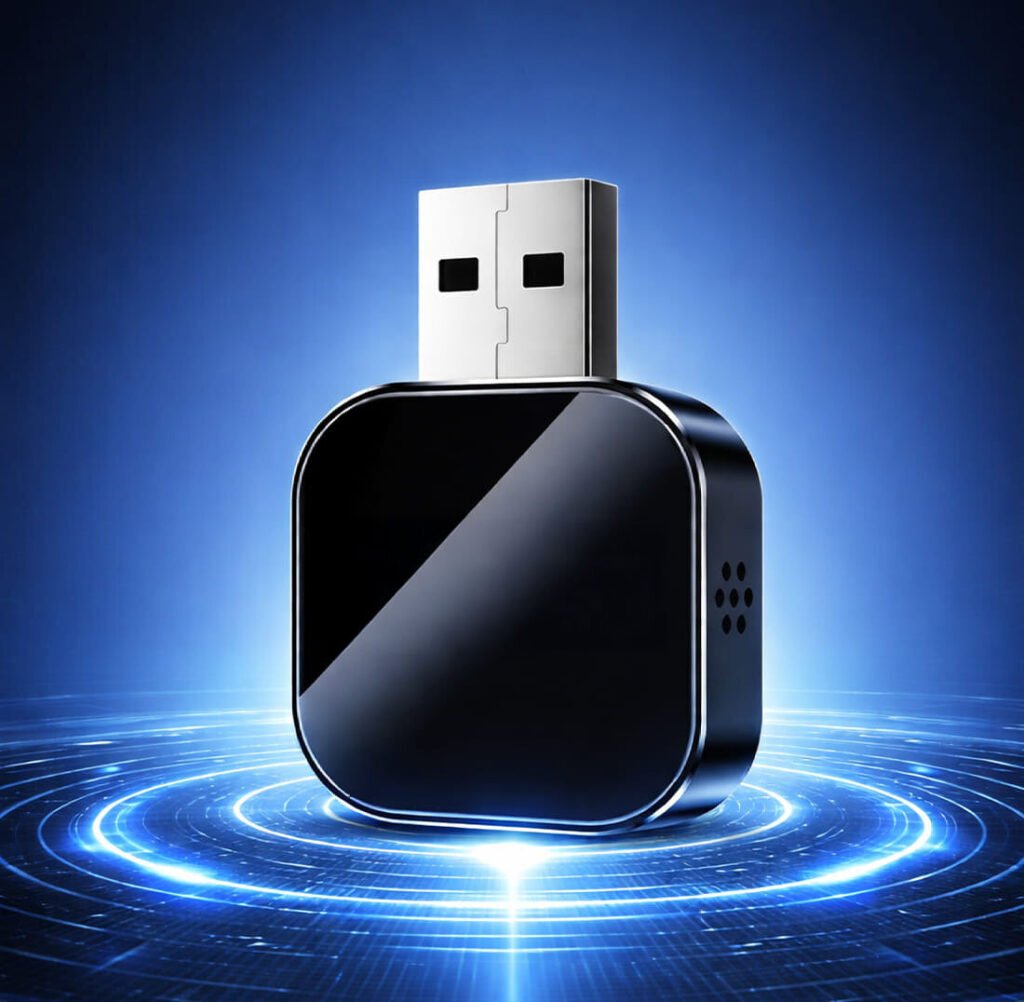
DrivePair is a compact plug-in adapter that converts a wired CarPlay or Android Auto connection into a wireless one. It is not a replacement head unit and it does not add CarPlay to a car that lacks it. The page is explicit on this point: if your vehicle already has factory-wired CarPlay or Android Auto, the adapter converts it to wireless.
The product is described in several headline features:
Works with both iPhone and Android phones
Compatible with Apple CarPlay and Android Auto in one device
Connects automatically after the first pairing
Uses 5GHz Wi-Fi together with Bluetooth 5.0
Plug and play, with no installation
Claimed compatibility with more than 600 vehicle models
An upgraded chipset
A USB-C adapter included in the package
A compact, hideaway design
A 30-day money-back guarantee
The sales page frames the adapter as the last cable you will ever unplug, and says your car should feel modern and now it does. That is marketing language, but the underlying idea is simple. Your phone and the car’s screen already know how to talk to each other over a cable. The adapter sits in between, talks to the car as if it were a cabled phone, and talks to your phone wirelessly. To the car, nothing has changed. To you, the cable is gone.
The page also stresses that the adapter keeps all the car’s existing controls working. Siri, steering wheel buttons, the touchscreen and any physical knobs are said to work exactly as they did before. This matters because some aftermarket solutions interfere with controls or replace the car’s interface. A plug-in adapter that leaves everything else alone is the less intrusive option.
It is also worth being clear about who the product is for. It suits drivers whose cars already have wired CarPlay or Android Auto, who want to stop using a cable, and who prefer a simple device to a dashboard modification. It does not suit anyone whose car has no CarPlay or Android Auto support at all, and it is not intended to replace a car’s built-in wireless system if one already exists.
How Does DrivePair Wireless CarPlay Work: Short Trips and Long Drives
Many smart gadgets have a nearby mode and a far-away mode. A wireless car adapter is simpler, because everything happens inside the cabin. Instead of describing how it finds belongings near or far, it makes more sense to explain how the adapter behaves at the start of a drive and over the length of a trip.
The first-time Drivepair Adapter setup
According to the Official Product page, the setup has three steps:
First, connect the adapter to the car’s USB port using the included USB-C adapter if your car has a USB-C port. Second, follow the prompts on the vehicle display to pair your phone once which the page says takes about 30 seconds. Third, drive. From that point on, the phone is meant to connect automatically each time the car starts.
The Two Radios Used By DrivePair CarPlay Adapter
DrivePair Adapter relies on two wireless technologies that work together. Bluetooth 5.0 is used for the initial handshake. It is the low-power link that lets your phone and the adapter find one another and agree to connect. 5GHz Wi-Fi is then used for the heavy lifting, carrying the screen mirroring, audio and map data that CarPlay and Android Auto need. The page emphasises 5GHz because it says it is faster and more stable than older 2.4GHz adapters, with less lag and fewer random disconnects. The general principle is sound: the 5GHz band typically offers more bandwidth and tends to be less crowded than 2.4GHz, although range and interference always depend on the environment.
The start of a short trip
When you start the car, the adapter powers up through the USB port and your phone is meant to link to it automatically. The page claims the connection takes about 5 to 10 seconds in total, and elsewhere says under 10 seconds. If that holds up in everyday use, it matches the experience of a short trip well: you get in, start the engine, and by the time you have buckled up and checked a mirror, navigation and music are on screen.
A long drive
Over a long drive, the question changes from how fast it connects to how well it stays connected. The page’s central argument is that 5GHz Wi-Fi and Bluetooth 5.0 give a rock-solid connection from driveway to destination, free of interruptions. This is the claim a buyer most needs to test, because a quick connection is of little use if it drops on the motorway. The 30-day return window gives you time to find out on your own routes.
What the phone does
Once connected, the phone behaves as it would on a cable. Navigation, Spotify, calls and messages are described as all wireless. You use the car’s own screen, voice assistant and controls, and the phone can stay in a pocket or bag. The adapter does not require an app, firmware updates or a complicated pairing routine, according to the page.
The Components of DrivePair Wireless CarPlay: What’s Inside It
The adapter unit: The main item is a compact, hideaway-style plug-in unit. The page describes the design as compact and discreet, which suggests it is intended to sit out of the way near the USB port rather than dominate the cabin.
The upgraded chipset: The page lists an upgraded chipset among its main selling points and in the comparison against other adapters. It does not name the chipset, its manufacturer or what exactly was upgraded. In practice, the chipset is the part that handles the wireless link, so it plays a large role in speed and stability. A buyer should treat the phrase as a claim and look for real-world reviews that confirm it if it matters much.
5GHz Wi-Fi and Bluetooth 5.0: The DrivePair adapter includes both radios. Bluetooth 5.0 handles discovery and the initial link, while 5GHz Wi-Fi carries the main data stream.
USB-C adapter: The package includes an adapter that converts a USB connector to USB-C. The official product page calls this a dual interface and says it is for newer cars. This is a practical inclusion, since vehicles differ in their port type and a missing connector would otherwise stop the setup.
Software and firmware: The manufacturer says there are no apps to download and no firmware to update. That implies the adapter is designed to work as a self-contained device. The flip side is that the page does not explain how any future fixes would be delivered.
What Consumers Typically Look for in a Wireless CarPlay Adapter
Before judging any single product, it helps to know what buyers in this category tend to care about. The following criteria are the ones that come up most often in reviews and forums, and they provide a useful checklist for reading the DrivePair page.
Compatibility with the car and the phone: This is the first question for nearly every buyer. The adapter must work with the specific vehicle, with the type of USB port it has, and with the phone in use. Because every manufacturer implements CarPlay and Android Auto slightly differently, a published compatibility list or a clear statement of the requirement is valuable. The key condition is that the car must already support the wired version of the system.
Connection speed: Nobody wants to wait a minute for the screen to appear after starting the engine. Buyers look for a connection that is fast enough to be ready by the time they pull out of a parking space. Claims of under 10 seconds are encouraging, but real-world results vary with the phone, the car and the software versions involved.
Stability: A fast connection is only half the story. The bigger concern is dropouts: music that stutters, a map that freezes, or a call that cuts out. Reviewers often rank stability above speed because it affects safety and trust. The choice of 5GHz Wi-Fi over older 2.4GHz is a design decision that speaks directly to this worry.
Audio and screen lag: Wireless links add some delay in theory. Buyers want to know whether there is noticeable lag between a touch on the screen and the response, and whether audio stays in step with video. The DrivePair FAQ lists audio lag as a question, which shows the seller knows it is a concern, although the question is listed without its answer in the text provided.
Ease of setup: Most people do not want to read a manual or update firmware. A plug-and-play device with a one-time pairing process is the ideal. The fewer steps, the lower the chance of something going wrong.
Support for both phone platforms: Households often include both iPhone and Android users. An adapter that handles both CarPlay and Android Auto is more flexible, and it holds its value if someone changes phones later.
Preservation of car controls: Shoppers want steering wheel buttons, voice assistants, touchscreen input and knobs to carry on working. They also want the adapter to stay out of the way and not interfere with the car’s other functions.
Size and appearance: A bulky device dangling from a port is both unattractive and easy to knock. A small unit that tucks away is preferable, particularly in cars where the USB port sits in an awkward spot.
Reliability over time: Heat, cold and vibration all take their toll on in-car electronics. Buyers value signs of durability, such as a decent warranty or consistently positive long-term reviews.
Value and risk: Finally, price matters, but so does the safety net. A clear return policy lets buyers try the product at low risk, which is a major factor for a device whose success depends so heavily on the individual car.
Holding DrivePair against these ten points reveals where the page is strong, where it is vague and where you will need to do your own checking.
What DrivePair Discloses About Its Product
A fair review should separate what a seller says clearly from what it leaves out. Here is how the DrivePair page measures up.
What the seller states clearly:
Platform support: The page says the adapter works with both Apple CarPlay and Android Auto, and with iPhone and Android phones.
Radio technology: It names 5GHz Wi-Fi and Bluetooth 5.0 repeatedly and explains why it believes this pairing is more stable than older 2.4GHz adapters.
Connection time: It claims the connection completes in under 10 seconds, with a typical range of 5 to 10 seconds.
Setup process: It describes three steps: plug it in, pair once, and drive. It estimates about 30 seconds for the pairing step.
Vehicle coverage: It claims compatibility with more than 600 vehicle models and states the condition that the car must have factory-wired CarPlay or Android Auto.
Control retention: It say Siri, steering controls, the touchscreen and knobs keep working as before, with zero modification to the car.
What is in the box: It confirms that a USB to USB-C adapter is included for newer cars.
Software requirements. It says no app, firmware update or complicated pairing is needed.
Return policy: It offers a 30-day money-back guarantee, described as full refund, no questions asked, with the package sent back.
Price: The manufacturer stated that the starting price is $49.99
What the seller does not make clear
The list of compatible vehicles: The page repeats the figure of 600 vehicles but, in the text provided, does not list them. A buyer cannot confirm compatibility from the page alone.
The chipset: It is called upgraded, but the page does not say what it was upgraded from, who makes it or how performance changed.
Audio lag: The FAQ asks whether there is any audio lag, but the answer is not shown in the material reviewed. Without it, buyers must rely on trial and customer feedback.
Warranty and support details: Beyond the money-back guarantee, the product page does not describe a warranty period, support hours, or how to contact the team. A contact link appears in the navigation menu, but no details are given.
Independent proof. The page refers to thousands of drivers and shows a Reviews section, yet the review text itself is not included in the material available here. As with any seller-controlled page, it is wise to look for independent reviews on other verified websites, not affiliated reviews.
Technical specifications: There are no figures for dimensions, power consumption or operating temperature.
DrivePair Wireless CarPlay Pros and Cons
Balancing the evidence above, here is a summary of the main strengths and weaknesses.
Pros
Removes the daily cable routine: The core benefit is that the phone connects on its own after one-time pairing, which suits short, frequent trips especially well.
Works with both CarPlay and Android Auto: A single adapter covers both platforms, which is useful for mixed households and for people who may switch phones.
Simple, no-installation setup: There is no wiring, no dashboard work and no app. The three-step process takes only a few minutes at most.
Fast claimed connection: A 5 to 10 second connection, if achieved in practice, is competitive for this type of product.
5GHz Wi-Fi with Bluetooth 5.0. This combination is a sensible technical choice aimed at better speed and stability than 2.4GHz-based designs.
Keeps existing car controls: Voice assistant, steering wheel controls, touchscreen and knobs are said to continue working normally.
USB-C adapter included: This makes the product usable in cars with different port types without buying extra parts.
Compact, hideaway design: The small size means it should not clutter the cabin.
Risk-reducing guarantee: The 30-day money-back promise lets buyers test the adapter in their own car.
Broad stated compatibility: More than 600 vehicles is a large claimed range.
Cons
Only works with cars that already have wired CarPlay or Android Auto. If your vehicle lacks both, this is not the right product.
Compatibility cannot be confirmed from the page. A claim of 600+ vehicles is not the same as a list, so you will need to check for your own model.
Many claims are unverified. Speed, stability and lag are described by the seller, with no independent test results provided in the material reviewed.
Vague on technical detail. The chipset is unnamed and no specifications are given for size or power.
Wireless always carries some risk. Wireless links can be affected by interference and by the particular combination of phone and car, so results can vary.
Battery use on the phone. Running Wi-Fi and Bluetooth together can drain a phone faster than a cable, which charges the phone while connected. Drivers may still want a charger for long trips, though the page does not address this point.
Unclear support information. Beyond the refund, the page does not set out warranty or support details.
Return shipping may fall on you. The guarantee says to send the package back, and the page does not say who pays for postage. Check this before ordering if that mattered to you
Prices, Refund Policies and Customer Support: What You Should Know
DrivePair Price
The sales page stated a starting price of $49.99. Prices for products sold through direct-to-consumer websites often change with promotions, bundles and seasonal sales. The only reliable figure is the one shown on the official order page on the day you buy. When you check it, look for the full cost at checkout, including shipping, taxes and any optional extras added to your basket.
A useful way to judge value is to compare the final price with what you actually gain. If you use your car every day and the cable is a constant annoyance, even a modest price may be worthwhile. If you drive rarely or your cable has never given trouble, the benefit is smaller.
DrivePair Refund policy:
The page makes one firm commitment: a 30-day money-back guarantee. In its own words, paraphrased here, if you are not satisfied you can send the package back and receive a full refund with no questions asked. The page labels the offer as risk-free and shows it prominently in several places.
This is the most important feature for a cautious buyer, because compatibility and stability depend on your particular car and phone. A sensible plan is to use the full 30 days, testing the adapter on short trips, on a long drive, with calls, navigation and music, and in different weather. If anything is off, request the refund early rather than at the end of the window.
Before buying, confirm a few details that the page does not make clear:
When the 30 days start, whether on the order date or the delivery date
Whether the item must be unused or in its original packaging
Who pays for return shipping
How long the refund takes after the product is received
Keep your order confirmation, take note of the date of delivery, and save the packaging until you are sure you want to keep the adapter.
DrivePair Wireless CarPlay Adapter Shipping
The page lists fast shipping among its headline claims but gives no delivery times or costs in the text reviewed. Check the estimated arrival date at checkout, particularly if you need the adapter for a trip.
DrivePair Customer support
A Contact link appears in the website’s menu, which indicates that support exists, but the page text does not describe how it works. Before you buy, it is worth finding the contact page and noting what options it offers, such as email or a form, and what response time is promised. If you run into pairing problems, quick answers matter. You can also test the seller’s responsiveness by sending a simple pre-sale question, for example asking whether your exact car model and model year are supported. A clear, prompt answer is a good sign. A slow or evasive one is a warning.
DrivePair Wireless CarPlay Where To Buy
The material reviewed here is the product’s own sales page, with navigation items for Features, How It Works, Reviews, FAQ and Contact. That strongly suggests the primary place to buy is the seller’s official website. The page does not mention any retail stores, marketplaces or authorised resellers.
Why the official site is the safest choice
Accurate terms: The money-back guarantee described above is the seller’s own policy. Buying from the official site is the surest way to benefit from it, because third-party sellers set their own return rules.
Genuine product: Popular gadgets are sometimes copied. Buying directly reduces the risk of receiving a look-alike with a different chipset or weaker performance.
Current pricing and offers: Any promotions or bundles will be listed on the official order page.
Direct support: If something goes wrong, you deal with the company that makes or supplies the product, with no intermediary.
If you find the adapter listed on a marketplace or another website, be careful. Check that the seller is clearly connected to the brand, read the return terms carefully, and compare the product description with the official page. Be wary of listings with unusually low prices, vague descriptions or no mention of the guarantee. Make sure the name on the product matches exactly, since many wireless adapters look similar and use similar wording.
Our Recommended Checklist before you buy DrivePair Wireless CarPlay Adapter
Confirm your car already has wired CarPlay or Android Auto.
Ask the seller to confirm compatibility with your exact make, model and year if unsure
Check the USB port type so you know whether you need the included USB-C adapter.
Note the final price including shipping and taxes, Read the refund terms and save a copy and Keep your order confirmation and packaging.
My Final Verdict
The DrivePair wireless CarPlay adapter addresses a real and common irritation. Plugging in a cable every time you drive is a small chore, but it is a repetitive one, and it is a chore that stops mattering as soon as it disappears. The adapter’s design is sensible on paper: a plug-in unit that talks to the car like a wired phone, a pairing of Bluetooth 5.0 for the handshake and 5GHz Wi-Fi for the data, support for both CarPlay and Android Auto, and no installation or app.
The features that matter most to buyers are largely addressed by the page. It claims fast connection, a stable link, preserved car controls, a compact body, an included USB-C adapter and a generous return window. If those claims hold up in your car, the adapter should deliver the effortless start to a drive that the page describes.
However, a careful buyer should keep the limits of the evidence in mind. The material reviewed is the manufacturer’s official page. It makes strong claims about speed, stability and compatibility but offers no independent test results, no named chipset, no vehicle list, no stated price and little detail on support or warranty. The FAQ raises the question of audio lag without an answer in the text provided. None of this means the product is poor. It means the real verdict is the one you reach yourself, in your own car, over a few weeks of ordinary driving.
Who should consider it
The DrivePair adapter is a good fit for drivers whose cars already have wired CarPlay or Android Auto, who take frequent short trips, who are tired of loose or worn cables, and who want a simple fix without any dashboard work. Households with both iPhone and Android users benefit from the dual platform support.
Who should be cautious
People whose cars lack CarPlay or Android Auto should not buy it, since it cannot add the feature. Drivers who rely on a phone charging continuously on long journeys should plan for a separate charging solution. Anyone who needs guaranteed performance in a less common vehicle should confirm compatibility with the seller before ordering.
The bottom line
My recommendation is a cautious yes, with the right approach. Confirm compatibility for your exact car first, buy from the official site, note the refund terms, and use the 30-day guarantee as a proper trial. Test it on the routes you drive most, including at least one long trip. If it connects quickly, stays connected and leaves your controls intact, it will likely become the kind of gadget you stop noticing, which is the best compliment a car accessory can earn. If it does not, the guarantee is there to protect you.
This review is based solely on the manufacturer’s own product page and should be read as an analysis of its claims, not as a laboratory test of the product.
Visit The Official DrivePair Wireless CarPlay Adapter For More Information
Our Readers Also Read About Qinux GoTag Smart Tracker
About Allsmartstuffs.com: Our Mission and Commitment to Readers
At Allsmartstuffs.com, we believe that choosing a product should be an informed decision rather than a response to advertising alone.
Our aim is to make product research easier by explaining what products are designed to do, how their features may be useful and which limitations buyers should consider.
We value clear information, balanced assessments and transparency about what is known and what remains uncertain.
We also recognise that a product that suits one person may not be the right choice for another. Price, individual needs, practical performance and safety all matter when evaluating a purchase.
Our mission is to help readers understand their options and make purchasing decisions that suit their requirements and budgets.
We aim to build credibility through responsible research, honest communication and a commitment to helping readers make decisions with greater confidence.
At Allsmartstuffs.com, our goal is simple: to make product research clearer, consumer choices smarter and online shopping more informed.
Thank you for visiting Allsmartstuffs.com and making us part of your product research journey.
Affiliate disclosure: If this article contains affiliate links, Allsmartstuffs.com may earn a commission from qualifying purchases at no additional cost to the buyer.