
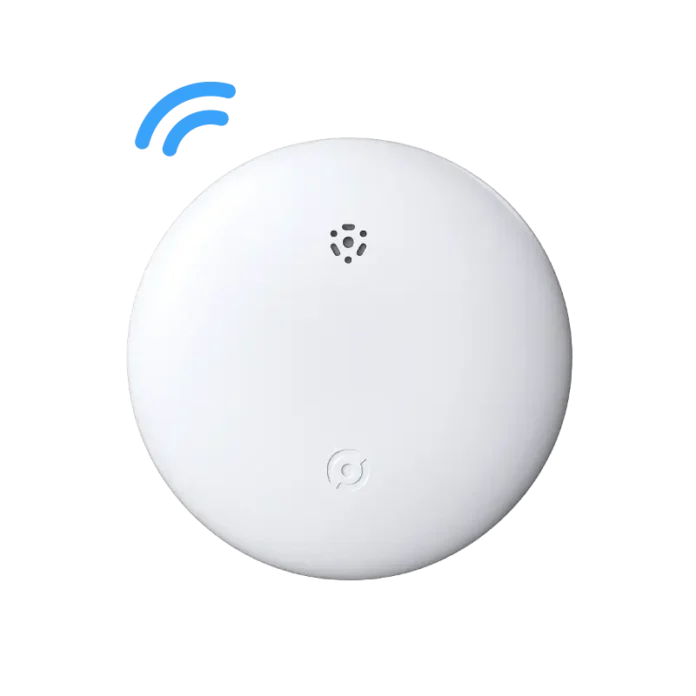

Few things produce a sinking feeling like patting a pocket and finding nothing there. Keys, wallets, luggage, bikes and cars all get lost or stolen, and small tracking tags have become a popular answer – Qinux GoTag.
The Qinux GoTag is one of the newer names, and its marketing is bold: a “mini tracker that finds everything, anywhere,” with “no distance limit,” “no subscriptions or extra fees,” and a promise of “exact coordinates, even in crowded places.”
Obviously, claims like these deserve a careful read. A tracker is only useful if it works at the moment you need it, and tracker marketing often blurs the line between what the technology can do and what a particular product does. This article covers What Qinux GoTag is, how it appears to work, what is inside a device like this, what shoppers should look for, which claims the manufacturer’s own copy supports, and which ones need caution. One finding shapes the rest of the review.
According to Qinux GoTag’s own description, the smart tracker works through the global network of nearby Android and Apple devices, using technologies like Google Find My Device and Apple Find My. That is a crowdsourced model, not a built-in GPS and cellular tracker, and it has real consequences for how “real-time” and “exact” the location can be.
Why Consumers Are Researching Smart Trackers
Smart trackers have gone from niche gadget to everyday accessory in a few years, for several reasons.
Firstly, losing things is expensive and stressful. A lost wallet means cancelling cards and replacing IDs. Lost luggage can ruin a trip. A misplaced set of car keys can cost hundreds to replace with a modern fob. A small device that cuts that risk for the price of a few coffees is an easy sell.
Theft is a growing worry. Bike theft, car theft and bag snatching make people look for a “second chance” option. Many shoppers hope a hidden tag will let them see where a stolen item went and hand that information to the police. The Qinux GoTag’s marketing leans on this, with lines like “Don’t take any more chances” and “a real solution against theft and losses.”
The big ecosystems made trackers mainstream. Apple’s AirTag and Google’s Find Hub network (formerly Find My Device) taught millions of people what a tracker is. Once people understand the idea, they start comparing cheaper alternatives from third-party brands, which is where products like the Qinux GoTag come in.
Subscription fatigue. Dedicated GPS trackers with their own SIM cards usually charge monthly or annual fees for cellular data. Many shoppers have grown tired of paying recurring fees for small gadgets, so “no subscription” is a strong selling point.
Pets, kids, travel and remote work. Tags now go on dog collars, backpacks, laptop bags, camera gear and suitcases. Frequent travelers in particular have learned that an airline can lose a bag, and a tag can show where it is.
Confusing information: Shoppers also research because the category is hard to read. “GPS tracker,” “Bluetooth tracker,” “item finder” and “smart tag” are used loosely, and they describe different technologies with different limits. Someone who expects a satellite-and-cellular device and receives a crowdsourced Bluetooth tag will be disappointed. Much of the research traffic is people trying to work out which kind of device they are looking at.
What Is Qinux GoTag?
Going by the manufacturer’s description, the Qinux GoTag is a small, portable smart tracker meant to help you locate objects or vehicles from your phone.
It is pitched as: Ultra-compact and discreet, designed “to blend in” so you can hide it in a bag, a bike, a car or a pet’s collar. Weather-resistant, working “in the rain, outdoors, or in tough conditions.” No official water-resistance rating (such as an IP code) is given in the material I reviewed, so “weather-resistant” should be read as a general claim, not a certified one.
Compatible with Android and iOS, connecting via Bluetooth. Subscription-free, with a one-time purchase price and, in the marketing’s words, “no hidden fees, no charges, no fine print.”
Wide-ranging, with “no distance limit,” thanks to the network of nearby phones.
The product’s positioning is that it is not just a keychain finder. The sales copy repeatedly mentions vehicles, motorcycles and bikes, and it also mentions pets, luggage, backpacks and keys. A single small tag covering all of those uses is the core pitch.
It is worth separating the product’s category from its marketing language. The phrases “Active Global Positioning” and “exact coordinates” suggest a GPS receiver inside the tag. The description of how it works says something different: the Qinux GoTag broadcasts a Bluetooth signal, and nearby Apple or Android devices that happen to pass by relay its position to you. Those two descriptions describe different technologies, and I’ll explain the difference next.
A final point on identity. You may also see “GoTag” used by unrelated products. There is a design-concept GPS tracker called GoTag that has been covered in design media. That is a different thing, a concept by an independent designer, not the Qinux product. Make sure you are researching the right item.
Also See My Honest Review On Ondrela Smart Tracker
How Does Qinux GoTag Work?
The Qinux Gotag’s own description gives enough information to explain the basic mechanism, which is the same one used by AirTag-style trackers.
Here is how it works in two situations
Finding belongings that are nearby
When the Qinux GoTag is close to you, the process is simple and works much like any Bluetooth device. It broadcasts a short-range Bluetooth Low Energy (BLE) signal. This signal is a small identifier that says, essentially, “I’m here.”
Your phone picks up the signal when it is within range, typically a few meters to a few tens of meters depending on obstacles and conditions.
This is the “lost in the house” scenario: keys in the couch, a wallet under a pile of papers, a bag in the trunk. Bluetooth range is limited, and the marketing itself acknowledges that “traditional Bluetooth only covers a few meters.” For nearby searches, the experience should be similar to other trackers, and the accuracy is usually good enough to narrow things down to a room or a pocket.
I could not confirm whether the Qinux GoTag has a built-in speaker or button, or whether it supports precision-finding features like ultra-wideband direction arrows. These features make a big difference in close-range searches, and you should check the listing for them before buying.
Finding belongings that are far away
This is where the Qinux GoTag’s headline claim lives, and where understanding the mechanism matters most.
Qinux GoTag cannot talk to your phone from miles away over Bluetooth. Instead, according to the manufacturer, it uses the crowdsourced finding networks run by Apple and Google. The process works like this:
The Device keeps broadcasting its Bluetooth signal. Any compatible phone that passes nearby, belonging to a stranger who has no idea the tracker exists, detects that signal.
That phone anonymously and securely uploads its own location, plus the tag’s identifier, to Apple’s or Google’s servers.
You open the corresponding app (Find My on iPhone, Find Hub on Android), and the network shows you the tag’s most recent reported position.
Because there are billions of Apple and Android devices in the world, this approach works well in busy places. A bag left in a train station or a bike stolen in a city can pass dozens of phones in an hour. That is what makes the “no distance limit” claim partly true: you can be on another continent and still see where your item was last detected.
But there are important qualifications that the marketing doesn’t emphasize:
It isn’t truly “real-time” in the way a live GPS feed is. What you see is the location when a passing phone last detected the tag. In a crowded area that might be seconds or minutes ago. In a rural area, a car park at night, or a remote road, it could be hours or may never update.
So, it depends on other people’s phones. If nobody with a compatible phone passes near the Tracker, you get no update. This is the single biggest limitation of the technology.
The location is the passing phone’s location, not the tag’s. Since Bluetooth range is limited, the position is usually close, but it is an approximation, not “exact coordinates.”
“Active Global Positioning” is not an accurate description. A tag with its own GPS receiver and a cellular modem is a different, usually subscription-based, device. Nothing in the described mechanism suggests the Qinux GoTag contains one.
Apple and Google networks are different. Historically, a tag has had to be built for one network or the other. Some newer tags support both, but this requires specific certification and design. The Qinux GoTag’s copy says it leverages both “technologies like Google Find My Device and Apple Find My.” If it truly supports both, that is worth confirming with the seller, and it is worth checking whether you need one variant per phone type.
In short, the far-away feature is real and often useful, but it is a “best effort” crowd system, not a guaranteed live tracker like most people claim.
The Components of Qinux GoTag: What’s Inside It
Bluetooth Low Energy radio and microcontroller: This is the heart of the device. A tiny chip handles the Bluetooth broadcasts and runs the tag’s firmware. It is designed to use very little power so that a small battery can last months.
Battery. Most trackers in this class use a replaceable coin cell, commonly a CR2032, which typically lasts about a year under normal use. Some use rechargeable batteries instead. The Qinux GoTag’s copy doesn’t say which, and this matters. A replaceable battery means low long-term cost. A sealed rechargeable one means you must remember to charge it, and a dead tag can’t report anything. Ask about battery type and expected life.
Antenna: A small antenna built into the circuit board sends and receives the Bluetooth signal. Antenna design strongly affects how often passing phones detect the tag. This is one reason two tags that look alike can perform very differently.
Housing and sealing: The casing needs to be small, durable and, ideally, rated against water and dust. “Weather-resistant” is a loose term. A formal rating such as IP67 is far more informative, and I didn’t find one stated.
Attachment method: Hiding a tag is part of the pitch. Whether it includes a hole for a keyring, an adhesive back, or a case matters in practice. A tag you can’t attach securely is a tag you can lose.
What is probably not inside
If the device works as described, it most likely does not contain a GPS receiver, a SIM card or a cellular modem. Those parts would add size, cost and power demand, and they would typically require a subscription to function. This is a reasonable inference from the “no subscription” and “tiny” claims, but it is also the reason the “exact, active GPS” language is questionable.
A responsible seller should be able to list the battery type, radio standards, certifications (for Apple’s and Google’s networks), ingress rating and firmware update policy. If you cannot find these anywhere, treat that as a meaningful signal.
Also See Qinux GoTag Official Product Page
What Consumers Typically Look for in a Smart Tracker
Before judging any one product, it helps to know what informed buyers weigh. These are the questions that separate a good tracker purchase from a regretful one.
- Which network does it use
iPhone owners generally want a tracker that works with Apple’s Find My network. Android owners want one that supports Google’s Find Hub. A tracker that only supports one is useless to people on the other. Confirm compatibility for your phone, and confirm it for the exact model you are ordering.
- Certification and legitimacy
Trackers that join Apple’s network are expected to be certified under Apple’s “Works with Apple Find My” program, and Google has its own requirements. Genuine certification means the tag is vetted for privacy and safety features. Look for the official badge on the packaging and the manufacturer’s listing, not just a statement in the marketing copy.
- Real-world accuracy
Buyers should read “exact coordinates” skeptically. The useful question is how often and how reliably the tag updates in places where you actually use it: your city, your commute, your holiday destinations.
- Battery type and life
Replaceable batteries are convenient and cheap. A tag that dies silently is a hazard, so look for low-battery alerts.
- Size and attachment
Small is good, but only if you can attach it to the thing you care about. A tag that is too thin to hold a keyring or too bulky to hide fails its job.
- Durability and water resistance
Look for a specific rating, not just a descriptive phrase.
- Total cost
This includes the upfront price, replacement batteries, shipping, any required accessories, and any subscription. “No subscription” claims should be checked against the checkout page and the terms.
- Anti-stalking safeguards
This is a major point that shoppers often overlook. Apple and Google both build alerts into their phones that warn people when an unknown tracker has been traveling with them. This protects people from being tracked without their consent. It also means that “undetectable” is a claim no legitimate tag on these networks can fully keep. A tag that truly avoided detection would be a stalking tool, and it would either not be certified or would be violating the networks’ rules. Treat any marketing that stresses “nobody sees it” with caution, and use trackers only on items you own.
- Return policy and support
A tracker is a trust purchase. You can’t judge it until you’ve used it in real conditions, so a clear and generous return window matters.
- Independent reviews
Look for hands-on testing from unaffiliated reviewers, not just testimonials on the seller’s page. The best evidence is a side-by-side test against a known tracker.
What Qinux GoTag Discloses About Its Product
It is useful to separate what the manufacturer actually says from what it implies.
Clearly disclosed:
It connects to phones via Bluetooth and works with both Android and iOS.
It uses the network of nearby Android and Apple devices, drawing on Google Find My Device and Apple Find My.
It is sold as a one-time purchase with no subscription or extra fees.
It is small, discreet and weather-resistant
It is intended for vehicles, bikes, luggage, bags, keys and pets.
Implied but not substantiated:
“Active Global Positioning.” This phrase suggests a GPS receiver. The explanation of the mechanism suggests crowdsourced location instead. Both can’t be true in the way a shopper would assume.
“Real-time.” Crowd networks update only when a phone passes nearby. The marketing uses “real-time” and “instantly,” but the actual experience is variable.
“Brutally accurate” and “exact coordinates, even in crowded places.” No accuracy figures, test conditions or independent measurements were provided. Crowded areas do tend to help crowd networks, but “exact” is a strong word.
“No distance limit.” Partly true in the sense that the networks are global, but conditional on someone with a compatible phone being nearby.
“No weird apps.” A reasonable claim if it uses the built-in Find My and Find Hub apps. But the copy also says you “integrate your device via Bluetooth,” and I couldn’t determine whether a companion app is needed for setup.
“Undetectable” and “invisible security 24/7.” As discussed above, unknown-tracker alerts on modern phones make this untrue in a literal sense, and it is a questionable thing to advertise.
Not disclosed
Battery type and life
Water-resistance rating
Dimensions and weight
Official certifications for Apple and Google networks
Whether it can play a sound or has a button
Warranty terms
Company address, ownership and support contact details
This pattern is common in promotional product pages: emotional, benefit-driven language with few technical specifics. It doesn’t prove a product is poor, but the lack of verifiable detail is the main thing a cautious buyer should push back on.
One more observation about the marketing environment. The product appears in affiliate-marketing networks, where promoters earn a commission per sale. That is a normal business practice, but it explains why so many pages online praise the product in similar language. When you see glowing testimonials, ask whether the reviewer has any disclosure of a financial interest.
Qinux GoTag Pros and Cons
Pros:
No subscription: If it works as described, you avoid the recurring fees that dedicated cellular GPS trackers charge. For casual use, that is a real saving.
Uses established networks: Relying on Apple’s and Google’s finding networks is a sound approach. These networks are large and, in busy places, can be quite effective.
Small and easy to hide: A tiny tag fits in luggage, bags, bike frames or a pet collar without much fuss.
Cross-platform claim: If it truly works with both iPhone and Android, that gives it broader appeal than single-ecosystem trackers.
Versatile uses: One device for keys, bags, bikes and more keeps things simple.
Weather-resistant (claimed): Useful for bikes, vehicles and outdoor gear.
Cons:
Misleading terminology. “Active Global Positioning,” “exact coordinates” and “real-time” overstate what a crowdsourced tag can deliver, and this may lead to disappointment, especially in a theft situation.
Depends on nearby phones: In rural areas, parking structures, or remote roads, updates may be rare or absent.
Not a true anti-theft tracker: For high-value vehicles, a hardwired or cellular GPS tracker offers continuous tracking. A tag is a helpful extra, not a replacement.
Anti-stalking alerts may tip off a thief: If a thief carries your item for a while, their phone may warn them about an unknown tracker. One hands-on review of a similar Android tag noted that these alerts can warn a thief, who could then find and discard the tag, which weakens its use for stolen bags or cars.
Sparse technical disclosure: Missing specs, certification details and warranty terms make it hard to judge quality.
Unclear brand track record: Qinux is not an established name with a long history of independent testing, and much of the online coverage appears promotional.
“Undetectable” marketing raises ethical concerns. Trackers should be used only on items you own, and advertising invisibility can encourage misuse.
Prices, Refund Policies and Customer Support: What You Should Know
Pricing: The manufacturer’s messaging stresses a “one-time payment” with “no hidden fees.” Promotional pages for products like this often advertise bundle deals, such as discounts for buying two, four or more tags, and the price can vary by country and by promotion. Because pricing on direct-to-consumer pages can change quickly and may be shown in different currencies, check the checkout page itself. Add Qinux GoTag to your cart and read the full total, including shipping, taxes and any add-ons, before you enter payment details.
Do a sanity check against the market. Well-known certified trackers from established brands are widely sold at modest prices. If the Qinux GoTag costs noticeably more than those, ask what justifies the premium. If it costs much less, ask what has been left out.
Refund policy: A “no fine print” promise is not a refund policy. Before buying, look for:
A stated return window (how many days)
Who pays return shipping
Whether refunds apply to opened or used items
Whether there are restocking fees
Where the return must be be shipped (a local address, or overseas)
A refund policy page that you can screenshot and keep
If the policy is only available after purchase, or is hard to find, treat that as a warning sign.
Customer support: Check for a working email address, a phone number or contact form, a physical business address, and stated response times. Look for a company name, not just a brand name. Independent complaint sites and payment-dispute options can show how a company has handled problems.
Protecting yourself: Paying with a credit card or a method with buyer protection gives you a route to dispute a charge if the product never arrives or doesn’t match its description. Keep screenshots of the product page, claims and policy at the time of purchase. Also be careful about pre-checked add-ons, subscription-style upsells or extended-warranty offers at checkout. If a “no subscription” product has recurring-billing terms hidden in the checkout flow, cancel immediately.
Where to Buy Qinux GoTag
The Qinux GoTag appears to be sold primarily through the manufacturer’s own promotional website, which is the channel consistent with its direct-response marketing. I couldn’t confirm that it is stocked by major retailers, so treat any claim that it’s available in stores or on large marketplaces with caution until you’ve verified it yourself.
A few practical rules for choosing where to buy The Qinux GoTag:
Prefer the official site, reached directly. Because trackers like this are advertised through affiliate and social ads, there can be many look-alike pages, some of which may be unrelated sellers or imitation products. Search for the brand name directly instead of clicking through an ad, and check that the website has clear contact and policy pages.
Be wary of marketplace look-alikes. If you see “GoTag” or similarly named products on third-party marketplaces at very different prices, don’t assume they are the same item. The name “GoTag” is also used by unrelated products, including a design concept for a GPS tracker, so check the seller and the product details carefully.
Check the seller’s identity. A legitimate seller should list a company name, address and contact method. Anonymous storefronts with no verifiable details are a risk.
Buy only what you can return. If you want to try the tag, start with a single unit and test it for the use cases you care about: leave it in a bag at a busy location, and check how quickly and accurately the location appears. Don’t buy a multi-pack on the strength of marketing alone.
Confirm compatibility before paying. Ask the seller, in writing if possible, whether the tag works with your phone’s operating system and whether any extra app is required.
Visit GoTag Official Product Page For More Information
My Final Verdict
The Qinux GoTag is built on a sound idea. Crowdsourced finding networks are the reason cheap, subscription-free trackers exist at all, and they genuinely work in busy places. If the Qinux GoTag is a properly certified, well-made tag that joins Apple’s and Google’s networks, it could be a perfectly reasonable low-cost tool for finding lost keys, luggage or a backpack.
The problem is the way it is sold. The marketing promises “active global positioning,” “exact coordinates,” “real-time” tracking and “no distance limit,” and it frames the tag as an answer to car theft. A crowdsourced Bluetooth tag can’t guarantee any of that. It shows you where a passing phone last noticed it, not a live GPS feed. In a city, that may be good enough to recover a bag. On a quiet road at night, it might tell you nothing at all. And because Apple and Google phones warn people about unknown trackers, a thief may be alerted and remove it. The “undetectable” and “invisible” language is, at best, overstated.
Add to this the thin technical disclosure, the unverified pricing and refund terms, and the fact that much of the online praise looks promotional, and my conclusion is cautious.
Who it might suit: shoppers who want an inexpensive tag for everyday items such as keys, bags and luggage, who understand how crowdsourced tracking works, and who buy from a seller with a clear return policy.
Who should look elsewhere: anyone relying on a tag to protect a car, motorbike or other valuable item against theft. For that, a dedicated GPS tracker with its own cellular connection, even with a subscription, is far more dependable. Also look elsewhere if you want guaranteed live tracking, or if you need a tag from an established brand with published specs and independent test results.
Before you buy, I’d do these five things:
Confirm in writing that the tag works with your phone and which finding network it uses.
Ask for the battery type, water-resistance rating and certification details
Read the full refund policy and keep a copy.
Pay by a method with buyer protection.
Test it as soon as it arrives, in the places you plan to use it, within the return window.
Used honestly, with realistic expectations, a tag like this can be a handy little safety net. Used as a substitute for real vehicle protection, based on promises of “exact” and “real-time” location, it could let you down at the worst moment.
Finally, a reminder on ethics: only place trackers on items you own or have permission to track. Hidden tracking of other people is harmful, and in many places it is illegal.