

EpiCooler Review: The Complete Guide (2026)
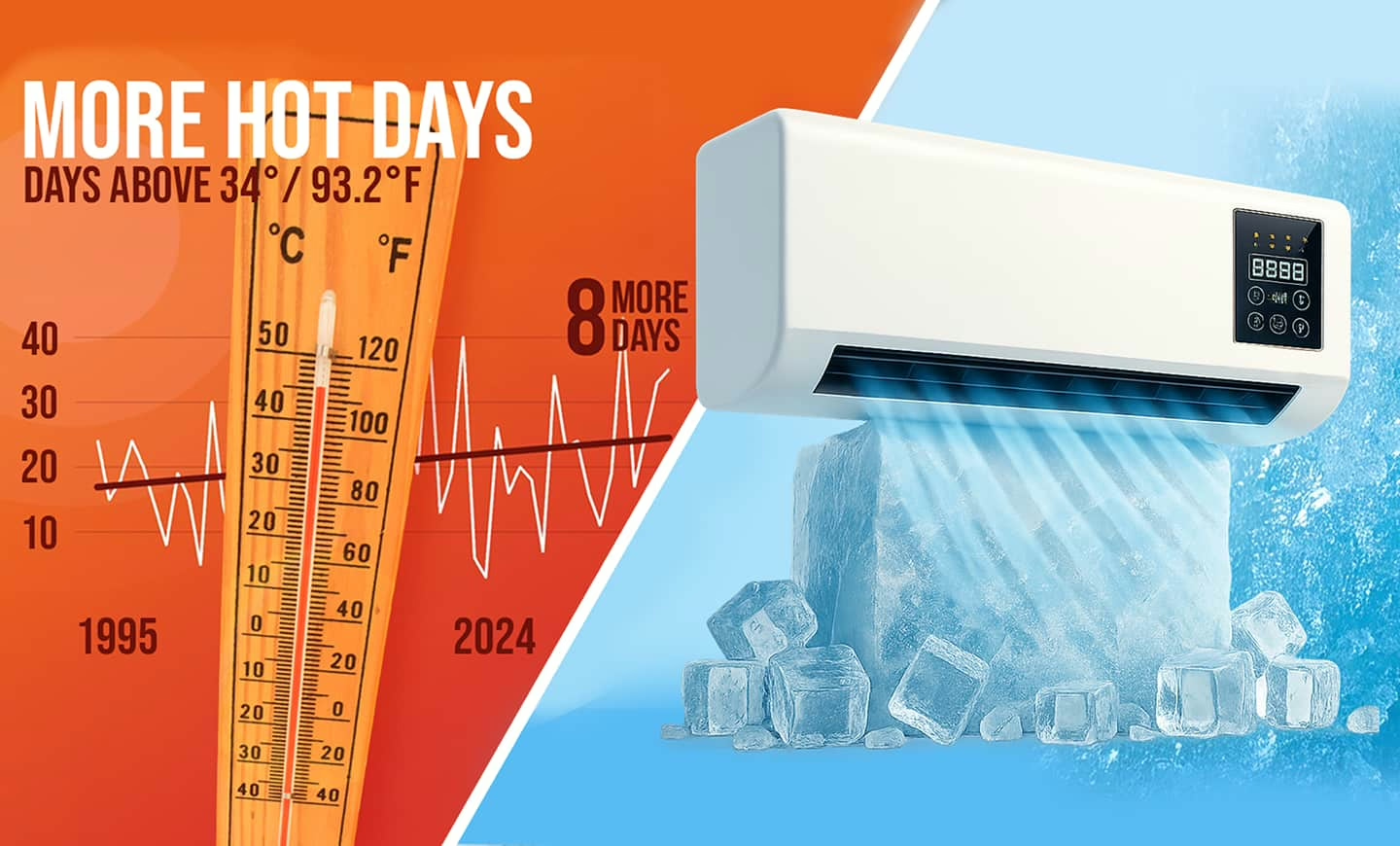
There is a familiar frustration that arrives every summer in millions of American homes. The temperature climbs, the ceiling fan starts losing the battle, and the choice narrows down to two options that both feel wrong: crank up the central air conditioning and brace for the electricity bill, or sweat it out and be miserable. For renters who cannot install permanent systems, people in older homes with outdated HVAC, remote workers trying to keep a home office bearable, or anyone simply tired of paying to cool rooms nobody is in, neither option feels acceptable.
That frustration has driven a surge of consumer interest in a third category: portable, personal cooling devices that can be moved wherever you need them, plugged into a standard outlet, and used without calling a technician or signing a lease on an expensive appliance. The EpiCooler Portable AC has emerged as one of the more talked-about products in this space heading into the summer of 2026, attracting attention for its combination of cooling and heating capability, its six operating modes, and a price point that sits dramatically below traditional portable AC units.
This review looks at the EpiCooler honestly and in depth. We will cover what the product is, whether it actually works, the technology behind it, its key features, how to use it for best results, who it makes the most sense for, what the real benefits are, why it gets recommended, and where its limitations honestly lie. The goal is to give you the clearest possible picture of whether this product belongs in your home this summer — without overselling it or dismissing it.
What Is the EpiCooler Portable AC?
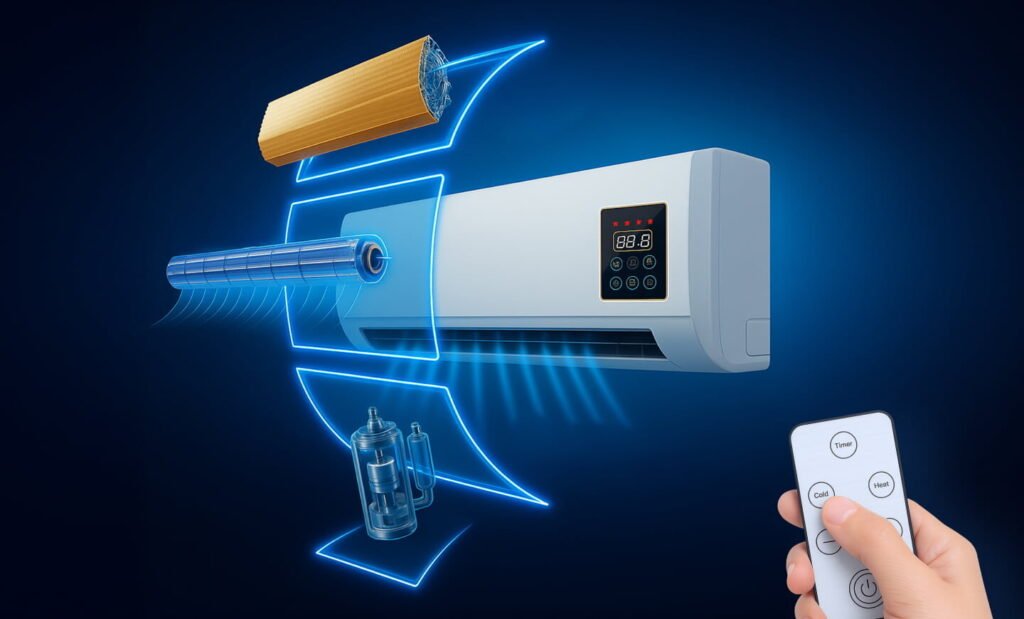
The EpiCooler is a compact, portable air conditioning unit designed to cool or heat a room without permanent installation. It is sold directly by the manufacturer online and positions itself as an accessible alternative to both traditional window AC units and ineffective desk fans.
At its most basic, the EpiCooler draws warm air in through its intake vents, passes that air over internal cooling coils, and pushes cold air back out into the room. Unlike evaporative coolers or basic fan-based personal coolers that use ice to chill the air, the EpiCooler uses a refrigerant-based cooling coil system — which is closer to how a real air conditioner works internally. This distinction matters, and we will come back to it in the technology section.
The unit weighs 2.1 kilograms, which makes it genuinely portable in a way that most window units are not. It connects to any standard electrical outlet, requires no drilling, no installation appointment, and no landlord permission. According to the manufacturer, it is capable of effectively cooling rooms up to 51 square meters — roughly 550 square feet — which puts it in territory that personal coolers typically cannot reach.
It also offers dual functionality that sets it apart from most competitors in this price range: it can cool down to 16°C and heat up to 45°C, meaning it is potentially useful year-round rather than being packed away at the end of summer. Six operating modes give users meaningful control over how the unit behaves depending on conditions and personal preference.
Does the EpiCooler Work? The Science and Technology Behind It
This is the question that matters most, and it deserves a genuinely careful answer — because the answer is more nuanced than marketing copy typically allows.
The EpiCooler operates using what the company calls TurboCool™️ Technology, combined with PTC Ceramic Heating for its warming function. To understand whether these claims hold up, it helps to understand the underlying physics.
Traditional air conditioning systems work through a refrigeration cycle: a refrigerant fluid circulates through coils, absorbing heat from indoor air in one stage and releasing it outside in another. This is why central AC and window units have both indoor and outdoor components — the heat extracted from your room has to go somewhere. The result is genuine, meaningful temperature reduction of the ambient room air, not just the air immediately in front of the unit.
The EpiCooler’s internal mechanism passes air over cooling coils in a single, self-contained unit. This is technically closer to a thermoelectric or compact refrigerant system than to a simple evaporative cooler. For smaller spaces and personal use, this approach can be genuinely effective. The manufacturer claims the unit cools and warms air in seconds, and user feedback broadly supports the idea that the cooling effect is real and noticeable — with several users describing meaningful temperature drops in their rooms within 10 to 15 minutes of use.
The claim of handling rooms up to 51 square meters (about 550 square feet) deserves some scrutiny, however. This is a generous coverage claim for a 2.1-kilogram unit, and real-world performance in a large, open-plan space with high ceilings or significant heat sources will differ from performance in a small, enclosed bedroom. The unit will work in larger rooms, but expectations should be calibrated accordingly — it will have a stronger effect closer to the unit and in more contained spaces.
The dual heating function uses PTC (Positive Temperature Coefficient) ceramic heating, a well-established and reliable technology used in many small space heaters. PTC heaters are self-regulating, which means they are energy efficient and have built-in overheating protection. This is not a gimmick — ceramic PTC heating genuinely works and is safe for home use.
The short version: the EpiCooler uses real cooling and heating technology, not just airflow redirection. Whether it performs at the level of a full-size window unit depends on room size and conditions, but for personal and small-room use, the underlying technology is legitimate.
Key Features
TurboCool Technology: The cooling system at the heart of the unit. It draws warm air through intake vents, chills it via internal cooling coils, and expels cold air into the room. The “Turbo” in the name refers to the speed and force of airflow, which the manufacturer claims produces rapid temperature drops compared to standard portable coolers.
Six Operating Modes: This is one of the EpiCooler’s genuine standout features. Most personal coolers offer two or three fan speeds and nothing more. The EpiCooler provides Low, Medium, High, Turbo, Eco, and Sleep modes — each designed for a different use scenario. Turbo mode maximizes cooling output for the hottest conditions. Eco mode reduces energy consumption during mild weather. Sleep mode runs the unit at low, quiet settings overnight without disruption. The breadth of modes makes the unit genuinely adaptable to different situations rather than being a one-setting device.
Dual Cooling and Heating: The ability to cool down to 16°C and heat up to 45°C makes the EpiCooler a year-round comfort appliance, not just a summer purchase. The PTC ceramic heating element is safe, efficient, and fast. For people in climates with cold winters, or those who work in drafty home offices, this dual function meaningfully extends the product’s value.
Portable and Lightweight: At 2.1 kilograms, the EpiCooler is light enough to carry from room to room without effort. There are no hoses to attach, no water tanks to empty, and no drainage to manage — the unit handles condensation internally, which is a practical advantage over some competing portable AC systems that require regular manual drainage.
Super Quiet Operation: The unit is described as running quietly enough for bedroom use, and this is consistent with what users report. Several reviewers specifically mention being able to sleep through the night without noise disruption — a common complaint about traditional portable AC units, which can be surprisingly loud.
Works for Larger Rooms: The claimed 51-square-meter coverage area is one of the more ambitious specifications in the personal cooling category. Whether the unit fully delivers on this in practice depends on room conditions, but even at partial effectiveness in larger spaces, it outperforms most ice-based personal coolers that are largely useless beyond a few feet.
Remote Control and Touchscreen Panel: Full control is available either via a handheld remote or a built-in touchscreen panel. Temperature, fan speed, and mode can all be adjusted without getting up — a genuine quality-of-life feature, particularly for bedroom use.
Built-In Safety Features: The EpiCooler includes overheating protection, overload protection, short-circuit protection, and an anti-scalding grille. These are meaningful safety specifications for a device that may be left running overnight or used around children.
Sleek, Compact Design: Traditional portable AC units are bulky and visually intrusive. The EpiCooler has a modern, compact form factor that is less obtrusive in a living room or bedroom setting.
No Installation Required: Plug it in, select your mode, and the unit is operational. No tools, no installation, no technician needed.
How to Use the EpiCooler for Best Results
Getting the most out of any portable cooling device requires more than just turning it on. Here are the practical steps that make the biggest difference:
Start with the right mode for the conditions. On the hottest part of a summer day, begin with Turbo or High mode to bring the room temperature down quickly, then switch to Medium or Eco mode to maintain comfort more efficiently once the initial temperature drop has been achieved. Running on maximum power continuously is rarely the most effective or efficient approach.
Position the unit strategically. Cold air is denser than warm air and will naturally sink and spread from the unit’s output. Placing the EpiCooler at a moderate height — on a desk or elevated surface rather than directly on the floor — allows the cold air to descend and distribute more effectively across the room. Pointing it toward the center of the space rather than directly at a wall also helps airflow spread more evenly.
Keep doors and windows closed. This applies to any cooling device. Allowing warm outside air to constantly flow in forces the unit to work harder and reduces its effectiveness. The EpiCooler will perform significantly better in an enclosed space than in one with active air exchange from outside.
Use Sleep mode overnight. Rather than leaving the unit on a higher setting and either getting too cold or waking up to noise, switch to Sleep mode before bed. It runs quieter and at a lower intensity, maintaining comfort without disruption.
Take advantage of the Eco mode during milder periods. On days when temperatures are warm but not extreme, Eco mode provides adequate cooling at reduced energy consumption. This is where the unit’s energy efficiency claims are most likely to translate into real bill savings.
In winter, use the heating function as a zone heater. Rather than heating an entire home to stay comfortable in one room, use the EpiCooler’s heat function to maintain comfort in the specific room you are in. This targeted approach to heating mirrors the energy efficiency logic of its cooling function.
Keep the intake vents clear. Ensure nothing is blocking the air intake on the unit. Restricted airflow reduces cooling performance and forces the motor to work harder.
Is the EpiCooler Any Good?
Honestly — yes, with appropriate expectations in place.
The EpiCooler performs well in the scenarios it is genuinely designed for: cooling a single room or personal space, providing an alternative to central air conditioning for renters or budget-conscious households, and delivering dual-season utility through its heating function. User feedback across multiple reviews reflects genuine satisfaction, with recurring themes of real temperature drops, quiet operation, and energy bill reductions compared to running whole-home AC.
The six-mode system is a practical strength that many competing products lack. The ability to shift between Turbo mode for rapid cooling and Sleep mode for overnight comfort without changing the physical setup of the unit is the kind of real-world usability that matters in daily use.
Where the EpiCooler falls short of its most ambitious claims is in very large or open spaces. The 51-square-meter coverage claim is achievable in ideal conditions — a well-insulated room with limited heat sources and no open windows — but in a less controlled environment, effectiveness will be noticeably reduced. Managing expectations around this is important for buyers in larger homes.
For what it costs and what it is designed to do, the EpiCooler is a genuinely good product.
Who Needs It?

The EpiCooler is the right fit for a specific set of people, and identifying whether you are in that group is the key to knowing whether it is worth purchasing.
Renters in hot climates are perhaps the most obvious beneficiary. The inability to install permanent air conditioning is one of the most common sources of summer misery for apartment dwellers, and the EpiCooler’s no-installation, no-permission-needed design directly solves that problem.
Remote workers who spend long hours at a desk in a home environment will benefit significantly from the ability to cool a single room efficiently without running whole-home systems. The targeted approach to cooling is both more comfortable and more economical for someone whose cooling needs are concentrated in one space.
People in older homes without central air conditioning, or with aging systems that struggle to keep up in extreme heat, will find the EpiCooler a practical supplement or stop-gap that provides real relief without the cost and disruption of system upgrades.
Students in dormitories or shared housing where climate control is communal and often inadequate are another natural fit — the unit is light enough to transport and compact enough for a small room.
Anyone who wants year-round utility from a single appliance will appreciate the dual cooling and heating function. Rather than buying a portable cooler for summer and a space heater for winter, the EpiCooler handles both.
People in climates with genuinely extreme heat — places where temperatures regularly exceed 40°C — who need a device with real cooling power rather than a basic evaporative cooler that struggles in high ambient temperatures.
Benefits Offered By EpiCooler Portable AC
Real temperature reduction in a room, not just personal airflow. Unlike ice-based personal coolers that cool the air directly in front of them, the EpiCooler is designed to lower the temperature of the air in a room, which is a qualitatively different and more impactful outcome.
Year-round usefulness. The dual cooling and heating function means the appliance earns its keep across all four seasons, not just three months of summer.
No installation, no permission, no professional required. This removes every practical barrier that makes traditional AC inaccessible for renters, frequent movers, and budget-conscious households.
Energy efficiency through targeted cooling. Running the EpiCooler in one room uses a fraction of the energy required to cool an entire home. For households where comfort needs are concentrated in one or two rooms, this represents a genuine and measurable reduction in energy consumption.
Six modes for every situation. The range of operating modes means the unit adapts to conditions rather than forcing the user to adapt to the unit.
Internal condensation management. No drain hoses, no water tanks, no mess. The unit handles moisture produced during the cooling process entirely internally, which is a practical advantage over many competing portable AC designs.
Safety features suitable for overnight use. Overheating protection, short-circuit protection, and an anti-scalding grille make the unit safe to run unattended during sleep.
Why Is It Recommended?
The EpiCooler earns its recommendation for a combination of practical and value-based reasons.
First, it offers technology that genuinely cools a room rather than just the person sitting immediately in front of it. For buyers who need real room cooling — not just personal airflow — the internal coil system represents meaningful capability that ice-based personal coolers cannot match.
Second, the dual-season functionality makes it one of the more economically sensible appliances in its category. A single purchase that handles both summer cooling and winter heating, without installation costs, represents solid value regardless of climate.
Third, the six operating modes reflect a product that was designed with genuine use cases in mind rather than a single one-size-fits-all approach. Sleep mode, Eco mode, and Turbo mode each address a specific real-world scenario, and having them available on one device reduces the friction of daily use.
Fourth, the price point is genuinely accessible. At $137.99 after discount, the EpiCooler costs less than a single month’s increase in an electricity bill from running central air conditioning in summer in many U.S. states. For the right buyer, it pays for itself quickly.
Finally, the 60% discount combined with direct-to-consumer pricing removes the retail markup that typically inflates the cost of comparable appliances. The founders’ stated philosophy — that they would rather let the product speak for itself than spend on advertising — is reflected in the pricing structure.
Limitations As Highlighted By EpiCooler Reviews
Coverage claims should be treated with nuance. The 51-square-meter figure is achievable under favorable conditions. In a large, poorly insulated room with high ceilings, multiple heat sources, and windows open, the effective coverage will be smaller. Buyers with very large spaces should set realistic expectations.
It is not a replacement for a full HVAC system. The EpiCooler is a serious portable cooling device, but it is not a central air conditioning system. In extreme heat — days above 43°C — in a large home, it will provide meaningful relief but will not replicate the whole-home cooling that a central system delivers.
Requires a power outlet. Unlike battery-operated or USB-powered personal fans, the EpiCooler needs to be near a standard electrical outlet. This limits its usefulness in settings without convenient access to power.
Only available online. The product is not available through retail stores, which means buyers cannot see or test it in person before purchasing. While the direct-to-consumer model keeps costs down, it requires a degree of trust in the product based on online information alone.
The discount creates time pressure. Marketing that emphasizes limited-time discounts and selling-out inventory can create artificial urgency. Buyers should evaluate the product on its merits rather than making rushed decisions based on discount expiry framing.
Complaints
The most common real-world complaints about the EpiCooler center on a few recurring themes that are worth acknowledging.
Some users in larger rooms note that while the unit provides noticeable cooling, it does not achieve the dramatic temperature reduction suggested by the most enthusiastic marketing claims. In a 30-square-meter bedroom with good insulation, it performs very well. In a 51-square-meter open-plan living area with high ceilings, it provides relief but falls short of fully cooling the space to a comfortable temperature on the hottest days.
A small number of buyers report that the initial noise level on Turbo or High mode is louder than they expected, though feedback on Sleep mode noise is consistently positive. The disparity suggests the unit performs well acoustically at lower settings but is not particularly quiet at maximum power.
Some customers have raised questions about long-term durability and after-sales support, which is a legitimate concern with any direct-to-consumer brand that does not have a physical retail presence. Buyers should ensure they understand the warranty and return policy before purchasing.
A few users note that the absence of an Amazon listing makes repeat purchases or warranty claims less straightforward than they would be through a major platform.
Verdict
The EpiCooler Portable AC is a capable, well-designed portable cooling and heating unit that delivers genuine value for the right buyer. It uses real cooling technology rather than just airflow redirection, handles rooms of meaningful size, offers dual-season functionality, and comes with enough operating modes to be genuinely adaptable to different conditions and preferences.
It is not a whole-home cooling solution, and it should not be evaluated as one. But as a portable, installation-free appliance that can meaningfully cool a room, provide targeted relief for renters and remote workers, and serve year-round heating needs as well, it makes a strong case for itself at its current price point.
The 60% discount and direct-to-consumer pricing make it financially accessible. The six operating modes, quiet sleep function, and built-in safety features make it practically usable for real daily life. And the dual cooling and heating capability makes it more economically sensible than most seasonal single-function appliances.
If your cooling needs are concentrated in one or two rooms, if installation is not an option, or if you are simply looking for a smarter way to stay comfortable without running expensive whole-home systems for the entire summer, the EpiCooler is worth serious consideration.