
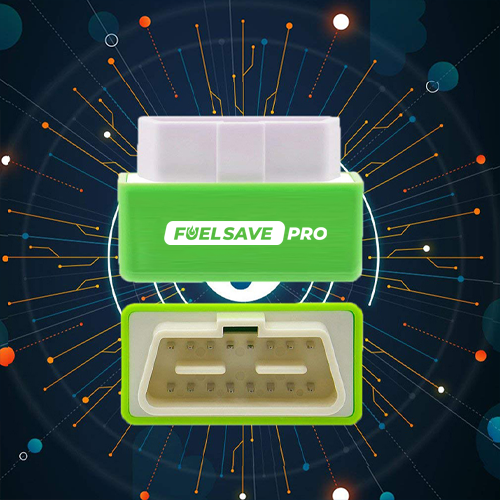

Investigating Fuel Save Pro In 2026
Still in 2026, fuel costs have become one of the most persistent pressures on household budgets across America. This reality has pushed millions of drivers to seek practical, affordable solutions that actually make a difference. In 2026, Fuel Save Pro Claims to cut fuel cost though not as it appears on most reviews.
Truly, Fuel economy tips, hypermiling techniques, and engine maintenance schedules help, but they demand sustained effort and discipline. What most drivers want is something simple, affordable, and effective: a one-time fix that quietly works in the background.
That is precisely the promise of the Fuel Save Pro, a compact OBD2 chip that plugs directly into your vehicle’s onboard diagnostics port and claims to reprogram your car’s electronic control unit for better fuel efficiency. No mechanic visit, no permanent modification, no monthly subscription. Just plug it in, drive normally, and track the difference.
Basically, the market for fuel-saving gadgets has a troubled history. Products that make big claims at checkout and deliver nothing at the pump have made many consumers understandably skeptical. The question isn’t just whether Fuel Save Pro sounds convincing, it’s whether it actually works for real drivers in real vehicles under real driving conditions, not just what the literature tells.
This review addresses that question directly. It examines how the device works, what the technology behind it actually does, what real buyers have experienced, and whether the investment makes sense given your vehicle type, driving habits, and fuel budget. If you have been searching “Does Fuel Save Pro work?” or wondering whether it’s a scam, looking for customer reviews, this is the complete, honest answer.
What Is Fuel Save Pro?
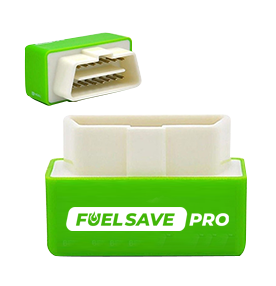
The Fuel Save Pro is a portable, plug-in OBD2 chip that claims to improve vehicle’s fuel economy by communicating with and progressively recalibrating its Electronic Control Unit. The maker claims that it is compact enough to sit behind the dashboard once installed, completely out of sight, and requires no tools, technical knowledge, or professional assistance to use.
The device connects through the standard 16-pin OBD2 diagnostic port that has been present in all US vehicles manufactured after 1996 and all European vehicles manufactured after 2001. This port was originally designed for emissions testing and engine diagnostics, but it also serves as a direct communication interface with the vehicle’s central management computer the ECU. Fuel Save Pro claims to exploit that interface to read live engine data and apply efficiency-oriented recalibrations over time.
According to the advertisement, The company behind the product is American-owned and operates a warehouse in New Jersey. Orders are shipped within 48 business hours via USPS, FedEx, or UPS, and the device is sold exclusively through the official website. There are no third-party marketplace listings guaranteed to carry the authentic product or honour the 30-day money-back guarantee.
More On Fuel Save Pro Device
As per the manufacturer, Fuel Save Pro makes no permanent changes to your vehicle. The recalibration it applies through the OBD2 port is not written into the ECU’s permanent firmware. Removing the device at any point instantly returns the ECU to its original factory default settings, with no residual effect, no trace, and no impact on resale value. This distinguishes it fundamentally from professional ECU remapping services, which make permanent firmware changes costing anywhere from $300 to $800 per vehicle.
The device includes a built-in reset function. On the top flat surface opposite the plug-in side, two small holes are visible. Inserting a pin into the slightly larger hole on the top left restores the device’s own calibration data to factory default, useful if the vehicle changes hands or if the driver wants to restart the calibration process from scratch.
According to Fuel Save Pro reviews though with limited verification, it carries over 3,750 buyer reviews, is covered by a 30-day money-back satisfaction guarantee, and is currently available at a 50% promotional discount from the official website. Multi-unit pricing is also available for households managing more than one vehicle.
Does Fuel Save Pro Work? The Science and Technology Behind It
To understand whether Fuel Save Pro works, you first need to understand why factory-tuned vehicles are not already running at peak efficiency and why that gap exists by design.
Why Factory ECU Calibrations Leave Efficiency on the Table
When an automaker programs a vehicle’s ECU before it leaves the factory, the engineers are not optimizing for the specific driver who will eventually buy that car. They are calibrating for the widest possible range of conditions: varying fuel quality across different regions, extreme cold and heat, high-altitude driving, maximum payload capacity, and the full spectrum of driver behaviour from gentle commuting to aggressive highway runs. That breadth requires conservative calibration.
Although, the factory tune sets fuel deliver parameters wide enough to function reliably in every scenario the vehicle might encounter over its lifetime. The trade-off is that for the vast majority of drivers who operate in a narrower, more predictable range of conditions the ECU is delivering more fuel than necessary for efficient combustion under their actual usage patterns. The factory setting is a safe average, not an optimized profile.
How the OBD2 Port Enables Real-Time ECU Communication
The OBD2 diagnostic port is the standardized interface through which external devices can read and interact with a vehicle’s engine management system. It carries live data streams from dozens of sensors throughout the drivetrain: oxygen sensors measuring exhaust composition, throttle position sensors tracking accelerator input, mass airflow sensors measuring incoming air volume, coolant temperature sensors, engine load calculations, and fuel trim values showing real-time adjustments the ECU is already making.
The Fuel Save Pro plugs into this port and immediately begins reading all of this sensor data. This is not passive monitoring. It claims to use the incoming data feed to analyze how the engine is actually performing under the specific conditions in which this particular vehicle is being driven.
The 150-Mile Adaptive Calibration Process
The Fuel Save Pro does not apply a fixed, one-size-fits-all adjustment. This is a critical distinction from simpler, lower-quality devices on the market according to the manufacturer. Instead, it enters an adaptive calibration phase that runs over approximately 150 miles of normal driving.
During this period, the device is building a behavioral profile of the specific vehicle. It is tracking how the driver typically accelerates, what speeds are most commonly maintained, how frequently the engine encounters stop-and-go conditions versus sustained highway cruising, and what the engine’s fuel trim data reveals about current ECU performance gaps. Every mile of data refines the profile further.
After the calibration period, the device applies optimized parameters back to the ECU’s fuel management routines, specifically targeting three core areas:
Fuel injection precision refers to the exact volume of fuel delivered per combustion cycle. The factory setting errs on the side of delivering slightly more fuel than necessary to guarantee ignition reliability across all conditions. A calibrated adjustment for a specific vehicle and driver profile can reduce that excess without sacrificing performance, because the calibration now knows the actual conditions under which combustion needs to occur.
Air-to-fuel ratio optimization is closely related. The stoichiometric ideal for complete combustion is a 14.7:1 ratio of air to fuel by mass. In practice, ECUs vary this ratio constantly in response to driving conditions, but factory programming tends to run slightly rich meaning more fuel relative to air as a safeguard. Bringing the ratio closer to the ideal under the conditions this specific vehicle actually encounters reduces fuel consumption per cycle.
Throttle response mapping adjusts how aggressively the ECU responds to accelerator input. A recalibrated throttle map can smooth out the engine’s power delivery, reducing the fuel spikes associated with uneven or over-aggressive acceleration without changing how the vehicle feels to drive.
Performance Claims and Realistic Expectations
The manufacturer claims up to 35% reduction in fuel consumption, 15% to 25% ECU efficiency enhancement, 35% more horsepower, and 25% more torque as outcomes of the recalibration process. These represent best-case scenarios, most likely achieved in older vehicles with large-displacement engines where the original factory calibration had the most available headroom.
For typical buyers moderately aged vehicles, mixed city and highway driving realistic expectations are a 15% to 25% fuel economy improvement. Drivers spending $80 per week on fuel could realistically save between $12 and $20 weekly, which adds up to roughly $600 to $1,000 annually from a device.
Newer vehicles with modern, already-efficient ECU calibrations will see smaller gains, simply because there is less inefficiency available to recover. The science is sound; the variation in outcomes reflects the variation in how much room different vehicles have to improve.
Features of the Fuel Save Pro
OBD2 Port Connectivity: The device connects through the standardized 16-pin OBD2 port found in virtually all passenger vehicles sold in the US after 1996 and in Europe after 2001. No adapters, no tools, and no wiring are required. Installation is a straightforward plug-in.
Adaptive ECU Recalibration: Unlike basic devices that apply generic preset adjustments, the Fuel Save Pro builds a vehicle-specific efficiency profile over 150 miles of real driving before applying its optimized parameters. This targeted approach produces more precise results across varied vehicle types and driving styles.
Fuel Consumption Reduction: The device targets measurable improvement in miles per gallon through optimized fuel injection timing, air-to-fuel ratio management, and throttle response calibration. Buyers across the 3,750+ review pool consistently report real, trackable savings across successive fill-ups.
Secondary Performance Improvements: More efficient combustion management also produces better power delivery as a by product. Many buyers report improved throttle responsiveness and a more energetic driving feel alongside the fuel economy gains, making the device useful for both economy-focused and performance-conscious drivers.
More Features
Keyless Ignition Compatibility: The Fuel Save Pro is fully compatible with push-button start vehicles, addressing a common concern among owners of newer model cars who might assume the device is limited to older ignition systems.
No Permanent Modifications: The device makes no lasting changes to the ECU’s firmware. Removing it at any time completely restores the vehicle’s factory settings. This is a meaningful advantage for drivers concerned about warranty implications or resale value.
Compact, Concealed Design: Once installed, the device sits entirely behind the dashboard without protruding into the cabin or being visible to passengers. It does not interfere with legroom or any other interior element.
Built-In Reset Function: A simple pin-activated reset on the device’s surface clears all stored calibration data and returns the unit to factory default, useful when transferring the device to a different vehicle or restarting the calibration process.
30-Day Money-Back Guarantee: Every purchase is covered by a full satisfaction refund within 30 days, giving buyers enough time to complete calibration, track results across multiple fill-ups, and make a data-grounded decision.
How to Use Fuel Save Pro for Best Results
Getting the most from the Fuel Save Pro requires following the calibration process correctly and tracking results systematically.
First, locate the OBD2 port in your vehicle. It is positioned under the dashboard below and slightly to the left of the steering column. The port has a distinctive 16-pin trapezoidal shape that is easy to identify.
Turn the ignition to the “on” position without starting the engine. This activates the vehicle’s electrical system and powers the OBD2 port. Insert the Fuel Save Pro into the port it connects in one orientation only, making incorrect installation impossible.
Start the vehicle and drive normally for the next 150 miles. Do not attempt to evaluate results before the calibration period is complete. Drivers who assess performance after only 20 or 30 miles and then conclude the device isn’t working are making the most common mistake in the buyer review record. The adaptive calibration genuinely requires the full 150 miles to build an accurate vehicle profile.
Once calibration is complete, begin tracking fuel economy properly. Record your odometer reading and the number of gallons dispensed at each fill-up. Calculate miles per gallon across two to three consecutive tanks and compare to your pre-installation baseline. This systematic comparison, not a gut feeling after one drive, is what accurately captures the improvement the device is producing.
Is Fuel Save Pro Any Good?
Across a buyer base of over 3,750 reviews, the Fuel Save Pro earns broadly positive feedback with consistent, specific outcomes rather than vague general endorsements. Real buyers report actual miles-per-gallon improvements, with some documenting gains as high as 7 MPG on family vehicles with high weekly mileage.
Complaints that do exist in the review record follow predictable patterns. The most common source of dissatisfaction is impatience during the calibration period buyers who evaluate the device before 150 miles incorrectly conclude it isn’t working. A smaller group of buyers with newer, already-efficient vehicles report modest rather than dramatic improvements, which is consistent with how the technology actually works.
The 30-day money-back guarantee is a strong indicator of manufacturer confidence. A device that consistently underdelivered could not sustain a full-refund return policy at scale without significant financial consequence. The presence of that guarantee, combined with a buyer review volume exceeding 3,750 entries, suggests a product that performs well enough to retain the majority of customers.
Who Needs the Fuel Save Pro?
The Fuel Save Pro delivers the strongest results for specific driver profiles where inefficiency in the existing ECU calibration is highest and weekly fuel spend is most burdensome.
High-mileage daily commuters are among the best candidates. Drivers covering 300 or more miles per week have both the usage volume to benefit from improved efficiency and the fuel spend to recover the device’s cost quickly.
Truck and large SUV owners typically see the most significant gains. Large-displacement engines running on factory conservative calibrations have the most efficiency headroom available, meaning the adaptive recalibration has more room to work with.
Families with high weekly driving volumes school runs, activity transport, errands accumulate miles across multiple short trips, a driving pattern that tends to run less efficiently on factory tunes and responds well to recalibration.
Owners of older vehicles from the late 1990s and 2000s benefit most dramatically. ECU calibrations from that era predate modern efficiency standards and often carry the widest gap between factory tune and optimal performance.
Drivers who cannot currently switch vehicles but need to reduce operating costs immediately will find the one-time cost and no-subscription model particularly practical.
Benefits of the Fuel Save Pro As Highlighted By Fuel Save Pro Reviews
Direct weekly fuel savings: A 20% improvement for a driver spending $80 per week generates over $750 in annual savings from a $44.99 device.
Improved engine responsiveness Better combustion efficiency produces a more energetic throttle feel alongside the economy gains.
No recurring costs: One-time purchase with no subscription, no consumables, and no maintenance required.
Reduced carbon emissions: Burning less fuel per mile reduces combustion byproducts released into the atmosphere.
Fully reversible: No permanent changes means no risk to resale value or warranty status.
Universal vehicle compatibility: Works with virtually all US vehicles made after 1996, covering the vast majority of cars currently on the road.
Zero installation effort: No tools, no mechanical knowledge, and no professional help required.
Transferable between vehicles: The device can be reset and recalibrated for a different vehicle whenever needed.
Multi-unit household savings: Multi-pack pricing reduces the per-unit cost significantly for families managing two or more vehicles.
Risk-free trial period: The 30-day guarantee means buyers can verify results across real fill-ups before committing permanently.
Why Is the Fuel Save Pro Recommended In America?
Factory ECU calibrations are conservative by design, built to handle the widest possible range of conditions rather than the specific conditions of any individual driver. This built-in inefficiency is well-established in automotive engineering. The Fuel Save Pro targets this gap directly, using the same OBD2 interface and ECU communication principle that professional remapping services rely on at a fraction of the cost.
OBD2-based ECU communication is not new or experimental. Automotive engineers, performance tuners, and fleet operators have used OBD2 diagnostics and ECU optimization for decades.
The Fuel Save Pro applies this established approach in an accessible, consumer-friendly format that removes the need for professional installation.
At $44.99 with a 30-day money-back guarantee, the device costs less than a full tank for most vehicles. The guarantee window is wide enough to complete the 150-mile calibration and track results across two to three fill-ups. If the device doesn’t perform, the purchase is fully refundable. The financial risk is minimal.
Over 3,750 Real Buyers Provide Meaningful Evidence.
Others Reasons
A review base exceeding 3,750 verified buyers is not a small sample though not verified. At that volume, the consistent pattern of positive outcomes, specific MPG improvements, reduced weekly fuel spend, better throttle response represents a meaningful and credible consumer dataset. The volume and specificity of the feedback distinguishes it from products supported only by manufactured testimonials.
It Costs a Fraction of Professional Alternatives. Professional ECU remapping delivers similar efficiency improvements at $300 to $800 per vehicle, requires a specialized mechanic, makes permanent firmware changes, and cannot be reversed.
The Fuel Save Pro claims that it delivers comparable outcomes at $44.99, is fully removable, and requires no professional involvement. For drivers who need results without a large upfront service bill, the value proposition is clear.
No Ongoing Costs or Commitments Unlike subscription-based fuel management apps or ongoing maintenance services, the Fuel Save Pro is a one-time purchase. Every month of improved fuel economy after the initial cost is recovered represents pure savings with no further investment required.
It Works Silently Without Changing Driving Habits. Most fuel-saving strategies require sustained behavioural change, gentler acceleration, reduced highway speed, and modified routing. The Fuel Save Pro requires none of this. It works in the background regardless of how the driver operates the vehicle, making it practical for drivers who want results without adjusting their daily routines.
Domestic Company with Reliable Fulfilment. Operating from a New Jersey warehouse with 48-hour order processing and standard carrier shipping, the company provides a straightforward domestic purchase and delivery experience with accessible customer support for guarantee claims.
Limitations of Fuel Save Pro As Highlighted By Recently Submitted Complaints
The Fuel Save Pro is a practical and well-reviewed product, but buyers should enter the purchase with accurate expectations.
Results require patience. The 150-mile calibration period is not optional it is the mechanism through which the device builds its vehicle-specific efficiency profile. Buyers who do not allow calibration to complete will not see the gains the broader buyer record reports.
Newer vehicles with modern, already-efficient ECU calibrations will see smaller improvements. The device can only recover inefficiency that exists. A 2023 hybrid with a sophisticated fuel management system has significantly less available headroom than a 2004 truck.
The 35% fuel consumption reduction represents a best-case outcome, not a typical one. Most buyers should realistically expect improvements in the 15% to 25% range, which is still substantial but worth calibrating expectations around before purchase.
The device is available only through the official website. This limits purchasing convenience but also ensures buyers receive the authentic product with access to the money-back guarantee.
Final Verdict
Fuel Save Pro occupies a well-defined and defensible position in the fuel economy market. The technology uses a OBD2-based ECU communication and adaptive recalibration is established, legitimate, and already used professionally in the automotive industry. The device makes that same approach accessible to everyday drivers at a consumer price point, without requiring professional installation or accepting permanent changes to the vehicle.
The evidence supporting real-world results is substantial. Over 3,750 verified buyers, consistent reports of measurable MPG improvement, and a 30-day money-back guarantee that removes virtually all financial risk combine to make a compelling case.
It is not a miracle device. Newer vehicles will see modest gains. Results require completing the calibration period. The maximum performance claims represent best-case scenarios rather than typical outcomes.
But for high-mileage commuters, truck and SUV owners, families with demanding weekly driving schedules, and owners of older vehicles looking for an immediate, low-cost way to reduce fuel spend, the Fuel Save Pro claims to be a practical option worth trying. At $44.99 with a full-refund guarantee, the cost of finding out whether it works for your specific vehicle is lower than a single tank of gas.