
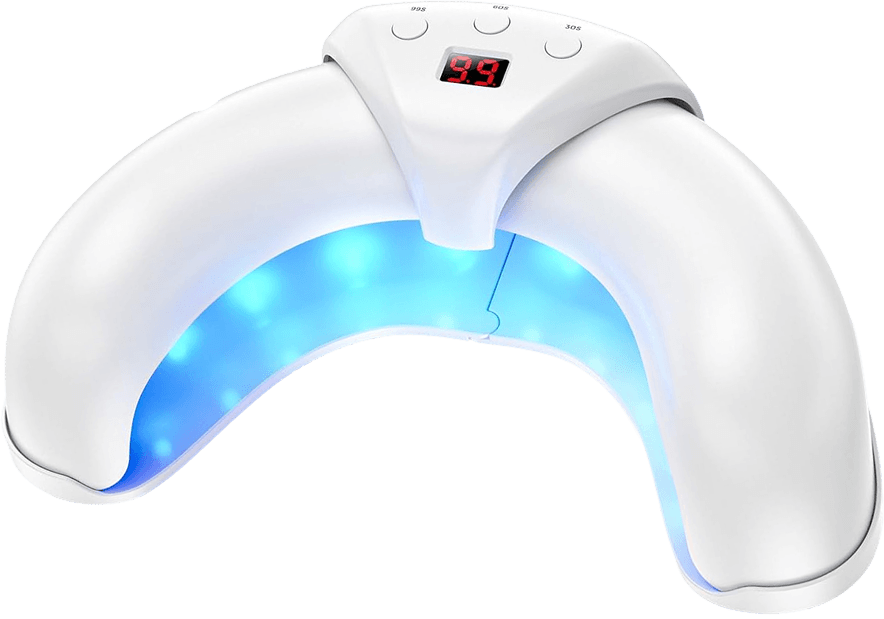
Nail fungus, medically known as onychomycosis, is one of the most common nail conditions in the world. Estimates put its prevalence at around 10% of the general population, rising to somewhere between 20% and 50% among adults over 60, and it accounts for roughly half of all nail disorders seen in clinical practice. It’s stubborn, slow to develop, slower to treat, and often embarrassing enough that people go to real lengths to hide it: skipping sandals in summer, avoiding pools and nail salons, and covering up in front of partners or family.
Given how frustrating and persistent the condition is, it’s no surprise that a steady stream of “breakthrough” gadgets promises to fix it at home, cheaply, painlessly, and fast. Search for “nail fungus laser device” and you’ll find dozens of similarly styled products, nearly all sold through their own standalone websites, nearly all describing a combination of light wavelengths, and nearly all promising results measured in days rather than the months. RenewaNail Device is one of these products: a handheld device marketed as a fast, non-invasive alternative to prescription antifungals, topical treatments, or in-office laser and surgical procedures.
Also Check Fungabeam Antifungal Device
What Is the RenewaNail Device?
According to its marketing, RenewaNail Device is a handheld, battery-powered device intended for daily home use on fungus-affected fingernails and toenails. It’s positioned as a consumer alternative to three existing treatment categories: prescription oral antifungal medication (such as terbinafine or itraconazole), topical antifungal creams and medicated lacquers, and in-clinic laser or surgical procedures performed by a podiatrist or dermatologist.
The manufacturer describes it as a “first-of-its-kind” device developed with input from scientists and recommended by podiatrists, sold exclusively through the brand’s own website rather than through third-party retailers such as Amazon or eBay. The marketing frames this exclusivity as protection against counterfeit copycats. That may well be part of the reasoning, but it’s also worth noting, neutrally, that a single-website, direct-to-consumer sales model is extremely common among low-cost imported gadgets that carry inflated claims. It’s a detail worth keeping in mind rather than treating as reassurance on its own, and it also means the product doesn’t carry the kind of large, searchable, independent review base that a widely retailed product would.
The device is marketed as part of a broader wave of “combination light therapy” tools: small, cordless units built around LED or diode components rather than the higher-powered surgical lasers used in medical offices. That distinction between consumer-grade light-emitting diodes and clinical laser equipment is one of the more important, and least discussed, details in this entire category of product.
RenewaNail Device: What Does It Claim to Do?
RenewaNail Device uses a combination of blue light and infrared light in a handheld, at-home device. The blue light is described as targeting fungus and bacteria on the nail’s surface, while the infrared light is said to penetrate deeper into the nail bed, reaching areas where creams and polishes can’t. Used twice daily for about 7 minutes per session, the company claims the fungus is fully killed within 7 days, regrowth becomes visible by day 14, and a completely clear, healthy nail is achieved within 21 to 30 days.
Features RenewaNail Device
Based on the product listing, RenewaNail’s core advertised features include:
Dual light technology: a stated combination of visible blue light and invisible infrared light emitted from the same handheld unit.
Portable, cordless design intended for use at home: the marketing suggests using it while sitting on the couch or having morning coffee.
A short daily treatment time, marketed as roughly 7 minutes per session, twice a day.
No topical mess: unlike creams, ointments, or medicated lacquers, there’s nothing to apply, dry, or wipe off.
A stated 100-day money-back guarantee, positioned as removing financial risk from the purchase.
A one-time purchase price, marketed as more economical over time than recurring topical treatments or ongoing office visits.
Order RenewaNail Today From The Official Website at a Discounted Prices
How Does RenewanNail AntiFungus Device Works
The manufacturer describes a two-part mechanism:
Blue light, which is said to act on the visible surface of the nail, targeting fungus and bacteria on contact, and infrared light said to penetrate more deeply into the nail bed, reaching areas that creams and polishes supposedly can’t.
What Does the Research Say About Laser Treatment for Nail Fungus?
Laser treatment for onychomycosis has been studied for over a decade, mostly using Nd:YAG lasers (around 1064 nm) in clinical settings. The theory is sound: fungal cells absorb certain light wavelengths as heat, and sustained heat can damage fungal proteins and trigger cell death. Some research also points to disruption of protective biofilms and light-induced oxidative stress on fungal cells.
Understanding Nail Fungus Before You Shop
It helps to know a little about the condition itself before evaluating any treatment for it, home device or otherwise. Onychomycosis is usually caused by dermatophyte fungi (the same family responsible for athlete’s foot and ringworm), though yeasts and non-dermatophyte molds cause a meaningful minority of cases. The infection typically starts at the tip or side of the nail and spreads toward the base, causing the thickening, yellow-brown discoloration, brittleness, and crumbling texture that most people associate with the condition.
Two features of the condition matter a lot when judging any treatment’s claimed timeline. First, the fungus lives inside and under the nail plate, in a low-blood-flow environment that’s naturally hard for topical treatments, and even some oral medications, to penetrate effectively: which is exactly why treatment is difficult in the first place and why so many products claim to have solved the penetration problem. Second, a nail cannot heal the way skin does. Damaged nail tissue can’t be repaired; it can only be replaced as healthy new nail forms at the cuticle and grows the old, damaged nail out and off. Fingernails grow out fully in about 4 to 6 months. Toenails, which are far more commonly affected, take 9 to 12 months, and can take even longer for the big toe or in older adults, where growth naturally slows.
This matters enormously for evaluating any product’s promised results: even a treatment that killed 100% of the fungus on day one would still leave a visibly damaged nail for many months afterward, simply because that’s how long it takes for the healthy new nail to grow in and replace the old one. Any marketing claim of a fully clear, healthy-looking nail within three or four weeks should be read with that biological reality in mind.
Order Renewanail Device From The official website today
Risk Factors and Why Fungus Comes Back
Understanding why nail fungus develops and recurs also helps explain why so many treatments, home devices included, disappoint people even when used exactly as directed. Common risk factors include older age (nails grow more slowly and are more brittle, giving fungus more time to establish itself), reduced circulation to the feet, diabetes, a weakened immune system, excessive sweating, tight or non-breathable footwear, a history of athlete’s foot, minor nail trauma, and simply spending a lot of time in communal damp environments such as pools, gyms, and locker rooms, where fungal spores are easily picked up.
These factors matter for two practical reasons. First, they explain why the same infection can respond differently in different people, which is part of why manufacturer testimonials and before-and-after photos, however genuine they may be for the individuals involved don’t reliably predict what any other specific buyer should expect. Second, and often overlooked in marketing for any nail-fungus product, is that fungal spores frequently persist in shoes, socks, nail clippers, and shower floors even after the nail itself starts to clear.
Treating the nail without also addressing footwear (rotating shoes, using antifungal powder or spray, washing socks in hot water, replacing old nail tools) is a common reason infections that seemed to respond to treatment later come back. This is true regardless of which specific treatment: oral, topical, in-office laser, or a home device is used on the nail itself.
How to Use RenewaNail Device
Per the marketing instructions, the suggested regimen is straightforward:
Apply the device directly to the affected nail(s) for approximately 7 minutes per session.
Use it twice daily; once in the morning and once before bed for consistent results.
Continue consistently for several weeks; the marketing suggests the fungus is “completely killed” within 7 days, that regrowth begins to be noticeable around day 14, and that a fully regrown, fungus-free nail is achievable within 21 to 30 days.
As covered above, that timeline runs into a hard biological constraint: toenails take roughly 9 to 12 months to fully grow out, and fingernails take 4 to 6 months. No treatment: laser, oral, topical, or otherwise can compress that growth cycle into three or four weeks, because a nail’s replacement happens only as new tissue forms at the base (the matrix) and pushes forward, not by the existing damaged nail somehow becoming healthy in place.
A treatment can, at best, stop the infection from progressing and allow the new growth coming in from the base to be clear and healthy which is itself worth something, but it’s a very different claim than “your nail will be regrown and glowing within a month,” and it takes as long as the nail naturally takes to grow, regardless of the specific treatment used.
This is a useful general test for evaluating any nail-fungus product’s stated timeline: if the promised full-recovery window is shorter than the months it takes nails to grow, the timeline is describing something other than a genuinely regrown, healthy nail most likely a reduction in visible symptoms, or simply an optimistic marketing estimate.
RenewaNail Reviews: Is It Legit or a Scam?
The honest answer sits between the two extremes rather than at either end. RenewaNail is very unlikely to be an outright scam in the narrow sense of a seller taking payment and shipping nothing, it appears to be a real, purchasable consumer device built around genuine LED or laser-diode components, sold with an apparently functioning storefront and stated return policy. Blue and infrared light do have documented antimicrobial and cellular effects in general dermatological research, so the underlying scientific premise isn’t invented from nothing.
Where the marketing runs meaningfully ahead of the evidence is in the specifics: the speed of results, the certainty of language (“permanently,” “once and for all,” “gone”), vague and unattributed authority claims, a promised timeline that conflicts with how nails actually grow, and comparisons to competing treatments that highlight only their downsides. These are, as covered above, classic and widely used patterns in direct-response marketing for health gadgets generally not evidence unique to fraud, but also not evidence of the rigor you’d expect from a genuinely well-substantiated medical device.
For context, even the best-studied clinical-grade lasers for this condition, operated by trained providers using far more powerful equipment, have inconsistent and generally modest published outcomes, and are FDA-cleared only for a temporary cosmetic improvement claim rather than a cure claim. A cheaper consumer device making stronger, more confident claims than the clinical-grade equipment it’s compared against warrants more scrutiny, not less. The most defensible summary is: probably a real, functioning light-emitting device; almost certainly overstated in its specific effectiveness and timeline claims; not independently verified by any published clinical research specific to the product itself.
RenewaNail Device: Does It Really Worth It?
Truly, there’s no independently published, peer-reviewed evidence confirming that RenewaNail Device specifically kills nail fungus or regrows healthy nails on the timeline advertised. The underlying idea: light energy affecting fungal cells isn’t invented from nothing; it’s loosely based on real laser dermatology research. But that research centers on clinic-grade Nd:YAG lasers operated by professionals, and even those have inconsistent, modestly-supported results, with FDA clearance limited to “temporary cosmetic clearing” rather than curing infection. A lower-powered, battery-operated consumer device making stronger claims than the clinical equipment it resembles is a mismatch worth taking seriously. Add in the biology of nail growth: toenails take 9 to 12 months to fully regrow and a “clear, glowing nail in 30 days” claim doesn’t line up with how nails physically work, regardless of whether the fungus itself is affected.
We aren’t saying it’s not worth it or trying to downgrade it, instead, we want to put you in a position where you can’t be disappointed. Results are real but we need to manage expectations. Many reviews recommend it and recent users confirm it works.
In short, it used a plausible mechanism, but the timeline advertised by most reviewers doesn’t match nail growth reality.
RenewaNail Device Benefits As Claimed by the Manufacturer
The manufacturer’s marketing lists several benefits. They’re presented here exactly as claims, not as established or independently confirmed outcomes:
Eliminating nail fungus “at the root” and preventing its return.
Supporting healthier, faster nail regrowth.
Improving nail appearance, texture, and color over time.
Avoiding the cost, downtime, and discomfort associated with in-office laser sessions or nail-removal surgery.
Avoiding the liver-related risks associated with oral antifungal medications.
A simple, low-effort daily routine compared with multi-step topical regimens.
Some of these comparisons are worth examining rather than accepting at face value. Take the liver-risk claim about oral terbinafine, the most commonly prescribed oral treatment: published research puts the risk of clinically significant terbinafine-related liver injury at roughly 1 in 50,000 to 1 in 120,000 prescriptions: a real but genuinely rare event, on a similar order of likelihood to the lifetime risk of being killed by an earthquake in the United States. Mild, asymptomatic elevations in liver enzyme blood tests are more common (single-digit percentages in some studies) but typically resolve without lasting harm and are the reason doctors monitor liver function during treatment in the first place.
Terbinafine also has real effectiveness behind it: clinical trials report complete cure rates in the range of roughly 35% to 76%, depending on the study design and follow-up period, making it one of the better-performing treatments available for this condition.
A marketing comparison that raises the liver-risk detail without mentioning that effectiveness data is technically accurate but meaningfully incomplete, it invites you to weigh a rare risk from one option against no risk data at all from the other.
Why It’s Trending in Search Results
A few forces are likely driving search interest.
First, onychomycosis is common, embarrassing, and genuinely hard to treat, existing options are slow (oral meds), messy (topical lacquers), or expensive (in-office lasers), which creates strong demand for something that sounds easier.
Second, the product seems to be heavily promoted through affiliate marketing and paid ads that link out to review-style landing pages which pushes both branded searches (“RenewaNail reviews”) and related terms (“laser nail fungus device”) higher in search volume.
Third, “before and after” visual content performs unusually well in this niche: dramatic nail transformations are shareable and clickable, fueling social media traffic that spills into search. None of that traffic pattern says anything about whether the device works; it mainly reflects an active, well-funded marketing campaign meeting a genuinely large, motivated audience.
Who Should Consider Trying It
A device like this is most reasonable to consider for someone who fits a fairly specific profile:
Has a mild, early-stage nail discoloration, a small area affected, no pain, no spreading and wants a low-risk, low-cost adjunct to try alongside, not instead of, proven care.
Has already discussed treatment options with a doctor or podiatrist and been cleared to experiment with adjunctive light therapy without delaying more effective treatment.
Understands the refund policy in detail, has confirmed the return process and timeframe in writing, and is prepared to follow through on it if results don’t materialize.
Has realistic expectations about timeline, understanding that even a genuinely effective treatment won’t produce a fully regrown, healthy-looking nail in under a month, simply because of how nails grow.
Isn’t relying on it as a substitute for medical care for a more significant infection.
People who fall outside that profile; a severe, extensively spread, painful, or bleeding infection; diabetes; poor circulation; or a compromised immune system should see a podiatrist or dermatologist rather than rely on an unregulated home device as a first-line treatment. Fungal nail infections in these groups carry a higher risk of complications, including secondary bacterial infection, and delaying effective treatment while waiting to see if a home device works can allow the infection to progress further, making it harder to treat later.
RenewaNail Antifungus Device Pros and Cons
Potential Pros
Non-invasive and reportedly painless, in contrast to some in-office laser treatments, which patients in published studies have rated as moderately uncomfortable.
No known systemic side effects or drug interactions, unlike oral antifungal medication, which requires liver function monitoring in some patients.
Low daily time commitment; about 14 minutes total per day as instructed, which is easier to sustain than some multi-step topical regimens.
A stated 100-day refund window, which if honored exactly as described meaningfully reduces the financial downside of trying it.
Light therapy as a broad category is a legitimate, actively researched area of dermatology, even though this specific consumer device hasn’t been independently validated in published trials.
A one-time purchase avoids the recurring cost of refillable topical treatments or repeated in-office visits.
Potential Cons
No independently published clinical trial data exists for this specific device which means that every effectiveness claim in the marketing traces back to the seller, not to a peer-reviewed source.
The claimed timeline (fungus “completely killed” in 7 days, fully regrown clear nail in 21–30 days) is inconsistent with how quickly nails physically grow, regardless of how effective the treatment itself might be.
Comparisons to oral medication and in-office procedures highlight those alternatives’ downsides (cost, liver risk, recovery time) without presenting their documented effectiveness data, which in the case of oral terbinafine is substantial.
Sold through a single direct-to-consumer website only, which makes it difficult to find reviews independent of the brand’s own marketing funnel and typical affiliate-style landing pages.
Phrases like “recommended by US podiatrists,” “clinically tested,” and “developed by Ivy League scientists” appear without naming which podiatrists, which institutions, or where any trial results were published; claims that a legitimate medical device would typically be able to substantiate specifically and easily.
No wavelength, power output, or FDA clearance number is disclosed in the marketing materials provided, making independent verification of the device’s actual specifications difficult.
“100-Day No-Questions-Asked” guarantees are heavily used across this entire category of direct-response health gadgets; they’re easy to advertise, and worth confirming in writing (return address, restocking fees, response times) before purchase, since experiences with collecting on such guarantees vary by seller.
Frequently Asked Questions
Is RenewaNail Antifungu Device FDA-approved?
The marketing materials provided don’t state an FDA clearance number or classification, and none is independently confirmed here. Buyers who want certainty on this point can search the FDA’s own device database directly by product or manufacturer name before purchasing.
How does this compare to the laser treatment my podiatrist offers?
In-office lasers used by podiatrists are typically higher-powered Nd:YAG equipment, FDA-cleared specifically for a temporary cosmetic improvement claim, operated under professional supervision, and backed by (mixed, but existing) published clinical data. A home LED/infrared device is a different category of equipment, and no equivalent published data specific to this product exists in what’s been reviewed here.
Could it help at all, even if the strongest claims are overstated?
It’s possible, in the sense that light therapy as a general concept has some plausible antimicrobial mechanisms, and using any consistent daily routine alongside good foot hygiene (keeping nails trimmed and dry, wearing breathable footwear, treating shoes and socks) could contribute to a modest improvement in appearance over time. What isn’t supported is the specific claim of a fast, complete, permanent cure independent of those other factors.
What should I do if I’ve already bought it?
Using it consistently as directed is unlikely to cause harm for most people with mild symptoms, since it’s marketed as non-invasive. It’s reasonable to keep expectations modest, track your own nail’s appearance with photos over several months, keep up basic hygiene practices in parallel, and see a professional if there’s no meaningful improvement after a reasonable trial period or if symptoms worsen.
Final Verdict
RenewaNail Device sits in a large and growing category of direct-to-consumer light-therapy gadgets that borrow credibility from a real, if still inconclusive, area of medical research – laser treatment of onychomycosis while making claims about speed, certainty, and permanence that go well beyond what published clinical evidence supports, even for the more powerful professional equipment it’s implicitly compared against.
That doesn’t mean the device does nothing, and it doesn’t mean it’s a scam in the sense of being fraudulent on its face. It means the marketing should be read as marketing: a persuasive case built for a product, not a clinical summary of what’s actually been proven. Anyone considering it would be well served by treating it as a low-stakes, unproven adjunct rather than a proven cure; confirming the refund terms in writing before buying; keeping expectations realistic about how long any nail, treated or not, actually takes to grow out; and keeping a doctor or podiatrist in the loop, especially if the infection is more than mild and cosmetic.